
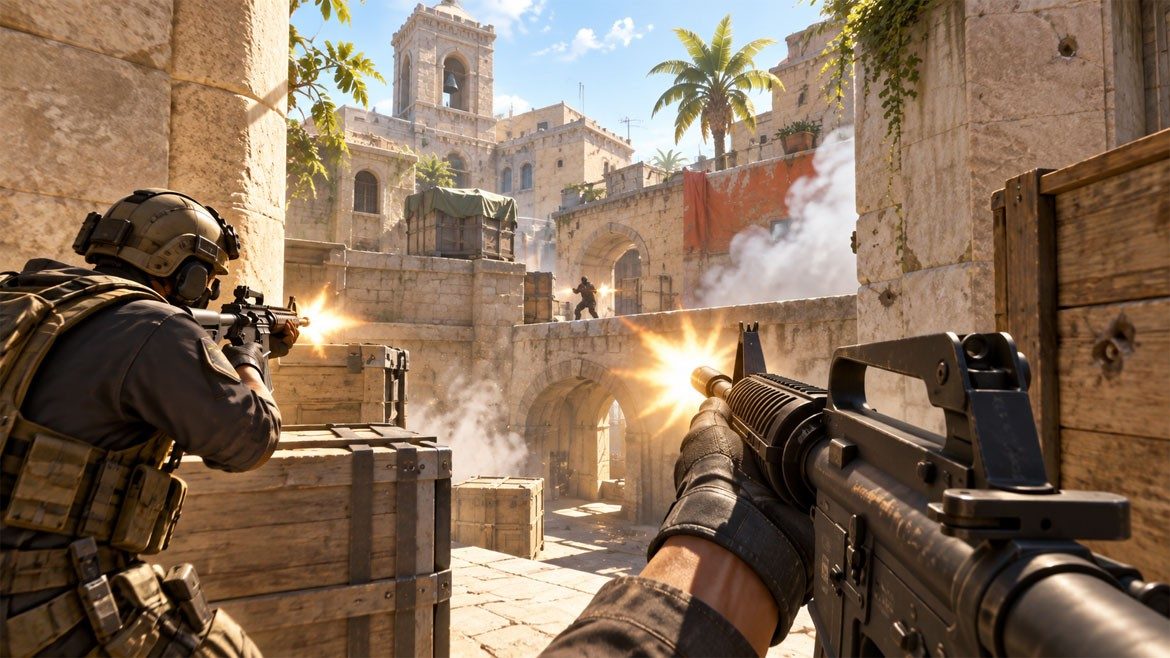
Although CS2 is much simpler tactically than other esports disciplines, strategy still plays an important role here. Teams are divided into defense and attack, and the main goal is to win 13 rounds. The defense often breaks down not after a perfect execute, but 20 seconds before it. One aggressive rifler who takes control of space on Mid or Long forces the CTs to change positions and abandon the planned crossfire. Teams that correctly use an aggressive entry player gain information and favorable duels even before the main attack begins.
How Aggressive Rifle Entries Break the CT Default
Standard CT strategies in CS2 are built around map control and correct positional play. By HLTV’s definition, a default on the T side is a slower, standard strategy where terrorists spread players across the map at the start of the round to gather information. At the same time, CTs build a defensive setup, relying on control of key zones, utility, and crossfires. This is why early aggression with an AK-47 or another assault rifle creates a problem, as it attacks the structure of the entire defense rather than an individual player.
This is most noticeable when watching professional matches. Teams like NAVI and G2 are a good example of implementing this strategy, and on cs2 live scores, you can see that when playing rounds according to this scenario, they have a higher winrate. If an aggressive rifler takes a CT who was responsible for Mid control, another defender is forced to cover that area, and the third may be left without necessary support at the bombsite. Then the team can rotate to the other plant site and plant the bomb without problems.
However, the rifle entry does not necessarily have to get a kill. For example, if YEKINDAR (FURIA) or another space creator forces two CTs to fall back after deploying flash or smoke grenades, the T-side has already achieved a valuable outcome. Losing space often means losing a convenient position for the AWP, a poor angle for the rifle, and a more difficult crossfire. HLTV separately described modern aggressive riflers as space creators, for whom map control and creating favorable duels are no less important than the direct kill.
Rifle Entry Timing, Utility and Trade Potential
 An aggressive entry should not act in isolation. The strongest T-side hits are built around correct timings, which in turn rely on a good player spawn at the start of the round. If the first player enters a zone just 1 second later than the correct timing, they will most likely die and lose the AK. However, if the second rifler is positioned at the proper distance, the CT must win two consecutive duels instead of one.
The timing of the attack is also important here. If a team throws three grenades, and the entry player peeks two seconds after the flash ends, the CT can return to position and regain full control of the angle. Therefore, professional teams synchronize grenade timing with the movement of the first rifler. In practice, this can look like a flash from the IGL, an instant peek from the entry player, and the second rifler exiting on the trade angle.
Utility determines how difficult this exchange will be. A flashbang can take away the advantage from a CT holding a specific angle. Smoke reduces the number of available lines for an AWP or rifle. A Molotov forces the defender to change position or wait for the grenade action to end. At the Esports World Cup 2026 and other CS2 tournaments, you could see the correct execution of these grenades. Ultimately, an aggressive rifle entry should not only have good aim but also know how to move correctly and use grenades effectively.
Why CT Defenses Struggle Against Repeated T-Side Pressure
One aggressive attack does not guarantee an easy victory. The CT side breaks when the T side repeats the pressure using different tactics. For example, a team takes Top Mid on Mirage three times in a row. In the fourth round, the CTs might rotate more forces toward Mid, while the Ts, instead of repeating the strategy, can execute a fast push onto the A or B site.
A similar situation arises on Inferno. If an aggressive rifler regularly pressures Banana, B defenders must decide when to use utility. An early molotov can stop an early push but leave fewer resources for the later part of the round. At the same time, passive play preserves grenades but allows the T-side to gain territory. So CTs constantly have to choose between information, position, and utility.
Historically, the role of the entry fragger has also changed. In the CSGO era, it was the classic model of a player who always enters the bombsite first, but in CS2 this role has gradually given way to a more flexible concept of a space creator. The value of players in this role lies in map control and creating conditions for the next stage of the attack.
This explains why an aggressive rifle can be effective even with a low kill count. If his actions cause the CT to give up position, use a grenade, or call the rotator for help, the T-side already gains a significant strategic advantage. This is especially important on maps with strong central areas, such as Mirage, Dust2, and Inferno.
Building a T-Side Around an Aggressive Entry Player
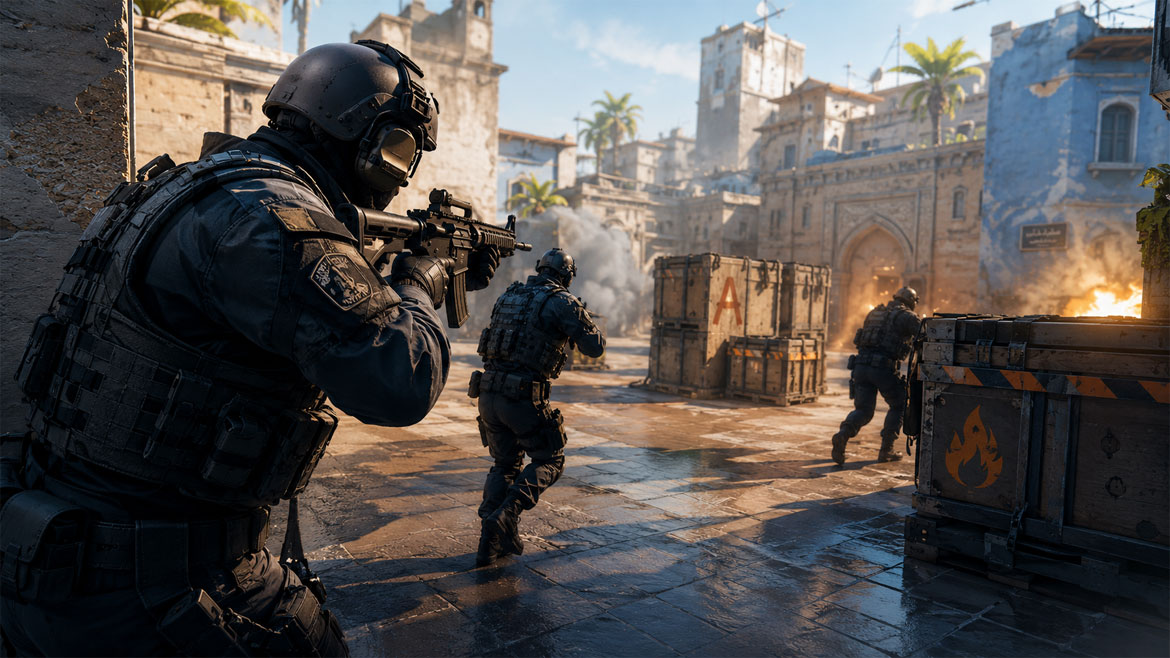 For an aggressive entry to deliver consistent results, a team must build a clear system around it. The first element is spawn-dependent decisions. As mentioned above, strategies involving a fast site execute must be built around player spawns at the start of the round. A clear example is Dust2, where players who spawn closer to Box will definitely run to Long. On Mirage, a position in T Spawn directly affects the speed of taking Top Mid.
The second element is information. The entry player must know which CT positions have already been checked and which utility has been used. If an AWPer showed himself at Mid on Mirage, a repeat peek without a flash becomes an unnecessary risk. If the CT has already used a smoke, the T-side can change the pace and attack through Connector or Short.
The third element is spacing. The first rifler should not run so far ahead that they are left without trade potential. At the same time, the second player cannot stand too close, because a single grenade or spray can stop both. The practical balance depends on the map, angle, and weapon type.
The best indicator of practical usefulness is the result. If the team uses these strategies and guidelines and wins round after round, this is a sign that the tactic works.
Conclusion
In this text, you have learned how aggressive T-side rifle entries break CT defaults. This works not only due to opening kills, their main strength lies in space control, changing the opponent’s positions, and creating favorable conditions for a follow-up attack. You may hear that a modern entry player is called a space creator, and this is true, as he can win the round even before directly reaching the bombsite. Therefore, an effective rifle entry is not a player who simply goes first. It is a player through whom the CT is forced to play not according to their original plan.