
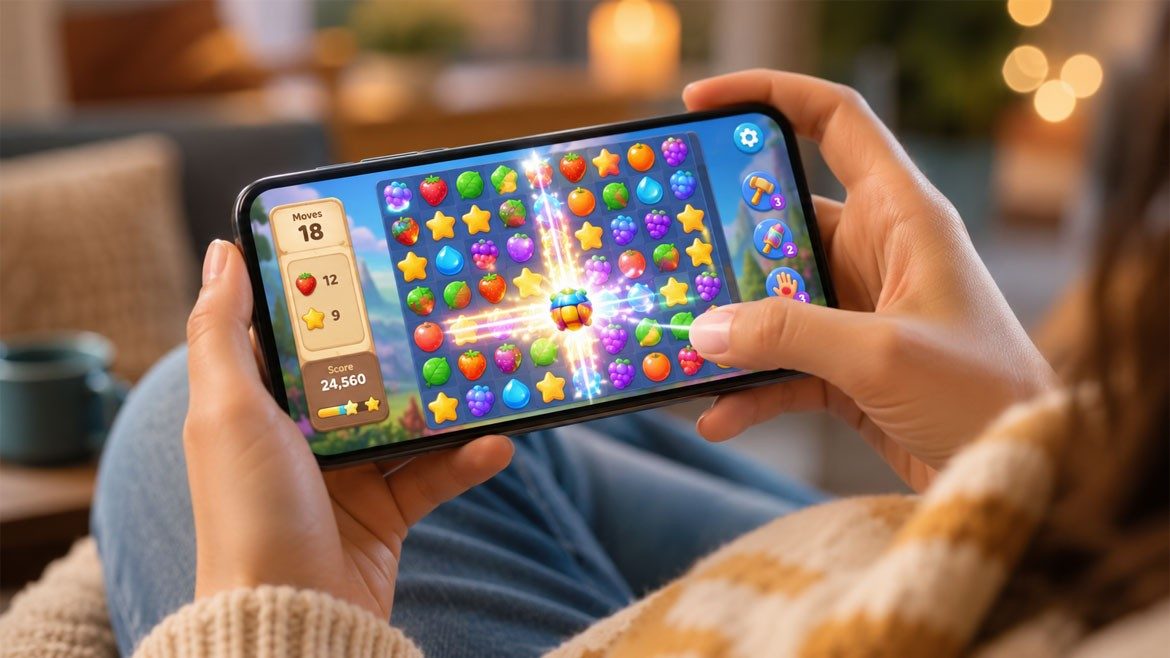
Points, streaks, leaderboards and surprise rewards, they all started in video games. Now you’ll find them everywhere, from your language apps and fitness trackers to the casino lobby.
How many times have you fired up an app just to keep some little counter from dropping back to zero? Whether it’s that green owl staring at you in Duolingo; your fitness ring closing for the day; or a progress bar at an online casino South Africa showing you how close you are to a bonus, you’re walking right into a game designer’s vision. They’ve been tinkering with those mechanics for decades, using pixels and high scores.
Gamification basically means taking those game ingredients, the ones that get people hooked, and using them in places that aren’t games at all.
The toolkit games handed over
 Gamification runs on a pretty small collection of tricks gamers know inside out. Points and XP give you numbers to chase. Badges and achievements turn every milestone into a shiny trophy. Levels let you measure your status, and progress bars show how close you are to leveling up. Leaderboards stir up rivalry, quests and daily challenges nudge you to log in and streaks punish you for skipping out. Limited-time events add a feeling of urgency. Random rewards make every session unpredictable.
Nobody who chased 100% completion in an open-world game is surprised by any of this. What’s new is that a lot of other industries jumped in. Straits Research put the global gamification market at around $25.94 billion in 2025. Other firms have different numbers, but the trend is undeniable: It just keeps rising.
The owl with a grudge
Duolingo is the poster child here. If you break it down, it’s a game at its core: Short levels, XP to earn, weekly leaderboards where you move up or down, daily quests and a streak counter so stressful that users pay for “streak freezes” to avoid breaking it. The company said it had more than 50 million daily active users by the third quarter of 2025, and their revenue shot up along with those numbers.
Think about that. Learning verb conjugations isn’t exactly the most electrifying activity for your Tuesday evening. But throw in a bit of game logic, and suddenly tens of millions are showing up every single day, half terrified of letting down an animated bird.
From pallet town to your step count
 Fitness was always a sure bet for gamification. Running apps gives out kudos and have segment leaderboards, while smartwatches reward you for closing rings. Pokémon GO got everyone moving first, transforming a whole generation into midnight park visitors searching for a Snorlax.
In March 2025, Pokémon GO’s developer sold their games division to Scopely, the team behind Monopoly GO, for billions, according to The Wrap. Scopely highlighted a crazy stat with the announcement: Since Pokémon GO launched in 2016, players have collectively walked about 30 billion miles. That’s quite a lot of exercise for people who claim to hate cardio.
The genre that never pretended otherwise
Online casinos might be the biggest adopter of gaming’s playbook, which makes sense considering slot machines and arcade cabinets are close cousins. Look at Betway, a South African online casino and betting platform, their lobby reads like a textbook in game design.
Slots have their own themes and stories. Then you’ve got crash games like Aviator: A plane takes off, the multiplier rises, and your only move is deciding when to cash out before it’s gone. Anyone who enjoys extraction shooters knows that tension: Pull out with what you’ve got or stay for just one more round of loot.
South Africans love this format. The National Gambling Board told Parliament in October 2025 that about 60% of South Africa’s gross gambling revenue for the year ending March 2025 came from online betting.
Why does it work on us?
 It comes down to how people are wired. First, nobody likes unfinished business. A progress bar stuck at 80% just bugs you until you fill it up. Second, we hate losing what we’ve already built, so streaks keep us tethered. No one wants to wreck a 200-day streak over one missed day.
Third, unpredictable rewards are more tempting than predictable ones. Ask anyone who’s opened loot boxes or run raids hoping for a rare drop. Fourth, we’re social creatures. If your friend’s two spots ahead on the leaderboard, you suddenly care way more.
The best proof is from a car wash. In a famous study by Joseph Nunes and Xavier Drèze, customers got loyalty cards needing eight stamps for a free wash. Some cards had two stamps already filled in. About 34% of those with pre-stamped cards finished the card, versus just 19% with a blank card. The workload was the same, the only difference was the feeling that you’d already started. Every app that gives you a free level-up in your first minute is playing that same psychological trick.