
How do you actually start building a D&D campaign? Pick one small setting, run a proper Session Zero, and design a single clear threat before writing any deep lore. That’s it – everything else builds on those three decisions.
D&D isn’t a niche hobby anymore. According to Axios, roughly 85 million people worldwide engaged with the brand in the past year, and more than 19 million accounts now exist on D&D Beyond, the official digital platform. That kind of scale is exactly why new game masters need a workable process instead of guesswork.
This guide walks through three stages: setting the groundwork, building the opening story, and using a modern DnD campaign creator to keep everything organized once the table starts generating its own chaos.
Start Small Before You Build Big
A lot of new game masters try to write an entire continent’s backstory before anyone has rolled a die. That habit rarely survives an actual session, since players tend to wander toward whatever interests them, not whatever got written down first.
What Scope Should a First Campaign Have?
A single town, one memorable tavern, and a patch of nearby wilderness is enough. That’s plenty of material for several sessions without months of prep work, and most players won’t notice how compact the map really is if the details feel lived-in.
Pro tip: write three strong NPCs before writing thirty forgettable ones. Depth beats volume in the opening arc.
Rules matter here too. The 2024 core rulebooks, including the updated Player’s Handbook, are now the standard for new tables. From there, one decision remains: run a published starter module, or build something homebrew.
- Published module – faster to prep, tested pacing, fewer surprises for a first-time DM
- Homebrew premise – more creative control, but slower to get off the ground
- Hybrid approach – borrow a module’s structure, swap in original NPCs and hooks
Gather Your Table and Run a Real Session Zero
Once scope is settled, the next job is finding people to play with – and this step gets rushed more often than it should.
How Many Players Does a Campaign Need?
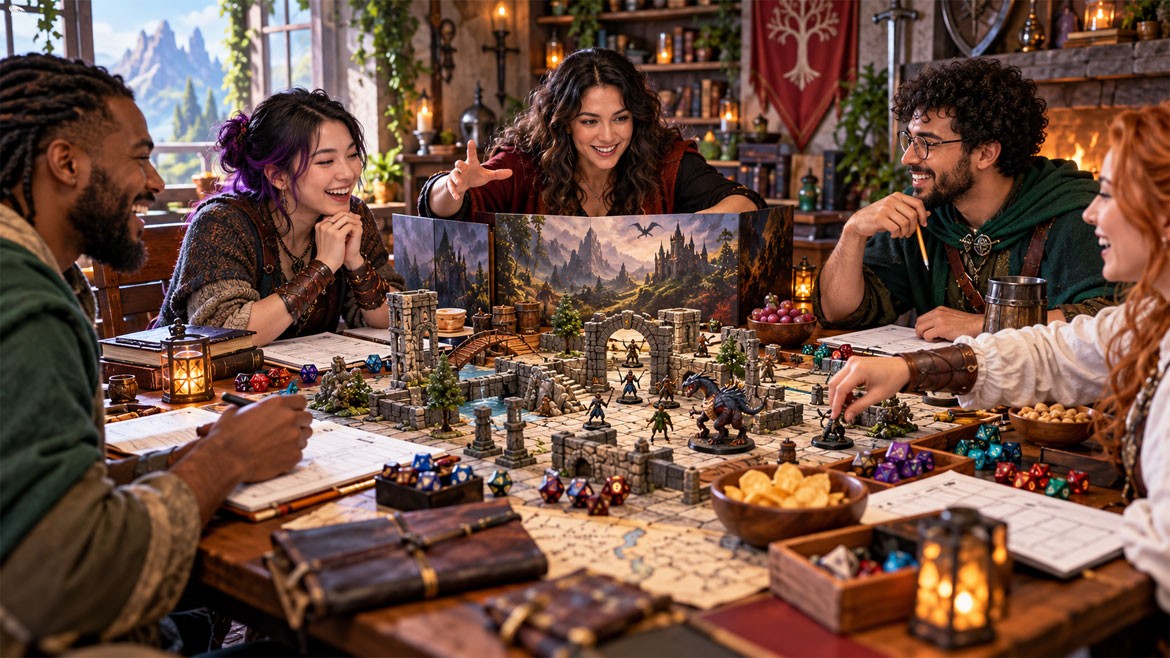 Three to five players is the workable range. Smaller groups sometimes struggle to fill out a party’s roles, while larger tables often leave someone sitting quietly for half the session. Before the first real game, a few things are worth locking down:
- Realistic scheduling and session frequency
- Tone preferences – combat-heavy, roleplay-heavy, or a mix
- Any hard limits on subject matter
Why Skipping Session Zero Backfires
Session Zero happens before any character swings a sword. It’s where tone, house rules, and expectations get set out loud, instead of assumed. Skipping it might save an hour up front, but mismatched expectations tend to resurface as arguments two or three sessions later – usually at the worst possible moment.
This meeting is also where backstories get tied into the setting. A rogue with a grudge against the local guard captain gives a DM a built-in hook, rather than something invented on the spot mid-session.
Designing the Opening Threat and a Living World
With players and expectations settled, the focus shifts to session one – the part that either hooks a table or quietly loses it.
What Makes a Strong Opening Hook?
A concrete problem beats a vague one. A missing merchant, a string of local crimes, or a threat approaching the town gate gives players something to investigate immediately. “Evil is stirring somewhere” gives them nothing to act on.
Should Every Campaign Have One Big Villain?
Not necessarily. A lone wizard in a distant tower is a familiar shortcut, and it’s rarely the most interesting one. A small faction – a corrupt guild, a scheming noble house, a cult hiding under a respectable name – creates multiple entry points into the plot and makes the world feel like it has its own logic, not just a villain waiting to be fought.
Tracking all of this matters just as much as inventing it. NPC names, faction ties, half-finished threads – a notebook or a digital doc works fine, as long as notes get written down consistently. Inconsistency is usually what breaks immersion first, since players tend to remember details better than an exhausted DM does mid-session.
Using a DnD Campaign Creator to Manage Prep
Prep work has changed a lot for game masters over the past couple of years. Hasbro’s own Q2 2025 earnings report noted 21% growth in tabletop revenue, with Dungeons & Dragons named as a direct contributor – a sign that more people than ever are running games, and more of them are reaching for digital tools to keep up. A well-built DnD campaign creator can now handle a lot of that overhead automatically.
What Should a DnD Campaign Creator Actually Do?
At minimum, it should track session recaps, organize lore, and generate content that would otherwise eat hours of manual prep. Platforms like Campaign Arks and Archivist AI were built specifically for this – unlike general-purpose chatbots, they’re designed around ongoing campaign structure rather than one-off answers.
Setting a Core Theme Before Generating Anything
Before touching a DnD campaign maker, it helps to define a central antagonist and the theme the story revolves around. A Big Bad Evil Guy works best as an extreme version of that theme – corruption taken past its logical limit, loyalty twisted into something dangerous. Vague prompts into any generator tend to produce equally vague, forgettable results.
Keeping AI Output Consistent With Your World
One recurring issue with AI-generated content is a drift toward generic fantasy tropes instead of a table’s actual established canon. Feeding a DnD campaign creator source documents and setting clear reference rules keeps generated content aligned with what’s already been built, rather than replacing it with something that reads like everyone else’s campaign.
Running a Prep Loop Between Sessions
The most effective workflow repeats on a cycle:
- Log major player decisions right after each session, while details are fresh
- Feed those decisions back into the DnD campaign creator to update quest logs and timelines
- Review generated updates before the next session to catch anything off-canon
This turns DnD world building tools into something that reduces admin work rather than adding another task to the pile – which is usually the whole point of using one in the first place.
Frequently Asked Questions
How long does it take to prepare a first D&D session?
A few hours is usually enough if the scope stays small – one town, a handful of NPCs, and one clear hook. Trying to prep an entire region before session one tends to waste time on material players may never even reach.
Is a DnD campaign creator worth using for a first-time DM?
Yes, particularly for tracking notes and generating minor NPCs, which are the tasks that eat the most prep time early on. It won’t replace the creative decisions around theme and story, but it removes a lot of the repetitive work around them.
What’s the biggest mistake new game masters make?
Overbuilding the world before running a single session. A campaign that starts small and grows based on what players actually engage with tends to hold together far better than one planned out entirely in advance.
Do published modules work as well as homebrew campaigns?
For a first campaign, often better. Modules come with tested pacing and structure, which lowers the risk of running out of material mid-session – something homebrew campaigns are more prone to in the early going.
How often should campaign notes be updated?
After every session, ideally within a day or two. Waiting too long between sessions to log decisions is one of the more common reasons campaigns start feeling inconsistent to players.