
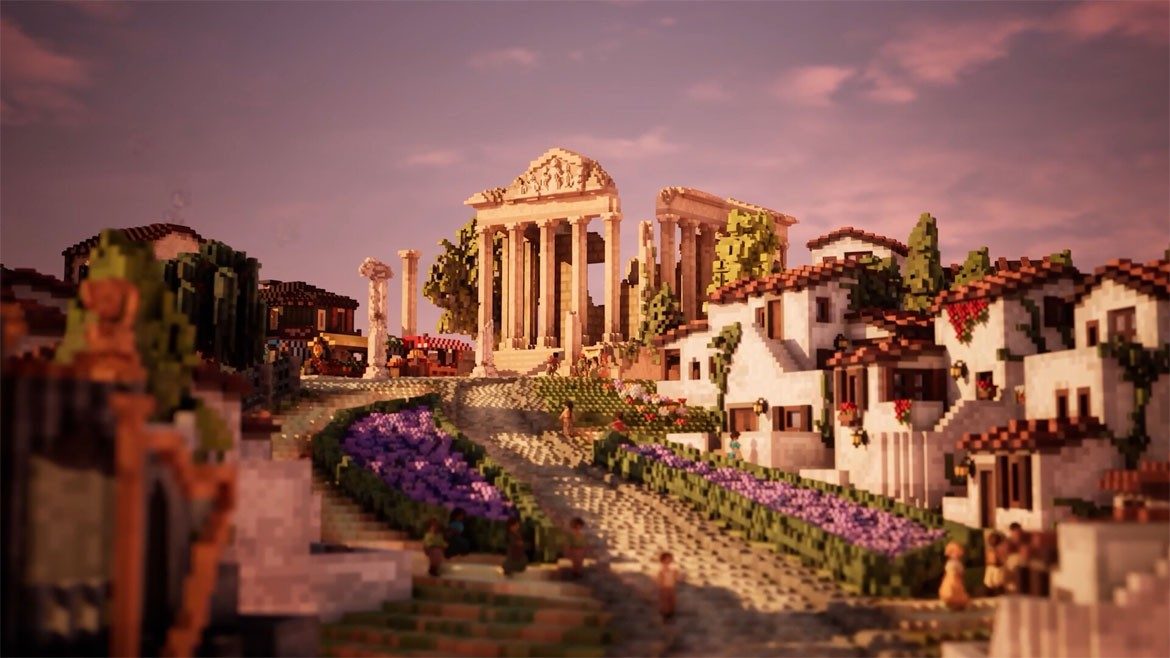
Traditional city builders typically require players to think like politicians, carefully managing infrastructure, money and every need of the people. Town to City adds its own spin to the genre by placing players in a pixelated world where imagination takes priority over pressure.
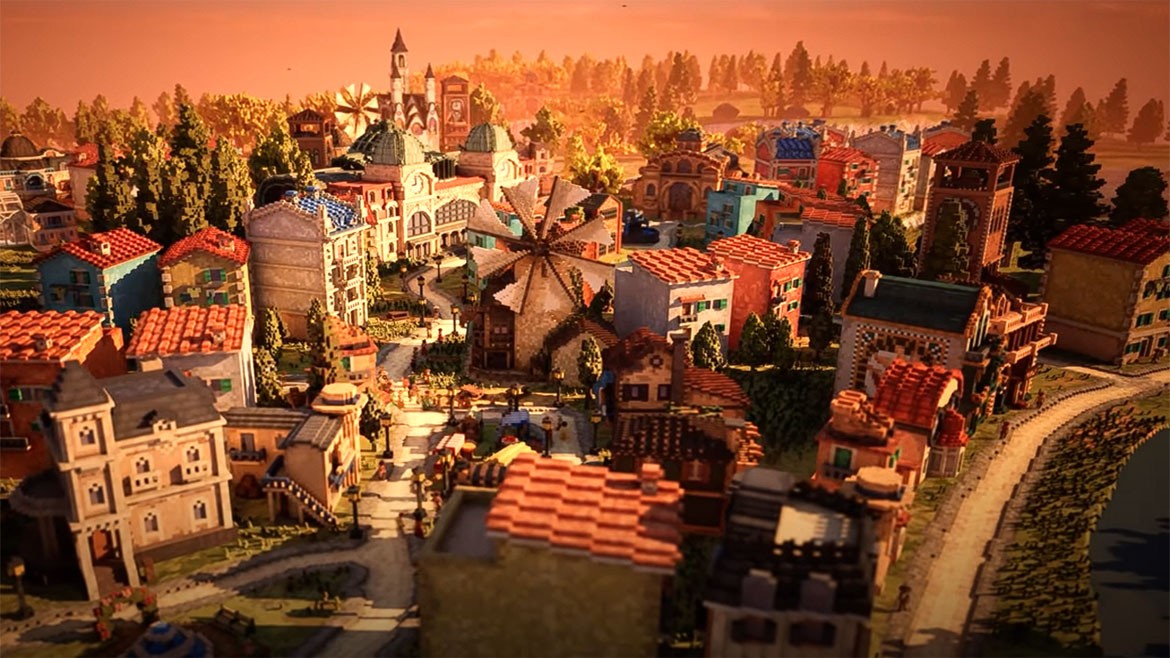 In Town to City, the main goal is to fulfill personal objectives and meet the requests of a small community while building and shaping the town. Its voxel art style provides a unique blueprint, and the gorgeous, warm lighting adds to the comfort of the experience. It is the kind of sim where players can sink their teeth into something easy and watch their ideas come to life.
That calm atmosphere is one of the title’s greatest strengths. Town to City lets players enjoy the scenery they built without the constant worry of mismanaging money or failing community requests. Instead, they can observe the uniqueness of their city, play at their own pace and enjoy the satisfaction of seeing a tiny settlement grow. It is available on Steam for PC.
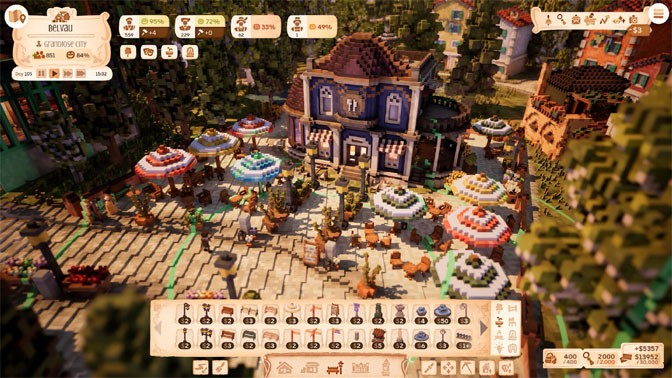 The control scheme elevates the creative process by making both the mouse and keyboard inputs comfortable and easy to use. The layout is simple to follow, and the controls are explained onscreen without becoming overbearing.
The sim teaches players how to move the camera immediately upon loading, and the ability to use either the mouse or keyboard for movement is a nice accessibility touch. As of this writing, Town to City does not have controller support, but the developers have confirmed that it will be added in a future update. Steam Deck support is also currently in beta. While it is not recommended on Steam Deck just yet due to bugs, it is still playable.
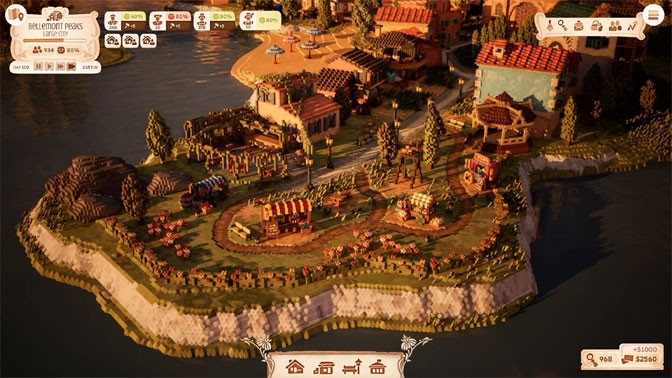 Gameplay in Town to City is unobtrusive. Players begin with people arriving by train who are looking for a place to live, while the tutorial shows how to place houses, decorations and activities for the townsfolk. The tutorial quickly expresses the creative freedom at the heart of the experience. It lets players place structures wherever they like while offering small, manageable tasks that lead them in the right direction without overstepping on their creative ambitions.
To bring more people into the town, players need different food places and shops. To run those shops, they need workers. This creates a smooth gameplay loop that circles back to where it starts while adding small variations along the way. Some residents may need housing near cliffsides, while others may require certain stores to be built near their homes. As players progress, a growing number of the city builder’s people expect more from them as the mayor. That means unlocking new plots of land, adding more services and welcoming more bougie residents who provide more money to the town.
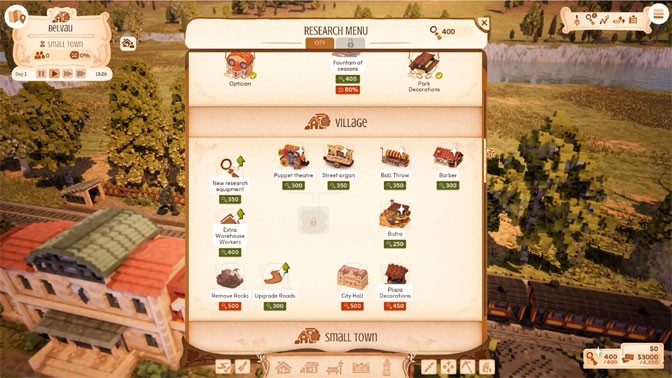 Money is earned over time, and it’s used to purchase the architecture needed for the town. However, Town to City is quite generous with its economy. Players tend to earn more money than they can spend, which means they rarely have to sit around doing nothing while waiting for funds to grow.
Players can also unlock more decorations and buildings through the observatory. Once it is built, the observatory accumulates points over time that can be spent on different shops and decorations that the townspeople may request. Additional workers can be assigned there to earn points faster and unlock new architecture more quickly.
 For players who do not want to worry about managing points or money at all, Town to City also includes a sandbox mode. That mode allows players to place whatever they want wherever they want to their heart’s content across several sandbox maps. The mechanics and sound design for placing architecture are phenomenal. Each distinctive building, flowerpot or other item has its own sound, which makes the building process feel more immersive and satisfying.
There are a few small nitpicks. Fences cannot be placed directly next to houses, and houses always leave a small gap between each other. This can feel a little clunky when multiple houses and fences are arranged together. There are also moments when placing a structure next to a path becomes difficult because the path curves, which causes the structure to jitter and makes the placement harder than it should be. One decorative feature I would have liked to have seen is the ability to add different doors and windows to houses. That would allow for even more creative freedom and add more variance between homes beyond the more elaborate houses and two-story structures.
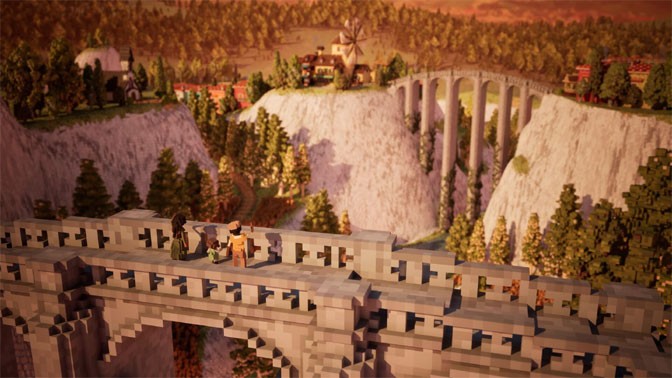 Still, those issues do not take away from the calming creative experience. They represent only a small percentage of what players can do, and Town to City already has a roadmap for future updates. The developers are continuing to address bugs and are also adding more building blocks, which should only make it stronger over time.
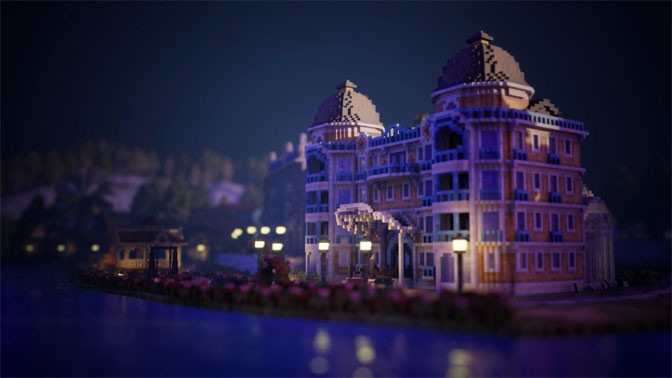
The visual design is stellar. As mentioned earlier, the lighting is beautifully handled during both day and night cycles. The shadows cast by trees and the warm light from the sun add to the cozy atmosphere. One especially charming touch is that villagers interact with the environment that players create. A family may walk down to a locally built playground so their children can play there, making the town feel more alive and personal.
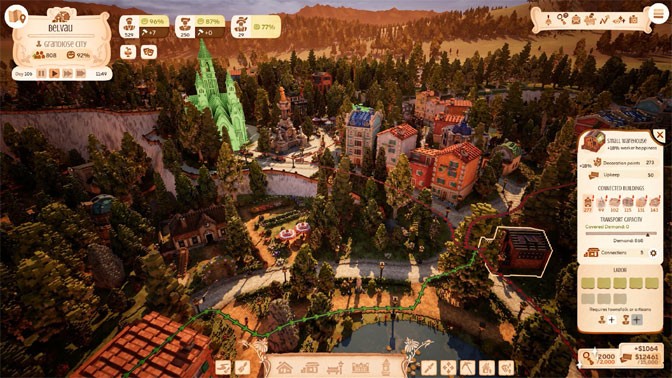 Town to City also uses depth of field well. When players zoom into a specific part of town, small portions of the background blur slightly, helping focus attention on the object or area being examined. It is a subtle but effective touch. Players can also experience their town from the perspective of the villagers. A camera mode allows them to wander around and admire what they built, which adds another layer of appreciation to the creative process.
The music perfectly complements that atmosphere. The soundtrack plays periodically, moving from quiet moments of birds chirping or children playing back into soothing, mellow tones. After every upgrade, players hear a jingle. Every time the city level increases by accumulating more residents, the title plays a small melodic number that makes the accomplishment feel meaningful.
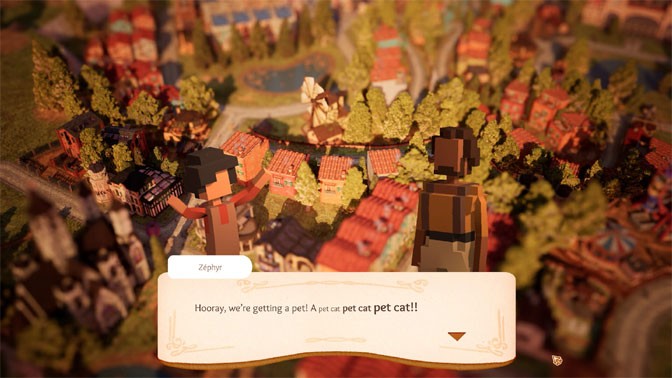 Town to City is easy to recommend for anyone looking for a relaxing town simulator without the anxiety-inducing micromanagement found in similar titles. Whether players are coming back from a busy day and looking for something calming before bed or spending an entire afternoon designing the perfect town, this sim provides plenty of creative space.
In Town to City, players are not just building a city. They are reaching new heights.