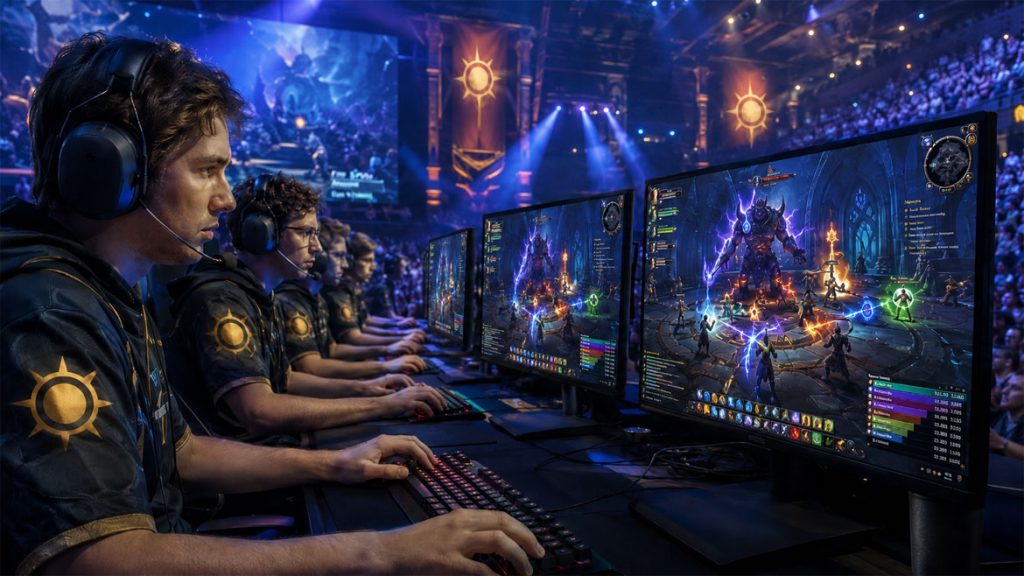


Educators and students will soon have access to two new learning games in Triseum’s revolutionary ARTé video game franchise, which immerses students in history and empowers them to assume influential roles in the creation of artworks around the world. Launching this fall, ARTé: Lumière recreates 19th century Paris centered around impressionist, realist and other modernist artists, while ARTé: Hemut spans ancient Egyptian religious beliefs, artworks and architecture.
“Our award winning games have been touted for their ability to improve students’ decision making and reflective thinking skills, not to mention sparking creativity and collaboration. This excitement has had faculty and students anxiously awaiting our new releases,” said André Thomas, Triseum CEO and Texas A&M professor. “Our new games rely on the same efficacy standards, research and imagination that go into all of our games, whereby improving student engagement and learning outcomes is core to what we do.”
Going head to head in sophistication and engagement with leading entertainment video games, Triseum’s learning games boast rigorous educational value, immersive visual appeal and inspiring game play. “The game-based learning movement is on and we are excited to be out in front of it,” noted Thomas.
 Triseum’s ARTé game-based learning series transports students to pivotal time periods where they are active cultural participants. ARTé: Lumière will empower students to relate both academic and impressionist artworks to the political, social, cultural, religious and economic milieu. In ARTé: Hemut, students will chart the course of history to experience the creation and culture that gave birth to the iconic pyramids, tombs and temples.
The original game in the series, award winning ARTé: Mecenas, allows students to commission works of art as a Medici banker. Launched in 2016, it is used by schools in the U.S. and Europe. In a research study, ARTé: Mecenas boosted knowledge gain by nearly 25 percent, and results from a year-long validation study using the game revealed strong student engagement, motivation to learn and knowledge acquisition.
“Introducing game-play, adventure and simulations into a learning experience feeds students’ hunger for problem-solving, exploration and learning through activity. It engages them in profound ways,” said Karl Kapp, professor of Instructional Technology at Bloomsburg University and author of several books on game-based learning. “Triseum’s games are filled with learning opportunities, which motivate students to think creatively, experiment with the content, and connect more deeply to the subject and its relevance.”