
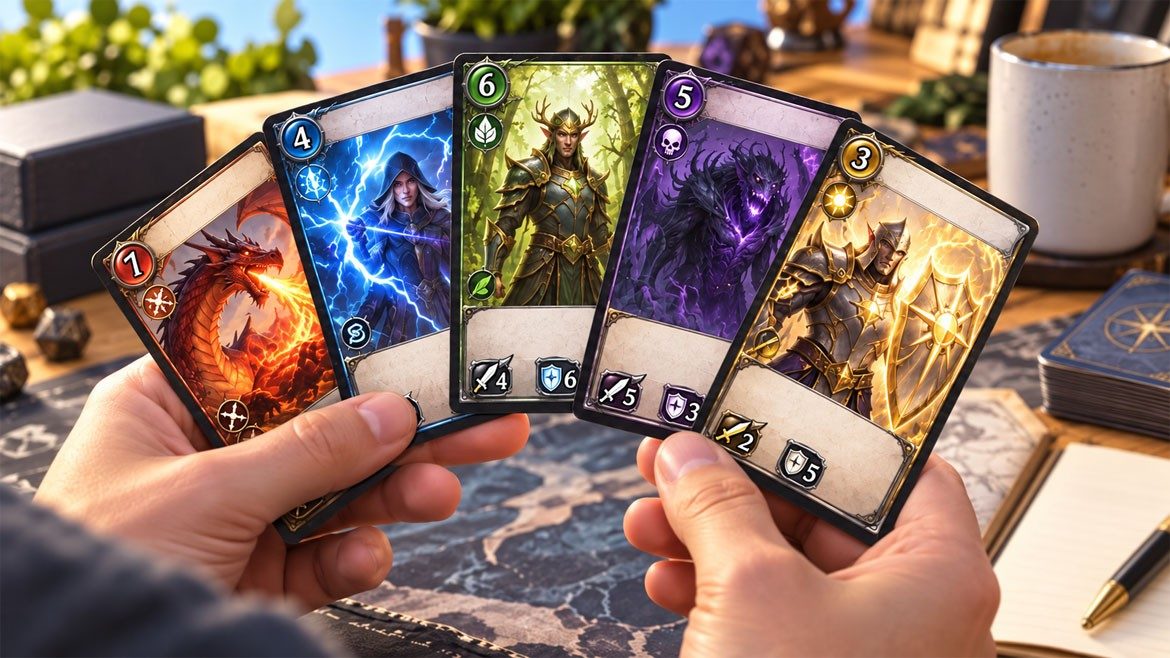
Indie tabletop development usually happens in spare bedrooms and coffee shops, built out of index cards, sharpie labels, and a spreadsheet tracking balance changes.
That scrappy start is normal. Almost every successful indie card game looked nothing like the finished product in its early days.
What doesn’t get talked about as much is the path from rough prototype to a deck you can actually put on a table, hand to friends at a convention, or ship to backers.
If you’re building a card game on your own or with a small team, here’s a look at how that process tends to go.
Prototyping Is a Non-Negotiable First Step
Before any decisions get made on final art or printing, the game itself has to survive contact with actual players. Many indie developers run hundreds of playtests using cheap prototypes: sleeved index cards, printed sheets cut by hand, whatever works.
This stage is ugly and slow, and that’s fine. The mistake some developers make is polishing the art before the mechanics are locked, which usually means redoing cards later to fix the balance.
Once the core loop holds up in playtests with people outside your immediate circle (strangers give far more honest feedback than friends), that’s the sign you’re ready for production.
It’s also when developers start looking seriously into custom card deck printing for the first time, since a locked ruleset finally means the card count, categories, and text requirements are settled enough to design around.
Lock the Card List Before Touching Art
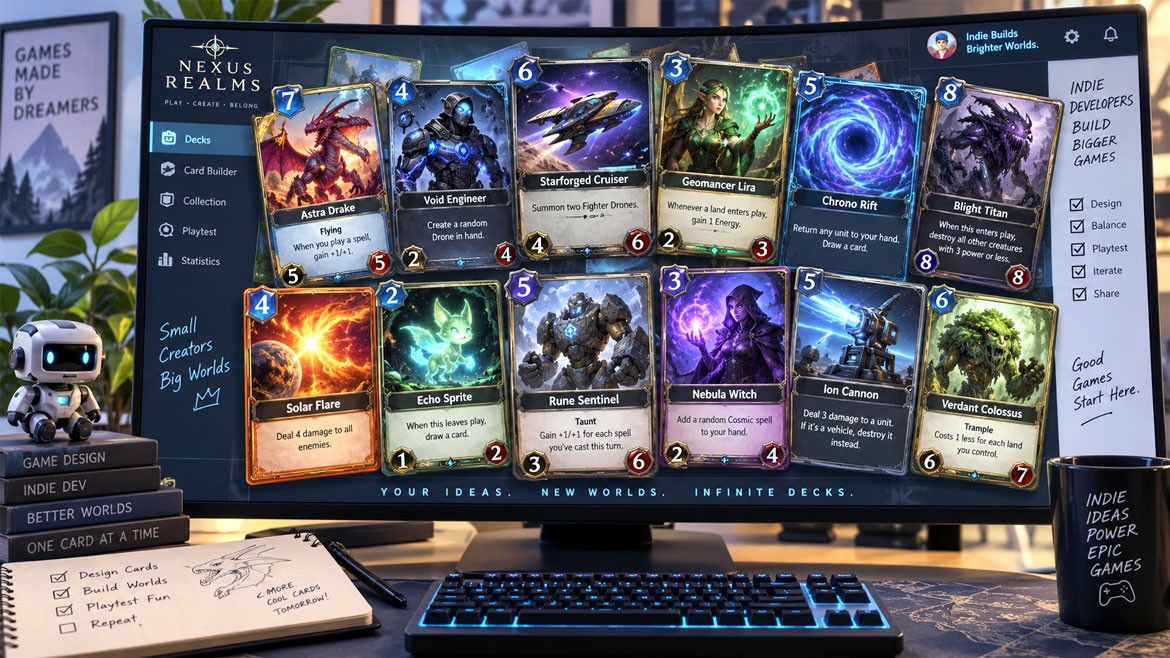 A common mistake indie designers make is starting illustration before finalizing the card list. Developers who’ve been through a full production cycle know to settle three things first:
- The final card count, including any planned expansions
- Card categories and rarity tiers, if the game uses them
- The exact text requirements for each card, since retrofitting a rules box onto finished art rarely looks clean
Getting this locked first means your art budget goes toward cards that will actually ship, not concepts that get cut in a later balance pass.
Design a Visual System, Not Individual Cards
What separates games that feel professional from games that feel homemade is consistency across the whole deck.
Indie teams can nail this quickly by building a simple visual system: a color code per card type, a consistent icon for effects, one template used across every card regardless of who illustrates it.
This matters most for solo developers working with multiple freelance artists. A shared template and style guide means forty cards look like they belong to the same set, even when several different people drew them.
Budget for Print, Not Just Art
A lot of first-time indie developers put most of their budget into artwork and treat printing as an afterthought. That tends to backfire.
Card stock weight, finish, and corner rounding all affect how real the game feels the moment someone picks it up. Cutting corners here is easy to regret after the cards arrive.
A deck that feels flimsy can undercut an otherwise great game design, while a properly weighted card with a clean finish reads as quality before a single card gets played.
Working with a manufacturer that specializes in small-batch custom merchandise gives an indie team more flexibility than a general print shop, especially for smaller runs that big commercial printers aren’t interested in or set up for.
Planning Around Crowdfunding Timelines
Many indie card games launch through crowdfunding, which adds its own wrinkle: you’re often promising a physical product before it exists yet.
That means building in time for a proof print, a full quality check, and shipping delays, all before the deck reaches backers. People remember production delays far more than they remember the original estimate.
Build that buffer into your campaign timeline from the start, not after you’re already behind.
Keep to High Standards Regardless of Print Run Size
Some indie developers assume a small print run means players will grade it on a curve. They won’t.
A 200-copy indie deck gets judged by the same standards as a mass-produced one. Nobody discounts how a card feels in their hand just because it came from a small studio.
Holding production quality to that same bar is what builds a loyal following instead of getting written off as a rough idea.
The Bottom Line
Every indie developer’s path looks a little different, but the ones who make it from prototype to finished deck are the ones who follow the order: game first, then visual system, then production, treated just as seriously as the design itself.
Skipping straight to art, or straight to printing, before the game is settled is an expensive way to learn that lesson. Now you know it for free.