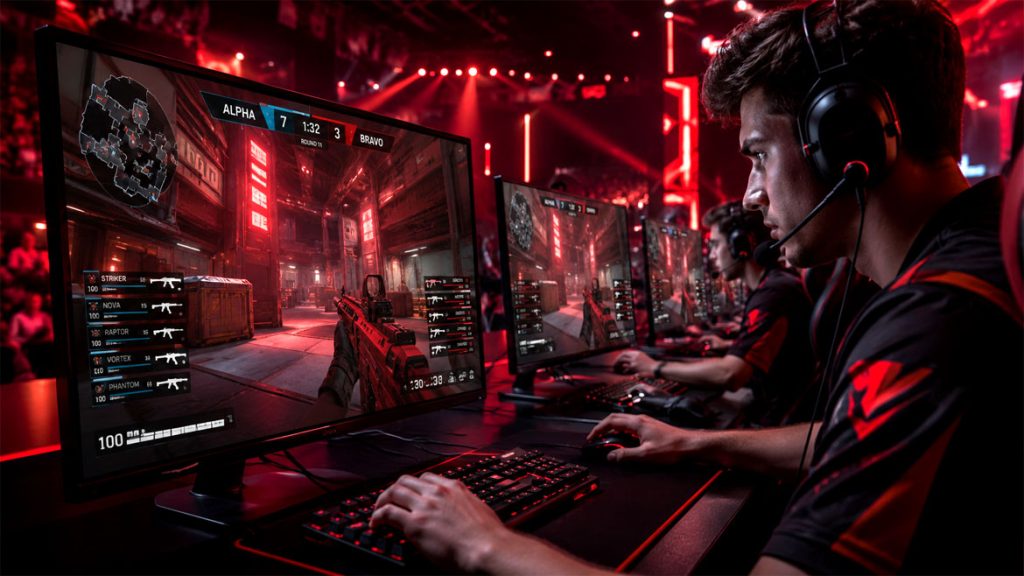

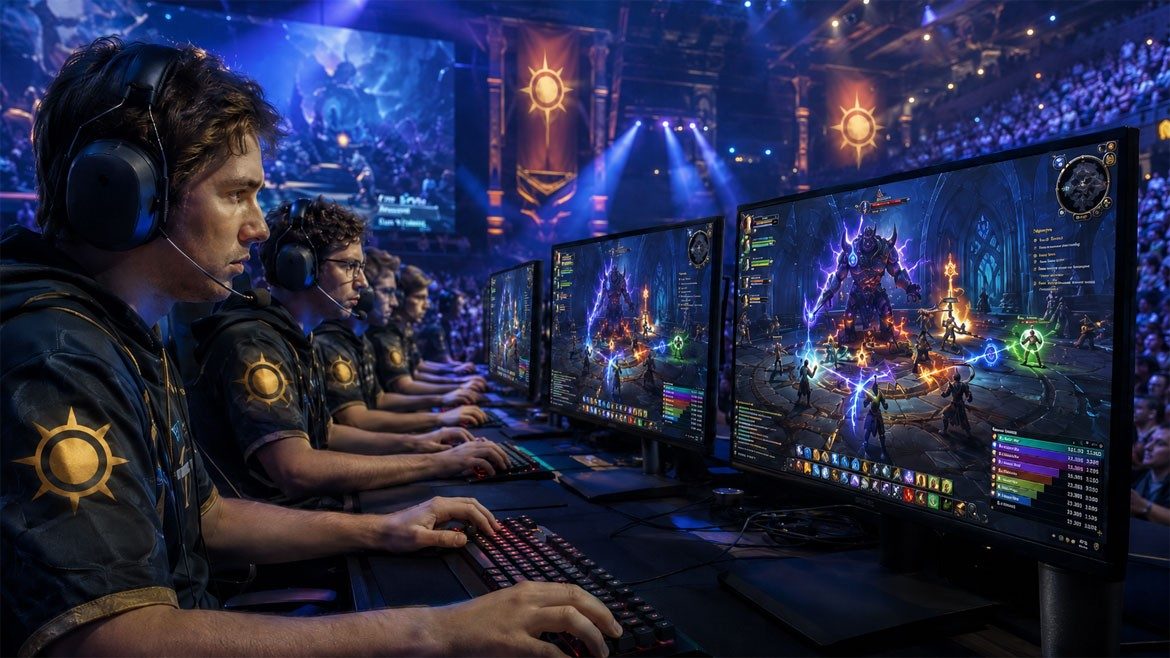
AI is now sitting inside the esports broadcast, not outside it. Riot Games and AWS brought a machine-learning Win Probability stat to the 2023 League of Legends World Championship broadcast after testing it at MSI 2023, with the model generating a new prediction every second of gameplay. ESL FACEIT Group pushed the distribution side further in May 2026 by debuting a TikTok-native vertical livestream at Intel Extreme Masters Atlanta. Fans notice the change in small ways. A Baron Nashor fight breaks open the game, a risky retake suddenly shifts the odds, or a Counter-Strike economy decision appears on screen before the desk has fully broken it down. Information reaches viewers much faster than it used to.
The Numbers Arrive Before the Replay
One of the biggest changes has been the speed of analysis. Riot’s Win Probability model draws on LoL Live Stats and a range of gameplay data to estimate which team is ahead at any given moment. Instead of waiting for a replay package or analyst segment, viewers get an immediate snapshot of how the game state has changed. During the Worlds 2022 final between T1 and DRX, AWS later used the back-and-forth match as an example of why the stat made sense for League of Legends, where a dragon fight can move the entire scoreboard in 25 seconds. The useful part is not the prediction itself; it is the timing. A viewer who misses why a team suddenly looks favored can see the swing before the analyst pauses the replay.
Integrity Tools Are Moving Under the Floorboards
AI also sits closer to competitive integrity, where the stakes are less visible and more severe. FACEIT’s Minerva engine analyzes text, audio, and behavioral data to detect toxicity and abuse in online gaming communities, while Riot’s Vanguard security update in December 2025 targeted a motherboard pre-boot loophole that could have weakened DMA cheat detection across the industry. Cheaters adapt. In practical tournament terms, that means organizers need more than admins watching demos after a protest; they need pattern detection, telemetry review, hardware policy, and escalation channels before a qualifier starts.
Mobile Screens Are Becoming the Second Arena
The esports audience now splits attention between the official stream, Discord, X clips, TikTok edits, fantasy picks, and betting dashboards. That behavior gives AI more work because the broadcast is no longer only a 16:9 feed with two casters and a replay package. During major match nights, the MelBet app (Arabic: MelBet تطبيق) can sit inside an adult viewer’s mobile routine alongside live odds, esports markets, score alerts, and match statistics. The smarter user reads the same data a production analyst does: map pool, patch version, side selection, pistol-round conversion, and whether a team burns utility before the 40-second mark. Esports betting should stay attached to verified match information, not to a highlight clip that shows only the final kill. Bankroll discipline still matters when a best-of-three flips after one overtime round.
Production Teams Are Editing for the Thumb
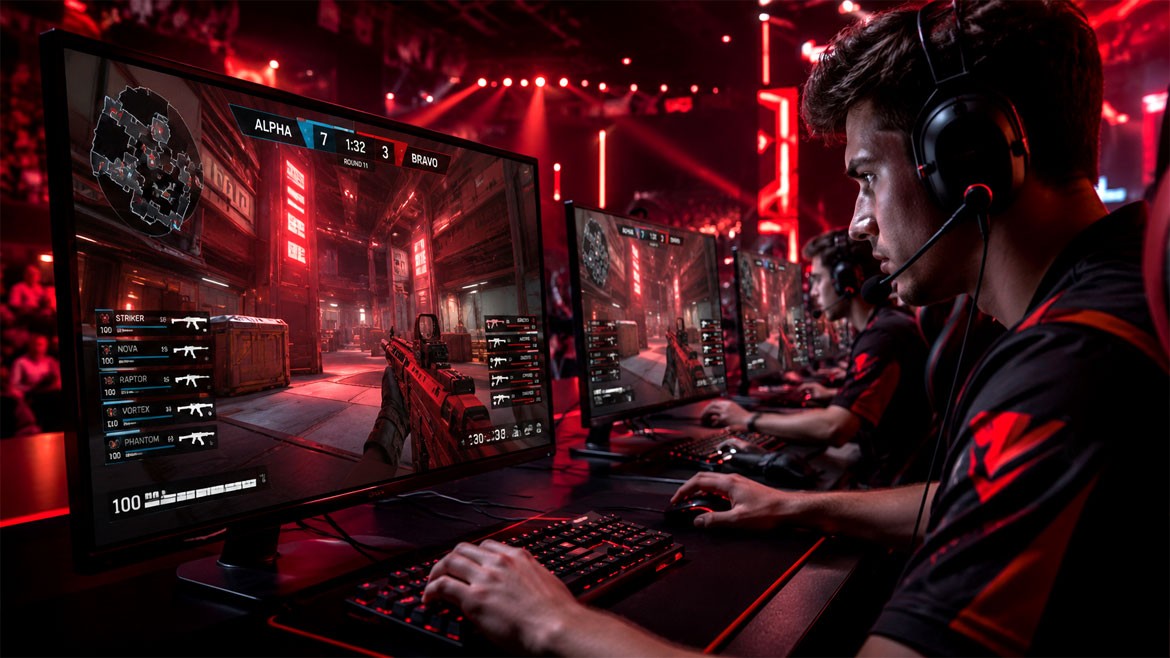 ESL FACEIT Group’s vertical livestream with TikTok at IEM Atlanta 2026 shows how broadcast strategy is changing, even as the game itself remains horizontal. A Counter-Strike player still clears angles left to right, but a mobile viewer watches the same round through a frame designed for one hand on a train or during a lunch break. AI does not have to generate the whole show to matter here; across esports production, it is increasingly suited to segmenting moments, tagging sponsor exposure, and preparing distribution-ready packages within minutes. At IEM Atlanta, the important production detail was format, not novelty. Esports has finally admitted that a mobile viewer is not a failed TV viewer.
Sponsors Want Proof, Not Vibes
The commercial side has moved just as fast. The Esports World Cup Foundation named Stream Hatchet its official data and insights partner for EWC 2025, a Riyadh event scheduled from July 7 to August 24 with 25 tournaments across 24 games, 2,000 elite players, 200 clubs, and more than $70 million in prize money. Shikenso was also named the official sponsorship analytics provider, using AI-powered brand exposure tools across broadcasts, streaming platforms, social media, in-game placements, and creator content. That changes the sponsor conversation from “was the logo visible?” to “how long did it appear, on which platform, beside which match moment, and with what audience response?” A small broadcast note matters here: a logo on a lower-third during a timeout has a different value from a jersey mark during a championship-winning round.
Game Data Is Becoming a Rights Product
 GRID’s 2025 Esports World Cup deal shows where the infrastructure is headed. The company said it would provide live, delayed, and historical in-game data feeds across five titles, including League of Legends and VALORANT, while powering event products and the official fantasy league. That is not just a statistics feed for fans; it is a rights layer for publishers, tournament operators, betting providers, fantasy products, and broadcasters. The cleaner the data, the more flexible the show becomes. A VALORANT analyst can explain why a Killjoy lockdown failed on Ascent, a fantasy player can track role value across maps, and a producer can build a graphic before the desk asks for it.
The Human Booth Is Not Dead Yet
AI has not pushed top esports broadcasters out of the picture because live coverage still hinges on interpretation, context, and timing. A system can calculate that a League of Legends team’s chances of winning fell sharply after a failed Baron attempt, but it cannot reliably explain the chain of decisions that led there or why the call seemed reasonable in the moment. In Counter-Strike, software can flag a 1-v-3 clutch as a key highlight, yet viewers still turn to analysts to unpack what actually happened. The most practical role for AI is behind the scenes: speeding up research, surfacing statistics, assisting with moderation, and handling repetitive production work. Used carefully, those tools can make broadcasts smoother and more informative. Used too aggressively, they can have the opposite effect. Constant predictive overlays can drain suspense from a close match, and heavy-handed monitoring systems can create legitimate concerns about trust and privacy. The balance is not about replacing people with technology, but about using technology where it adds value, while leaving the storytelling and analysis to those who know the games inside and out.