
Gambling has long been a staple of the video game industry. Rockstar Games relied on a game of chance to move the story of Arthur Morgan along in Red Dead Redemption 2. The Witcher swaps card games for dice games, but keeps the hand rankings the same. In Fallout: New Vegas, the Luck stat affects slot machine outcomes and casino games form part of the in-game economy. A high Luck score may improve the odds of winning a slot machine in Fallout: New Vegas. Players can spend money gambling at a casino in GTA Online. Mahjong and shogi games are playable in the Yakuza series, as well as video poker. The battle arena in Final Fantasy VII Remake and the slot machines and card games in Cyberpunk 2077 also flesh out the side activities in their worlds. Modern gaming utilizes a wide variety of mechanisms and simulations to create the experiences players enjoy. Video games have borrowed mechanisms and designs from the real world, like casinos, to create new and interesting experiences for players.
The following crossovers reveal how casinos and video games have borrowed ideas from each other: three features that moved from casinos to video games and two features that moved from games to online casinos. Gamers will easily recognize features that moved from video games to online casinos.
This countdown covers features that represent the flow of ideas between the casino and video game industries. Texas Hold’em’s appearance in Red Dead Redemption 2 is emblematic of the flow of ideas from casinos to video games. Other features on this list, such as the daily login bonus and progression system, can be found in online casinos. These elements add structure and progression to casino play. Other game design features such as a challenge system can also be found in online casinos. Don.ro Casino is one example of how elements from video games have influenced online casinos. This countdown breaks down each of these features.
A Look at Poker in Red Dead Redemption 2
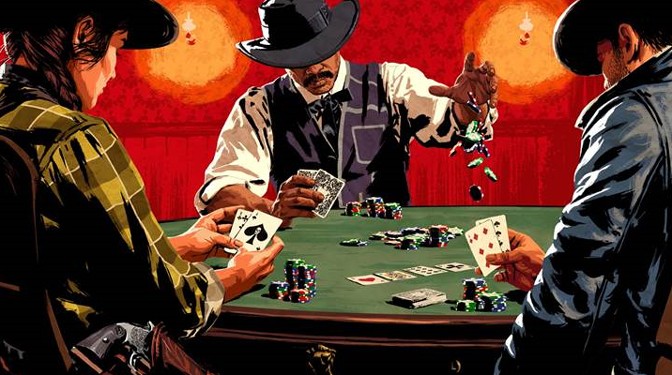 Most open-world games treat minigames as optional distractions. Players of Red Dead Redemption 2 gain access to the minigame after progressing through the story. In Chapter 2, upon completion of the mission “Who Is Not Without Sin”, players can find Arthur Morgan sitting in on poker games at Flatneck Station, Valentine, Blackwater, Saint Denis, and Tumbleweed. Each player is initially dealt two hole cards. There is then a betting round, followed by the community cards in the flop-turn-river sequence, with betting after each.
Beyond the rules of Hold’em, the game employs behavioral AI in an interesting way. Players can learn that an opponent always folds in the face of a bet and use that information to their advantage. In turn, the game rewards players for observing opponents in the same way players of traditional poker do.
In a way, the main story also eventually incorporates the minigame. In Chapter 4, the mission “A Fine Night of Debauchery” uses the outcome of a poker hand to further the progression of the game’s story. It is rare for an open world game to require a minigame for story progression. Rockstar clearly broke from the norm by implementing poker in this way.
The Witcher series takes the fundamental concept of playing cards, and instead of developing that idea further, alters it dramatically. In The Witcher, Geralt plays dice. But, it’s still basically card poker. Five dice are rolled, and players can select which dice to keep and which to discard. After the first round of keepers is determined, the remaining dice are rolled again. Poker hands are evaluated and scoring is done much the same way it is in card poker. Five-of-a-kind hands are possible in this game, which cannot happen in card poker. As in card poker, the best hand wins each round, and the aim is to take two out of three rounds.
While these examples may vary in setting and locale, they achieve the same ends by incorporating card game mechanics in a fantasy setting or a frontier world.
Spin the Wheel: Roulette and Slots Enter the Game World
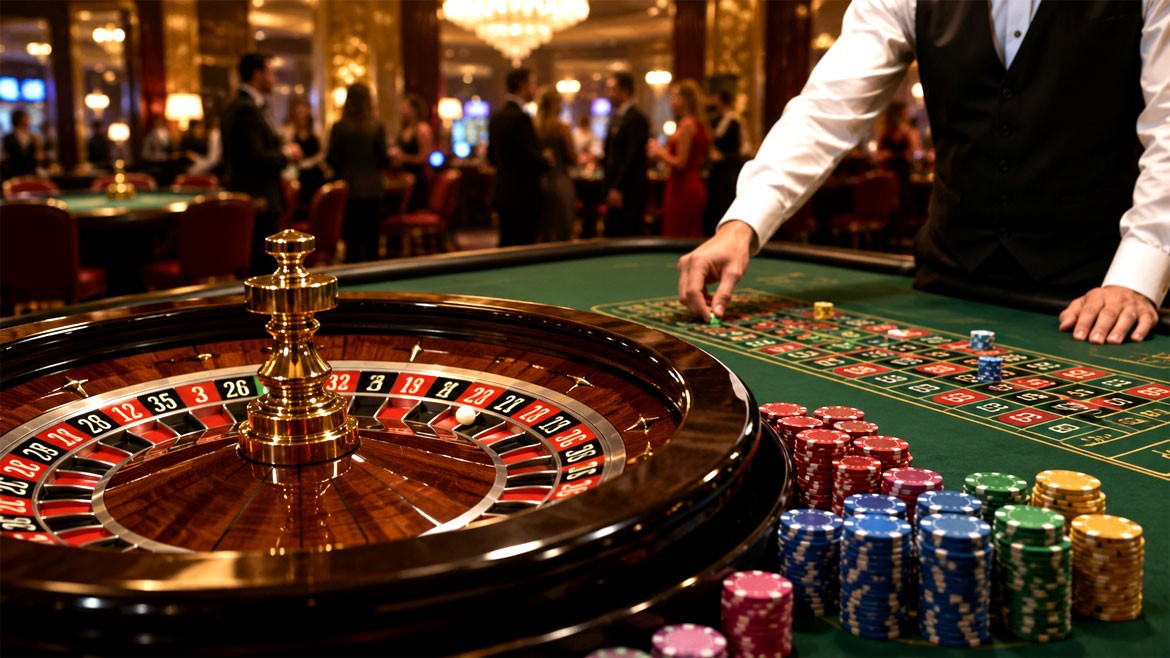 Casino games occupy a prominent position in the Fallout series, and Fallout: New Vegas, in particular, embraces and celebrates the spirit of the casino genre like no other title in the series. Many casino and hotel locations in the game feature working slot machines, roulette wheels and blackjack tables, which reward players with in-game currency.
The slot mechanic is one of the better designs in the game. One of the seven SPECIAL stats is Luck. The Luck stat influences the outcomes of gambling minigames. At a Luck of 7, slots break even. A stat of 10 means a positive expectation from playing slots. The developers could have easily left Luck as flavor text. Instead, they incorporated Luck directly into the game’s stat system.
Rockstar took a different approach with the Diamond Casino & Resort in GTA Online, separating in-game currency from casino chips. Each in-game day a player can exchange up to 20,000 GTA dollars for casino chips (50,000 for Penthouse VIPs). It takes about 48 real-world minutes to simulate an in-game day. The chip economy allows the casino to function similarly to a real-world casino.
Upon opening, the Diamond introduced the Lucky Wheel as a lobby mechanic. Each real-world day players receive 1 free spin. The wheel has 20 equally likely outcomes, each with a 5% chance of landing. Wheel prizes include cash and RP as well as items and the game’s weekly featured vehicle. Players discuss their wheel luck the same way people talk about scratch tickets.
Mahjong, baccarat, cee-lo, blackjack and roulette all make an appearance in the gambling den minigames in Yakuza 0. The mahjong implementation is detailed enough that players have used it to learn the rules. Each game is presented as a separate vignette.
Achievement and Mission Systems Merge
The opposite is true when considering the integration of Achievement and Mission systems. In video games, players complete a mission to advance the story and/or earn an achievement. Online casinos have borrowed this structural framework.
In a typical video game, a player engages in a variety of random encounters or side quests, as they explore the game environment. In an online casino, missions and side quests take the form of daily or weekly challenges. An example of a goal may be to trigger three bonus rounds in online slot games. Players are rewarded for their efforts with bonus spins or credits. Achievements are awarded and maintained in player profiles in much the same way Valve’s achievements are in Steam.
The key is what this layer does and does not modify. Completing a mission has no impact on the outcomes of future spins. The probability of a given event occurring remains the same. That’s a crucial distinction. In a game, items or abilities may be unlocked. Characters may be able to access previously gated areas. In a casino, completing a mission does not alter the games themselves. It rewards the player with a bonus item.
That’s an important distinction for players experienced with achievement systems. Completing a mission does not change the odds of the next spin. The achievement layer is unrelated to the rules governing the games. It provides structure and a broad aim to a player account and is unconcerned with the rules governing individual games.
From a player perspective, it’s like having a goal to accomplish each day. In a game, missions provide a way to redirect and focus a player’s aim. From a design perspective, a game facilitates a player’s perception that each small individual action contributes to a larger cumulative effect and builds toward a greater end.
Using Mechanics in Online Casino Games
 The XP system is one of the most revolutionary inventions in video game design. The concept has mainly focused on rewarding players for continuous effort and entertaining them with a myriad of unlockable content. Online casinos have adopted a similar mechanism to reward player loyalty.
Online casinos have several loyalty programs that award players points for engaging in game play. Points determine a player’s position along a Loyalty track. Advancing along a Loyalty track rewards players with exclusive bonus offers and content.
This design structure is implemented by numerous casinos. Similarity between the design structures employed by casinos and video games does not imply one industry borrows from the other. Loyalty programs and XP bars originate from shared ideas about player engagement and retention. Online casinos incorporate a visual and structural language that players are already familiar with.
Incorporating design structures that reward players with bonus content through ongoing play offers players a sense of progress and achievement.
Mechanics for Rewarding Players for Their Daily Play
The mechanics of daily rewards and streaks are deceptively simple, but very effective at incentivizing player retention.
A daily reward system is the simplest example. Players are incentivized to return daily to collect a reward. Additional complexities can be added. For example, players can collect points towards a reward or a streak counter. These examples all incorporate the core element of a live-service game’s daily challenge.
Adding a streak mechanic allows for the introduction of consequences. If a streak is broken, it resets to zero. These mechanisms allow players to track and build progress within a game.
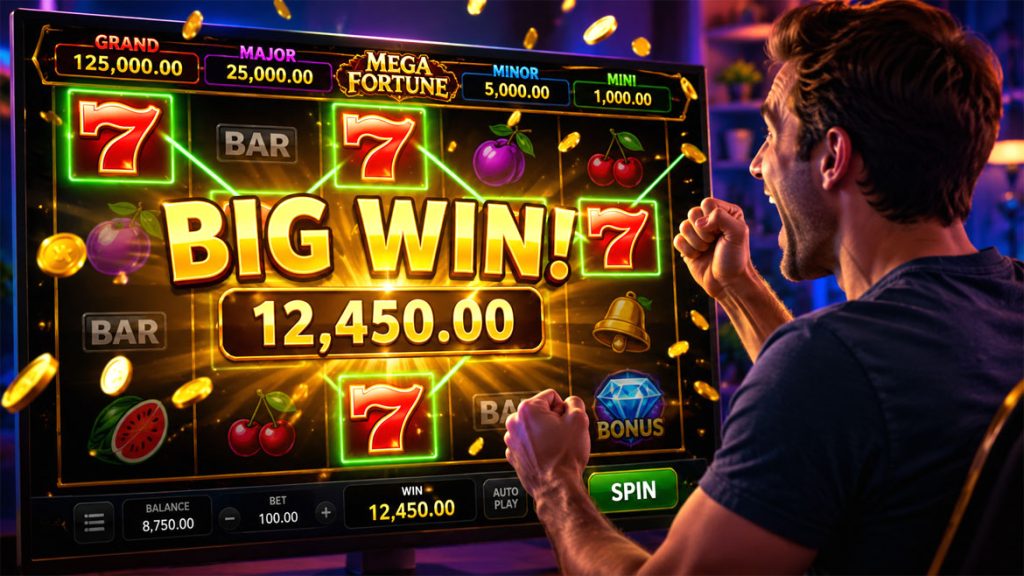
Most importantly, these mechanics provide a sense of progression to a random activity, like spinning the reels of a slot. Such mechanics give players a sense of achievement and reward for investing their time in a game. This is likely why these mechanics have also gained widespread use and popularity in the slot and casino industry. In truth, both industry verticals tackle the same core issue: making a repeated activity feel like it is going somewhere.
Why Are There So Many Crossovers?
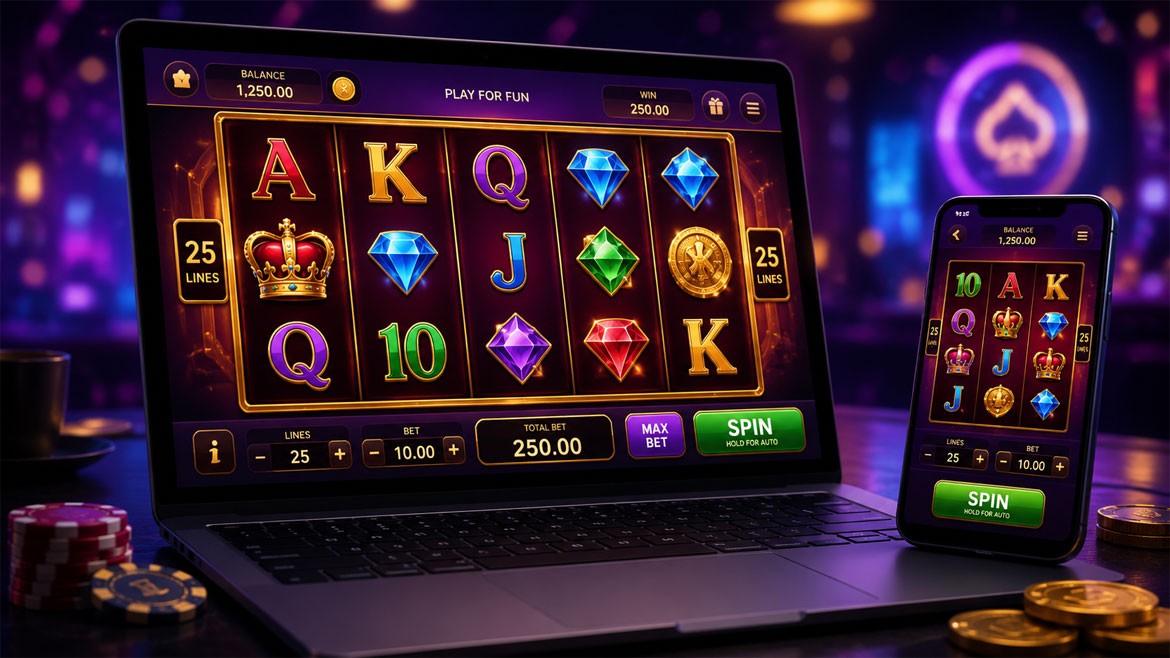 Crossovers occur because both worlds feature a similar framework. In both, a larger goal is broken down into smaller components that can be quickly resolved (e.g. finishing a task in an online game or virtual world, spinning a wheel to reveal a prize, completing a hand of cards). The smaller components are frequently used to reward the player or provide progress toward the larger, overarching goal. These frameworks lend themselves well to XP and leveling systems, which are sought after by players and can easily be translated across media. Poker can be replaced with dice poker or other card or board games. System design can vary widely from one to another, but the logic remains constant. These similar implementations demonstrate creativity in design. Thus, designers can build and reinforce structures that enable players to meaningfully and effectively progress toward goals, and offer rewards along the way.