
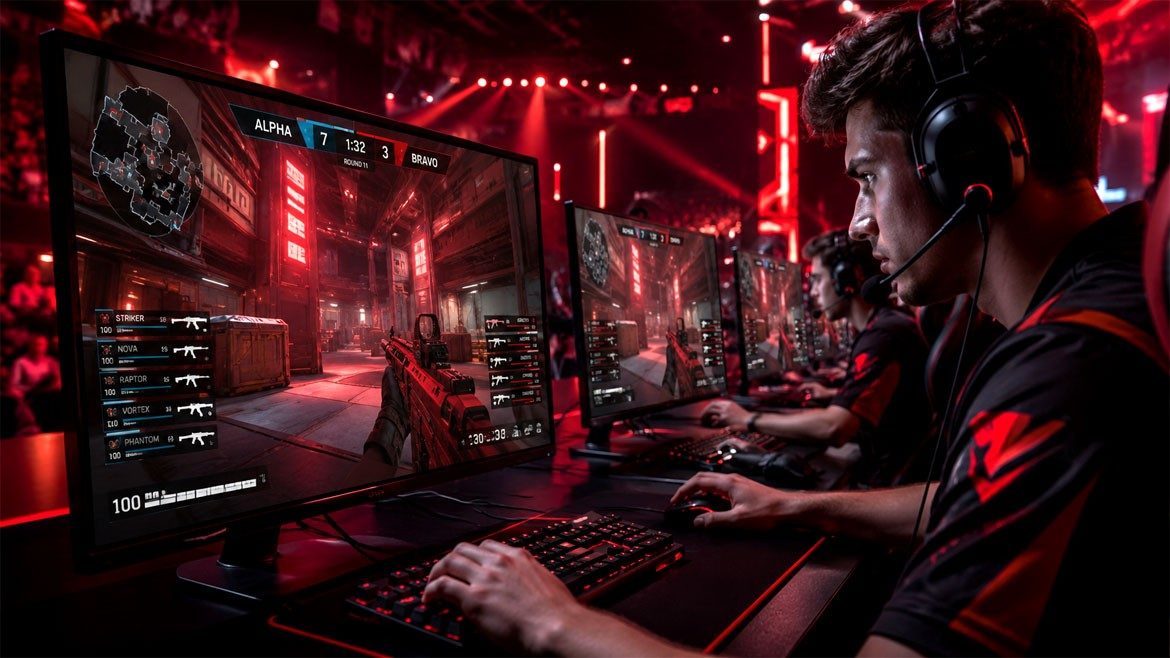
Major finals in Counter-Strike resemble more traditional televised sporting events these days. With things like analyst desks, full venues, trophies with monetary significance, and live audiences that can compete with lower league football finals, CS has levelled up. It’s clear no one in attendance thinks this is niche. It’s a packed venue with slick production and a buzzing odds board. The scene grew up.
This maturity altered the audience and the way they engage. The same people who were reading football or tennis lines are now keeping a League of Legends bracket open on a Sunday, and the concept of Esports bet Ireland, legal betting on a video game, has shifted from novelty to everyday occurrence. The boards next to the Premier League and ATP are also offering betting and in-play prices are changing every round.
The scene stopped being niche
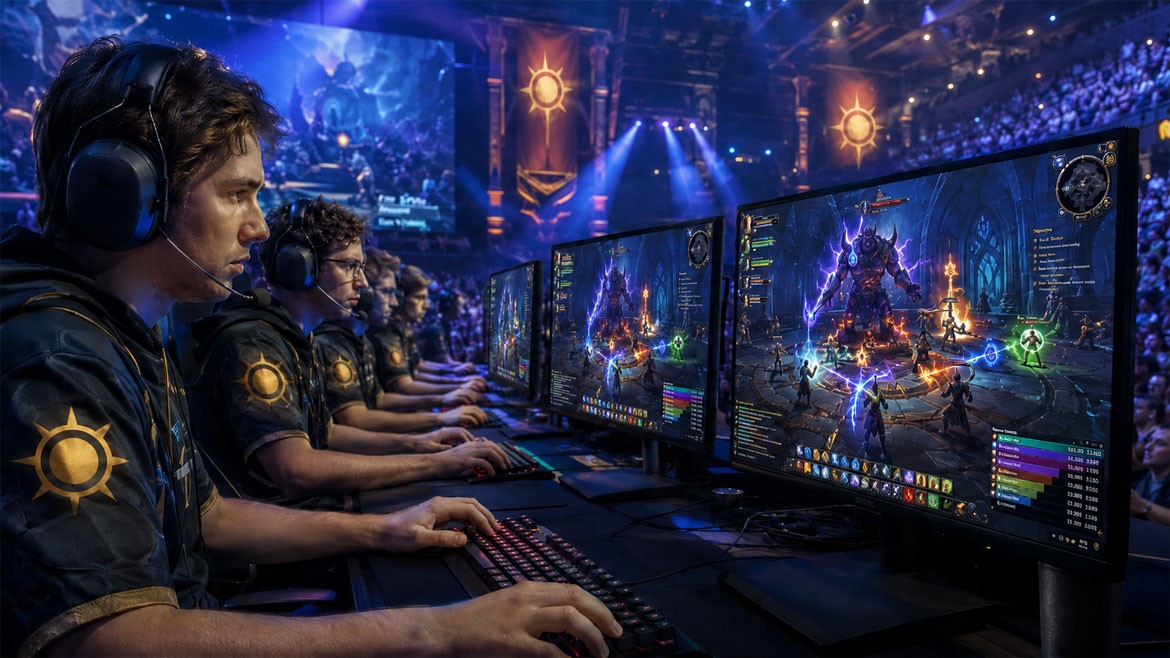 Consider the statistics. In 2021, Dota 2’s The International 10 earned more than 40 million dollars through crowdfunding. This is the largest prize pool in esports history. Most of it went to Team Spirit, an underdog team that qualified. It was incredible. After that, Valve ended the crowdfunded Battle Pass, and the prize pools reduced. This went on to show the scene was maturing beyond the hype period.
The League of Legends World Championships are now a massive awards event for T1 and Faker, as they won Worlds in 2023 and 2024. Their world’s wins have also brought out arena sized crowds, like heavyweight title matches. Counter Strike also came back swinging, as CS2 replaced CS:GO in 2023, and at the first major CS2 event at PGL Copenhagen in 2024, Natus Vincere won the tournament. Combine this with the Riot Games owned Valorant, which launched in 2020 and now has a global VCT circuit, and you have four game ecosystems instead of a basement hobby.
The engagement problem nobody talks about
Admitting this can be challenging, but platforms also know that casual fans can jump in and out as they please. esports fans can get distracted easily. If a team is getting crushed in game one of a best of three series, they can just close the tab and go do something else.
The actual struggle is not having peak view counts, but rather total watch minutes. Twitch and YouTube might have a massive stream for the finals of Valorant Champions, however, they will lose the viewership almost instantly if the match becomes lopsided. People are losing interest quickly, and that is what we call attention. Even the most important metrics on any platform—like retention, return rate, and ad load—are a product of how long you can keep viewers engaged during the slow parts.
Why betting glues people to the screen
 This is where even the smallest bet alters the entire scenario. Put a couple of euro on the underdog through a regulated book like Esports bet Ireland, and suddenly a dead 13-3 map still matters to you. Watch the entire thing and come back tomorrow to check the reading.
Prediction markets can operate without cash as well. An example would be Riot’s own pick’em brackets for Worlds, or free Twitch prediction polls that use a channel point system. They exist because they work. If a person has a stake in the outcome, they remain engaged, participate in chat more, and invite others to join. This engagement is the ultimate goal for any platform and wagering is the most effective means of achieving this.
It didn’t take long for broadcasters to realize this. Live odds overlays, win-probability graphs, and round-winner markets now integrate directly into the stream rather than being listed in separate browser tabs. Betting and broadcasting are merging, and the platforms that are leaning into this the most are the ones engaging audiences the most deeply in a series.
Five things betting brings to esports platforms
Engagement is the headline, but the betting layer does more than that for a platform:
- Extended time spent on the platform is a result of a blowout map creating a motive to continue viewing.
- It engages casual fans more, it creates reason for them to learn the roster, maps, and metas.
- The audience begins to develop second-screen habits and uses the app during breaks in between the matches.
- It creates ongoing engagement throughout the entire year, rather than just a spike during one grand final event in August.
- Sponsorship funds are redirected to leagues, teams, and broadcasts.
The integrity problem is real
 All of this is pointless if the matches are rigged. And esports has a scar here. Match-fixing CS:GO players were arrested in Australia in 2020, and in 2021 the Esports Integrity Commission made the rounds and banned dozens of players in the North American and Australian leagues. Young players, on small salaries, working in tiers that nobody is watching, are an obvious target for a fixer.
The other challenge that exists here is age. This audience skews more young than any other legacy sport, and a Fortnite adjacent audience can’t be directed toward a betting slip. Any mainstream platform will have to age-gate very strictly, verify users that are betting, and enforce it, or they will get shut down, and rightfully so.
Where a regulated market like Ireland fits
Repetition is arguably boring, however ‘regulation’ is interesting to me. A licensed operator must verify age, monitor suspicious betting behavior and report odd ones. This is not red tape; it is what keeps the sport clean enough to survive its own popularity.
The only thing Ireland has done is construct a skeleton. The Gambling Regulation Act 2024 has established the Gambling Regulatory Authority of Ireland, and a licensed Irish operator now exists within those stipulations as opposed to outside them. When you can wager on a CS2 Major via a bookmaker that marks a fixed map and streams a block on a minor, the odds transcend being a threat to the game and become integral to its infrastructure.
The odds are already part of the show
Prize pools alone will not determine the success of esports platforms in the future. Successful platforms will be those that find ways to keep people engaged during the match, even when teams are clearly losing (a.k.a. “keeping them on the edge of their seats”). In this regard, real money in-platform betting with regulated betting laws will likely be the most effective engagement tool.
The scene evolved and so did the screens displaying the numbers. The only real question now is whether the rulebook keeps up, and with the 2024 Act, Ireland just showed one way it can.