

When VR really started becoming popular, there were many of us in the iGaming space who thought it would revolutionize the market.
One of the only things holding online casinos back – if any – is that they’re less immersive compared to traditional brick-and-mortar casinos.
Live dealers and high-quality graphics have helped to change that, but platforms are still limited to what they can offer players on a mobile screen.
VR has the potential to blur the lines between physical and digital gameplay, making players feel like they’re really at a casino table even if they’re playing from their own homes.
It’s 2026, however, and VR has failed to become widely implemented in online casinos. So, what’s gone wrong?
The Problem With VR
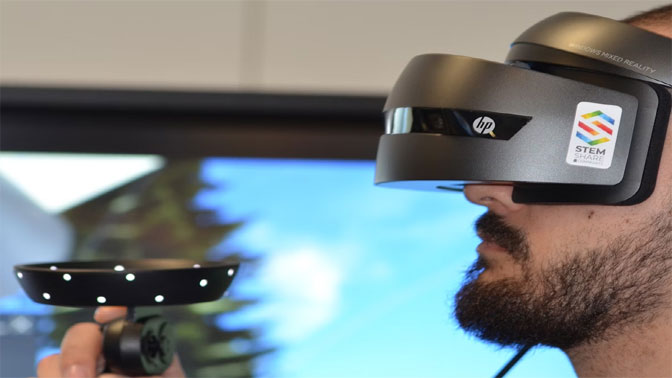 Well, nothing’s gone wrong per se, it’s just a question of technology and expense. VR is a complicated technology. It works by using headsets to track a player’s head and hand movements through sensors and controllers, then rendering a fully immersive 3D environment in real time.
This requires extremely powerful software high-end hardware components – the best modern VR headsets include high-resolution OLED or LCD displays for each eye, precise motion sensors, gyroscopes, accelerometers, and more, all of which are costly to produce and integrate.
Not to mention, most headsets either contain their own built-in processors or require a high-performance PC or console to run smoothly, and this only adds to the total costs.
For this reason, many VR headsets are simply out of the price range of the average consumer, and therefore adoption is low despite the technology being so revolutionary.
Earlier last year, for instance, global VR headset shipments fell by 17%, with an average standalone headset now costing between $300 and $1000.
That’s a clear insight into how the consumer barrier is holding back mass adoption, and so it goes without saying as to why VR is still not widely implemented in the casino space.
The Problem for Online Casinos
 We’ll say it anyway, though. With consumer demand low and VR costs remaining high, many online platforms don’t yet see the value in investing heavily in VR offerings.
It’s expensive for them too, of course. To create one VR-friendly game, developers must model and animate every element in full 3D, including tables, cards, slot machines, and other interactive environments.
They’d also need to program realistic physics and responsive interactions so that player movements are accurately reflected in the game, and on top of that, optimize the game engine and graphics to run smoothly on multiple VR platforms.
In short, developing a single VR game can cost tens or even hundreds of thousands of dollars, which is why only platforms with substantial budgets can justify VR content at scale – although, even then, many of them keep the number of VR titles limited due to uncertainty around consumer adoption.
Whether that uncertainty will remain is another story. Oftentimes, expensive, innovative tech like this starts relatively inaccessible before gradually becoming more affordable. But for now, VR remains a niche segment of the market, not a mainstream one.