

Video games might seem a world away from traditional board games. One takes place on a screen, often with elaborate graphics, soundtracks and online multiplayer, while the other might involve little more than a board, some cards and a handful of pieces. Yet many mechanics found in modern video games have much older roots in tabletop gaming.
Some of these same principles can also be found in online casino gaming, showing that the boundaries between different forms of gaming are not always as clear as they might seem.
Dice rolls became digital randomness
 Chance has always been an important part of tabletop gaming. Rolling a die can determine whether a carefully considered plan succeeds or fails, adding uncertainty that forces players to adapt.
Video games have taken this idea and made it invisible. Instead of physically throwing dice, players encounter random number generation behind the scenes. A weapon might deal a randomly selected amount of damage, an enemy might drop a rare item, or an unexpected event might change the course of a playthrough.
Role-playing games make particularly heavy use of randomness. Critical hits, loot drops and random encounters can make familiar gameplay feel different from one session to the next.
Chance is also fundamental to casino gaming. Online casino platforms use random outcomes in games such as slots, roulette and digital versions of traditional card games. Players exploring Norske Casinoer, for example, encounter a different application of the same basic idea: an outcome contains an element that can’t be completely predicted in advance.
The mechanics and purpose are different, but the appeal of uncertainty is something that has existed across gaming formats for centuries.
Turn-based gameplay has tabletop roots
The turn is another mechanic that existed long before video games. Board games need a clear structure to determine who acts and when, especially when several players are competing for the same resources or territory.
Video games adopted this system through turn-based strategy games and RPGs. Civilization, for example, allows players to carefully consider their next move before handing control to their opponents or the computer.
Card and casino games have also traditionally relied on structured turns. Poker and blackjack, for example, require players to make decisions within a defined sequence, even though the pace and rules differ from those of a traditional board game.
Computers have made turn-based gameplay considerably more sophisticated. Instead of players manually tracking health, status effects and other variables, the game can calculate everything automatically.
Resource management created meaningful choices
Board games frequently revolve around deciding how to use limited resources. Players might collect money, gather materials, control territory or decide whether to spend a valuable card now or save it for later.
Video games have adopted this principle in countless ways. In Civilization, players balance resources while developing cities and expanding their civilizations. Survival games might require players to manage food, materials and equipment, while strategy games can make success dependent on spending resources efficiently.
Risk and reward are also central to many other types of games. A player might gamble resources on a risky move in a board game, take a chance on an attack in a video game or place a wager in an online casino.
The mechanics aren’t identical, but the underlying decision is familiar: how much are you willing to risk for the possibility of a better outcome?
Tabletop RPGs shaped digital characters
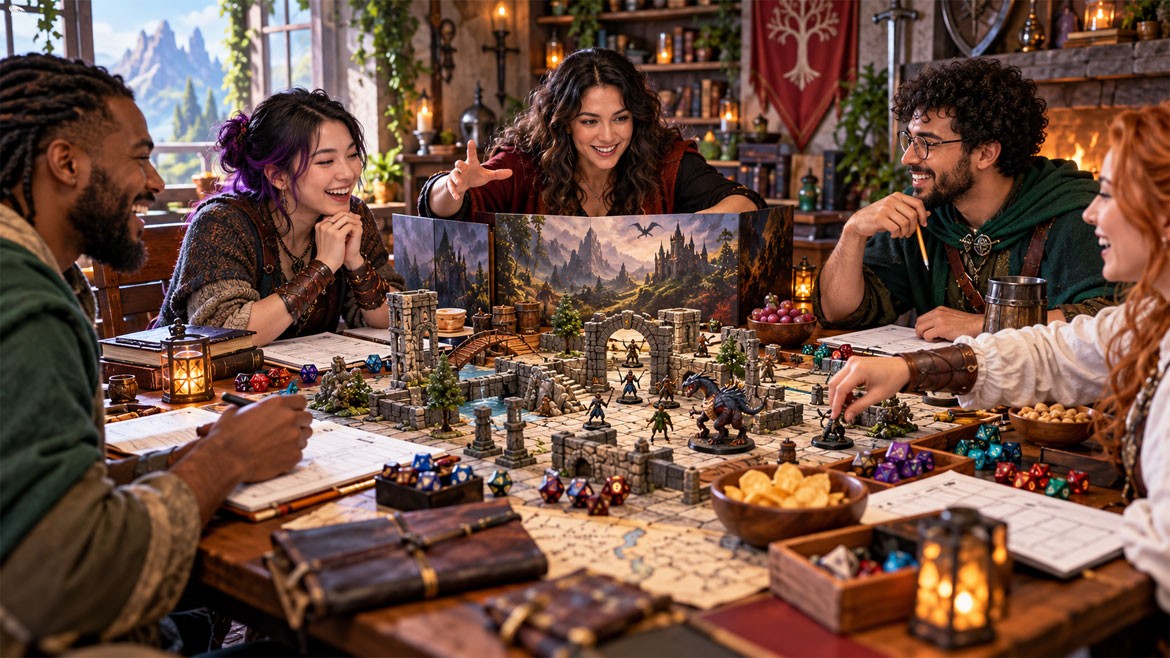 The influence of tabletop role-playing games becomes even clearer in modern RPGs.
Players are accustomed to choosing character classes, improving statistics and earning experience points. Strength, intelligence, dexterity, health points, armor and abilities are all standard parts of the genre.
Much of this language has roots in tabletop RPGs, particularly Dungeons & Dragons. The game helped establish conventions that would later become familiar to video game players.
Digital RPGs could then take these ideas further. A computer can automatically calculate damage, apply modifiers, and track character progression without requiring players to keep records themselves.
Casino games have taken a different approach to progression and rewards. Rather than developing a character, players might encounter bonuses, promotions or loyalty systems designed to encourage continued interaction. Again, the mechanics have different purposes, but both demonstrate how gaming experiences can be structured around anticipation and reward.
Card games made the leap to digital
Cards are another tabletop feature that has been transformed by video games.
Digital games can use cards as attacks, abilities, collectibles or resources. Players might build a deck, manage a limited hand or look for combinations between different cards.
Games like Slay the Spire have made deck building central to the experience, while Inscryption combines card mechanics with a much broader adventure. Balatro has similarly demonstrated how familiar card-game concepts can become something different.
Online casinos have also brought traditional card games into digital environments, allowing games such as blackjack and poker to be played without a physical deck or table. The computer handles the dealing, calculations, and other practical elements, leaving players to focus on their decisions.
Gaming has always borrowed ideas
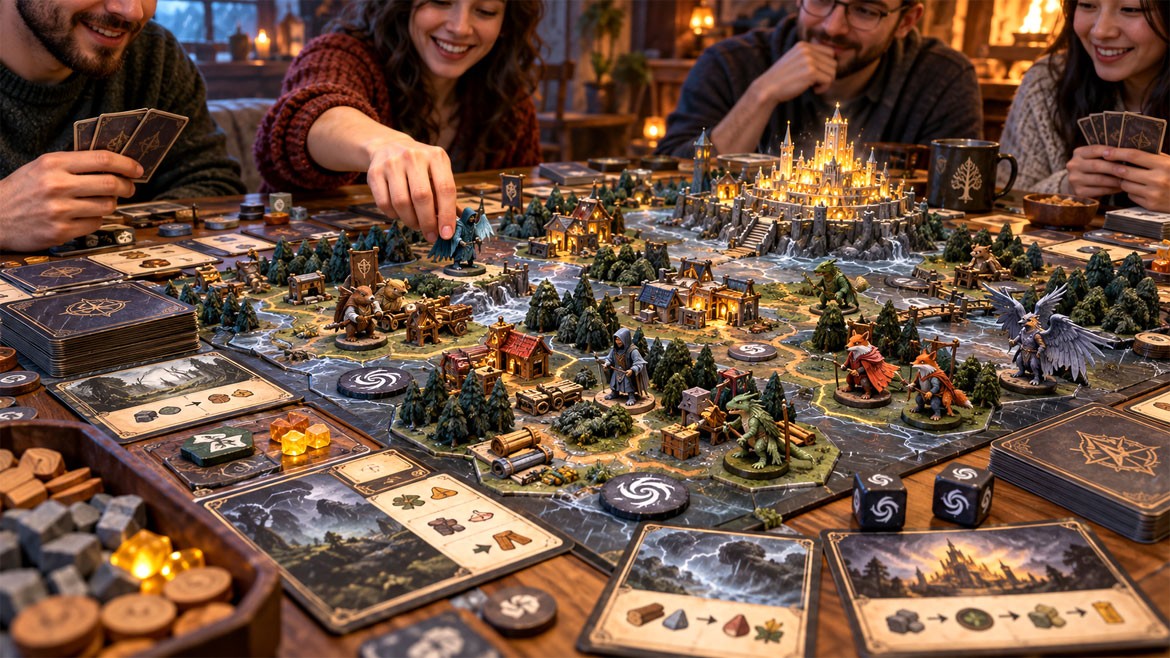 Board games, video games and casino gaming have all adapted familiar ideas around chance, risk and rewards. Video games have simply used technology to make these mechanics more complex and immersive.
The next time a game asks you to take a risk or leave an outcome to chance, there might be more tabletop history behind it than you realize.