
Maps are polite. Quest markers are efficient. Yet a strange thing happens when a game removes them: players slow down, argue with the screen, take wrong turns, and remember the night better. The Joy of Getting Lost: Why Players Still Love Games That Don’t Tell Them Where to Go is tied to that memory-making mess. A bright arrow can finish a task, but a half-seen tower beyond a swamp invites a story. Even outside adventure games, choice-heavy spaces attract people. Players read tables, compare licenses, and follow hunches in much the same way; casino comparison sites sort casinos, including platforms accessible in Hungary for an expert checking rules before play. The same pull shows up elsewhere. Wishking casino advertises More than 4000 games inside its casino online lobby, yet the fun still depends on curiosity, small risks, and the pleasure of picking a door without a perfect hint.
Blank spaces make better stories
An unmarked path gives the player room to be wrong. That matters. In The Legend of Zelda: Breath of the Wild, the Great Plateau works because it teaches with smoke columns, cold air, and cliffs, not with a blinking line. Elden Ring does something rougher. A golden ray points in a broad direction, then leaves the player to meet a giant crab, a locked lift, or a cave full of wolves. Those detours become personal proof. One player remembers finding Siofra River by accident at 1 a.m.; another remembers dying to skeletons for twenty minutes and laughing. A marker would have made both stories shorter. Worse, flatter. Getting lost lets the mind stitch places together. The bridge is near the red tree. The merchant sits after the broken cart. The shortcut feels earned because nobody announced it.
The brain likes a half-open door
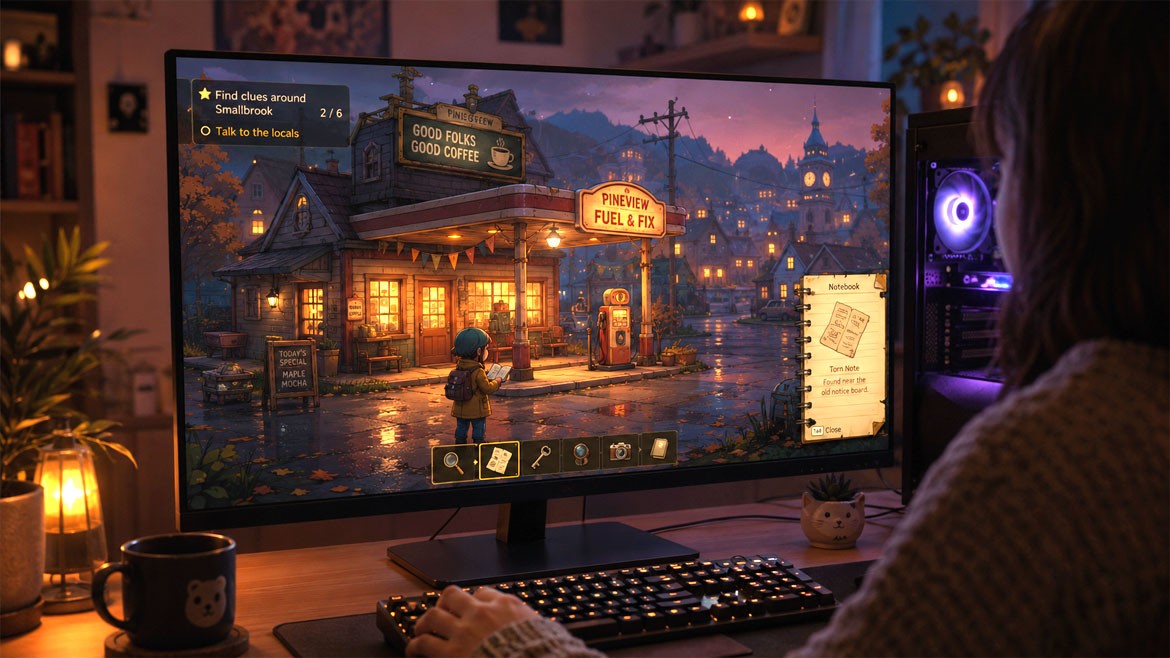 Clear instructions reduce friction, but they also reduce attention. Give a player a dot on a mini-map and the eyes keep checking that dot. Remove it, and the whole screen wakes up. Footprints in mud, the shape of a roof, a sound behind a wall. Tiny clues turn into decisions.
This is why Morrowind still gets praised by people who forgive its dicey sword swings. Directions sound like something a tired local would say: go north past the silt strider, turn near the old bridge, watch for a cave by the coast. The player listens, then doubts the memory. Good.
Confusion needs limits, though. A game that hides everything becomes homework. Outer Wilds lands the balance because each planet gives clear physical rules. The player is lost, but not abandoned. There is always a rumor log, a visible moon, or a busted ship part saying, try over there next.
Old-school friction still has teeth
Older games were not always noble about this. Some were short, so they stretched playtime with fake walls, obtuse keys, and maze screens that looked almost identical. Anyone who mapped Phantasy Star on graph paper knows the pain. Still, that friction trained a different posture.
The player kept notes. Real notes. A password in a notebook, a skull-shaped rock drawn in blue pen, a reminder that the shop in the third town sells fire boots after midnight. Those scraps made the game bleed into the room.
Modern designers borrow that feeling without copying every annoyance. Tunic hides language in plain sight and trusts players to read symbols slowly. Return of the Obra Dinn gives a ship, a pocket watch, and a list of names, then asks the player to think like a nosy clerk with all afternoon free. No arrow could replace that click in the head.
How studios keep mystery fair
 Fair mystery is built, not sprinkled on top. The best games teach their visual grammar early. Yellow paint on climbable ledges gets mocked, but readable stone cracks, repeated lantern colors, or enemy camps placed near roads do the same job with less shouting. Subnautica uses depth, oxygen, and fear as signs. If the player cannot survive a trench yet, the game says so through panic, not a pop-up lecture.
Good maps also leave blanks. Hollow Knight marks benches and stations, but it lets corridors twist until the player forms a private mental version of Hallownest. The map is a partner, not a boss.
The trick is respect. Players accept being lost when the world answers their attention. They reject it when doors need random keys, clues look like wallpaper, or failure costs forty dull minutes. Small rewards matter too: a shortcut, a weird statue, or one line of dialogue nobody else mentions nearby. A simple test helps: after a wrong turn, did the player learn a place, a rule, or a joke? If yes, leave the fog in.