

Someone on a Souls-like Discord I lurk in spent four hours farming the same Crucible Knight last week. Four hours. For a talisman with a base drop rate low enough to make a statistician wince. They got it on attempt number 61, posted a screenshot, and got 200 replies within the hour. That’s not an outlier. That’s just Tuesday for anyone who’s spent real time in FromSoftware’s ecosystem.
Elden Ring: Tarnished Edition landed on Switch 2 last month bundled with Shadow of the Erdtree, and gamers noted something interesting beyond the frame rate improvements. The port didn’t touch the drop tables. Same grind, same odds, same 61-attempt farming sessions, just on a screen you can play in bed now. Other games backed this up too, with critics largely agreeing the hardware jump didn’t change the fundamental itemization design at all. Good. Because that design is worth understanding on its own terms.
Here’s the thing about loot tables. They’re not mysterious. They’re spreadsheets with weighted percentages, dressed up in fog gates and boss music. And once you understand how they work, you start seeing the same math everywhere else in the industry, including places that have nothing to do with swords.
What’s Actually Happening When a Boss Drops (Or Doesn’t)
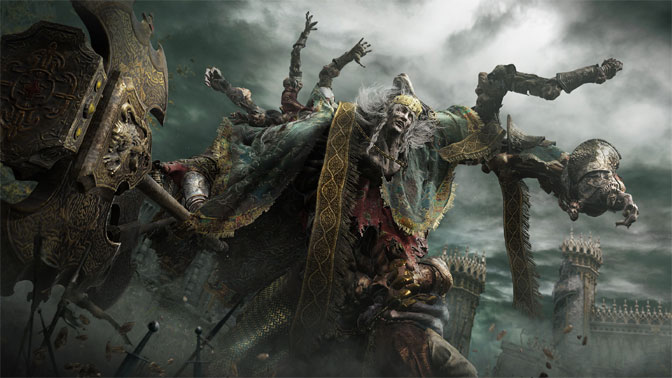 Every enemy in Elden Ring carries an invisible loot table. Not a single item, a list. Each entry on that list has a weight, and the game rolls against those weights every time the enemy dies. A Crucible Knight might have common upgrade materials at a 40% weight, a rare bell bearing at 3%, and a talisman sitting somewhere around 1-2%.
Game Developer’s breakdown of loot table design explains why studios build it this way instead of just guaranteeing rare drops on a timer. Guaranteed drops kill tension. Random ones with proper weighting create what designers call variable ratio reinforcement, the same psychological hook that makes slot machines and gacha pulls addictive in completely different genres. You don’t know when the good thing happens. You just know it can. That uncertainty is the entire engine.
Miyazaki’s team didn’t invent this. Diablo popularized loot tables for the ARPG genre back in 1996, and every dungeon crawler since has iterated on the same core formula: kill something, roll dice, hope. What Elden Ring changed was scale. Open-world density means thousands of these rolls happen per playthrough, across hundreds of enemy types, each with its own table.
The Math Behind “I’ve Killed This Thing 40 Times”
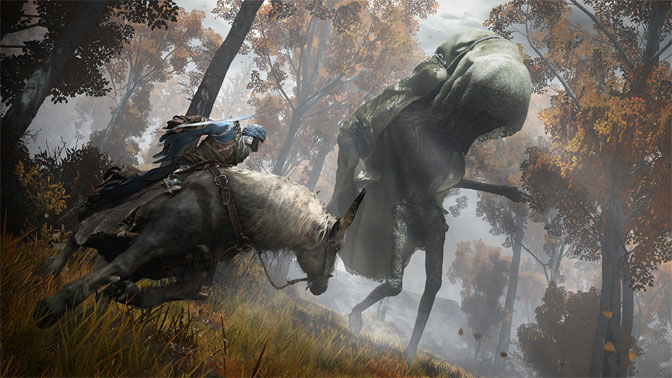 A 2% drop chance sounds small. It isn’t nothing though. Run the numbers across 40 kills and you land around an 55% cumulative chance of having seen the drop at least once, using the standard 1 minus (0.98 to the 40th power) formula that governs independent probability events.
Most players don’t do that math mid-grind. They just feel cursed. One analysis of the drop rate psychology gets into exactly this gap between the actual math and the felt experience, and it’s a genuinely underrated read if you’ve ever wondered why your friend swears an item is “bugged” when the drop table says otherwise.
Small numbers feel bigger when you’re staring at them for the 47th time. That’s not superstition. That’s how human pattern recognition works under repeated near-misses.
Independent technical writer James Watkins ran simulations on exactly this kind of grind math, and his analysis of item drop probability shows how quickly cumulative odds diverge from what players intuitively expect. Nobody’s brain is wired to naturally compute compounding probability. We’re wired to notice streaks and blame the dice.
This is also where jackpot-tier design comes in, and it’s worth naming directly: Elden Ring’s rarest bell bearings and the biggest prize tiers in a slot machine’s paytable are governed by structurally identical math. Both use weighted random number generation. Both rely on rare, high-value outcomes sitting at the tail end of a probability curve to keep engagement high across thousands of attempts. The dragon-hunter’s bardiche and a five-of-a-kind jackpot symbol are, mathematically, cousins.
That overlap isn’t hidden from anyone who’s spent time in either community. Soulslike players increasingly demand transparency on drop weights, and speedrun communities have reverse-engineered entire loot tables from game files just to settle Discord arguments. Gamblers do the same thing, except the stakes involve actual money instead of a talisman, which raises the bar on how much that transparency actually matters. When real currency is on the line, players researching everything about the best online casinos tend to prioritize published return-to-player percentages and audited RNG certifications before they ever click deposit, because a vague loot table is an inconvenience in a video game, but it’s a red flag in a payout system. Worth a quick note here too: gambling carries real financial risk in a way loot farming doesn’t, so anyone exploring that side of things should only ever wager what they can genuinely afford to lose.
Boss Loot Versus Slot Paytables: The Actual Difference
The comparison isn’t perfect, and it’s worth being honest about where it breaks down. Elden Ring’s drop tables are static. Once a data miner extracts them, the numbers are public and permanent. Slot machine RTP figures get published too, usually somewhere between 92% and 98% depending on jurisdiction, but the underlying RNG seed and math model live behind closed doors in a way no Soulslike ever bothers hiding.
There’s also no financial stake in farming a Crucible Knight. You lose time. That’s real, but it’s not your rent money. This distinction matters more than it sounds like it should.
Both systems share one design truth though: variance is the point, not a flaw. A loot table with 100% drop rates isn’t a loot table, it’s a checklist. A slot machine that pays out predictably isn’t gambling, it’s a vending machine. The tension between “probably not this time” and “but maybe” is the actual product being sold, whether you’re farming Limgrave or spinning reels.
Why Drop-Rate Transparency Became a Community Obsession
Go back five years and most players just accepted whatever a game told them, or didn’t tell them, about drop rates. That’s changed. FromSoftware doesn’t officially publish percentages, so the community built its own infrastructure: spreadsheets, wikis, mod-extracted data, YouTube breakdowns with frame-by-frame kill counts.
Game Developer’s probability guide for designers points out something designers already know but rarely say out loud. Players don’t actually hate randomness. They hate randomness they can’t verify. A 1% drop rate that’s clearly labeled 1% generates far less frustration than an unlabeled drop that feels arbitrary, even if the second one is statistically more generous.
That single insight explains a lot of modern game design decisions, from Warzone’s loot pool transparency patches to Genshin Impact’s pity system disclosures. Players want the house rules published. Not because the odds need to be good. Because the odds need to be known.
FAQ: Loot Tables, RNG and Drop Rate Math
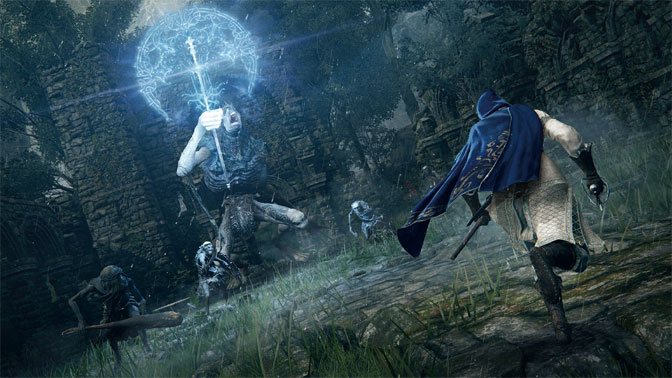 Does Elden Ring: Tarnished Edition change any drop rates from the original PC/console versions? No. Based on data mining and community testing since the Switch 2 launch, drop tables carried over unchanged from the base game and Shadow of the Erdtree DLC. The port focused on frame rate and resolution, not itemization balance.
Why does a 2% drop rate feel so much rarer than it should? Human brains struggle with compounding probability. A 2% chance still fails 98% of the time on any given try, so long unlucky streaks feel statistically wrong even when they’re completely normal within expected variance.
What’s the difference between a loot table and a simple random drop? A loot table assigns different weights to multiple possible items on one roll, while a simple random drop is usually a single item with a flat percentage. Most modern RPGs use weighted tables because they allow finer control over rarity tiers.
Do speedrunners actually know the exact drop percentages in Elden Ring? Mostly yes, through file extraction and large-scale community testing across thousands of kills. FromSoftware hasn’t officially confirmed every number, but community-sourced spreadsheets have proven accurate against extracted game data repeatedly.
Is RNG in video games the same math as RNG in gambling software? The underlying concept, pseudorandom number generation seeded by an algorithm, is similar. The regulatory requirements differ sharply though, since licensed gambling RNG must pass independent audits that game-loot RNG never has to undergo.
The Grind Was Always the Point
That Discord farmer who finally got their talisman on kill 61 wasn’t unlucky in any meaningful sense. They were living out exactly what a well-tuned loot table is designed to produce: enough near-misses to keep pulling the lever, and just enough payoff to make the next 60 attempts feel worth it. FromSoftware understood this before most of the industry caught up, and the Switch 2 port proves they saw no reason to touch a formula that’s kept players farming for over a decade.
Understanding the math behind that grind doesn’t ruin the magic. If anything, watching the curtain and still wanting to pull the lever anyway says more about good design than bad luck ever could.