
By: Megan Curtin
For many, comic conventions, fan expos, and pop culture gatherings are vibrant, exciting escapes, a chance to celebrate shared passions and connect with communities. For attendees with disabilities, those same spaces can also require careful planning, creative problem-solving, and a lot of invisible effort just to move through the day.
I have attended AwesomeCon on and off (mostly on) since 2017. AwesomeCon 2025 was my first year attending the Con as a mobility aid user, and 2026 was my first year attending as a disabled member of the Press. The transition from being a non-disabled attendee to a disabled one fundamentally changes the convention experience. Simple actions like navigating crowded aisles, waiting in long lines, or locating an accessible restroom become complicated logistical puzzles that can drain energy before the fun even begins.
What has shifted for me in the past few years is not just how I move through the space, but how I see it. I now notice where organizers shine, where fellow attendees step up, and where a few thoughtful changes could make the entire weekend more welcoming for everyone.
The Accessibility Gauntlet: Entrances and Queuing
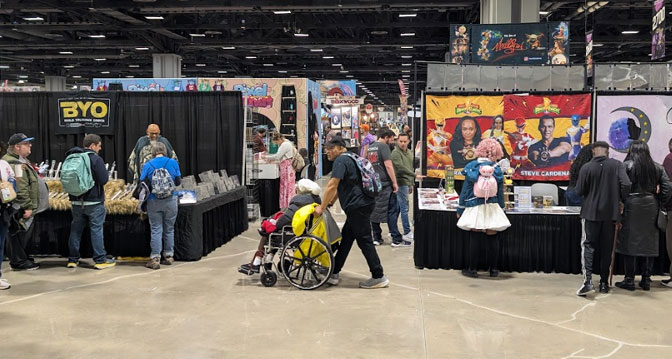 The most critical element for many disabled attendees is the accessible entrance and queuing system, and this is something AwesomeCon planners handle with care and intention. The convention offers a separate, clearly marked entrance for attendees with mobility challenges that shortens the walk and reduces the stress of fighting through crowds at the very start of the day. Once inside, the Accessibility/Mobility Aid Pick Up Room is located directly in front of you, impossible to miss and staffed by people who genuinely know what they are doing.
The staff in this area consistently impressed me. They are well-versed in the procedures for picking up rented equipment, ready to explain elevator policies, and willing to answer questions without haste or impatience. They also explain that elevator access is intended for those with Accessibility or Companion wristbands and for attendees with strollers, which shows that the planning is there even when enforcement is uneven.
AwesomeCon’s inclusive queuing plan for celebrity interactions in the Exhibit Hall is more of a work in progress. There are separate autograph and photo lines for attendees with disabilities, which is important and appreciated, but these lines can be difficult for those using larger mobility aids like electric scooters or wheelchairs because the paths are tight. Options such as Return Time wristbands and seating areas for those unable to stand in line are available and thoughtfully designed, yet several Con-goers I spoke with mentioned that seating is limited, sometimes taken by non-ADA wristband holders, or they are inconsistently managed by staff who interpret the rules differently.
On the Exhibit Hall floor, ADA seating is sparse, but many non-disabled attendees are mindful about making space when they see a mobility aid user trying to get through a crowded vendor aisle. I did have several children and teens dart in front of my mobility aid, including a few solid bumps, but in such a high-energy environment it is hard to be upset with excited kids racing between booths. Clearer pathways and more visible ADA rest zones would support both safety and enjoyment here without dampening the enthusiasm that makes the vendor area so fun.
Panels, Events, and Seeing the Stage
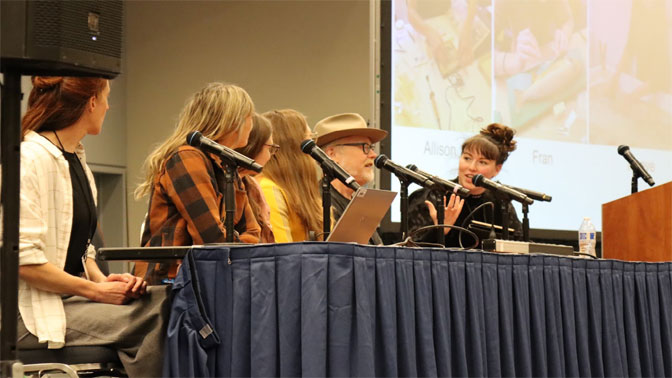 AwesomeCon invests real effort into making panels and scheduled events welcoming to disabled attendees. ASL interpreters are present during Main Stage panels, and a team approach ensures that no single interpreter is overworked. For smaller panels and experiences, interpreters can be arranged on a first-come, first-served basis through the Accessibility Desk, which gives Deaf and hard-of-hearing attendees more flexibility in planning their day.
ADA reserved seating is available in multiple sections of the staging area. In practice, though, some of these seats end up partially obstructed or difficult to reach with mobility aids due to the way ticketing and seating layouts intersect. What stood out to me this year was not just the initial layout, but how quickly AwesomeCon staff responded when they realized something wasn’t working.
When it became apparent that ASL interpreters were positioned too far from attendees with hearing impairments, organizers relocated both the interpreters and the reserved ASL seating closer to the front of the stage. That change was made in real time, during the event, which speaks volumes about their willingness to listen and adjust. I also deeply appreciated the effort from Sue and the Press team to make sure I had clear visual access to the stage as a mobility aid–using member of the Press, rather than treating accessibility as an afterthought.
These moments reinforce that accessibility is not a one-time checklist item. It is an ongoing conversation that grows stronger when disabled attendees are seen, heard, and included in the solutions.
Finding Calm: Sensory and Quiet Spaces
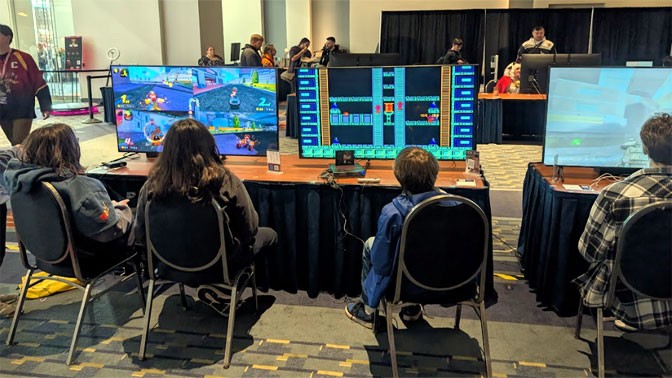 For attendees with autism, chronic migraines, epilepsy, or other sensory processing needs, a convention’s main floor could possibly quickly tip from exciting to overwhelming. The noise, lights, crowds, and constant motion can at times push the body and brain past their limits, no matter how much you want to stay and enjoy the programming.
AwesomeCon is working to meet this need. A Quiet Room is located near the Accessibility Desk and serves as a retreat for anyone needing a sensory break. Having a designated, low-stimulus environment is not just nice-to-have; it can be essential for health, safety, and the ability to continue participating in the event. It would be wonderful to see future expansions of this concept, such as quieter spaces closer to the Exhibit Hall, but the foundation that exists today is meaningful and appreciated.
Addressing the Difference Between Accessibility and Inclusion
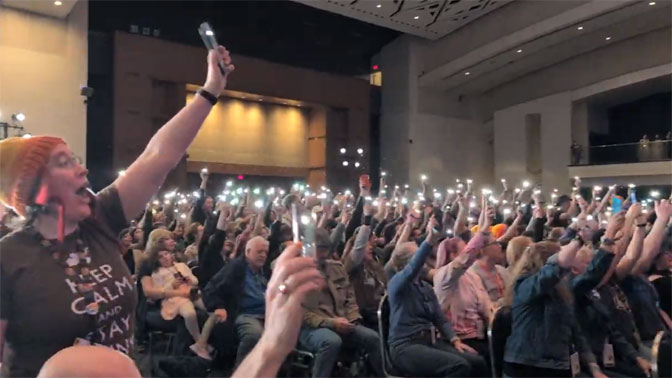 Achieving genuine inclusivity requires more than ramps and elevators; it requires seeing disabled attendees as full participants whose experiences and perspectives shape the event. Many conventions meet the legal baseline of ADA compliance, but the most memorable and welcoming ones treat accessibility as a core value. From conversations with other disabled Con-goers, it is clear that AwesomeCon is on this path and that a few targeted improvements could elevate the experience even further.
One powerful step would be forming a dedicated Accessibility Advisory Committee made up of disabled attendees, vendors, and members of the press. This group could provide lived-experience feedback during planning long before the doors open. Input from people who navigate these spaces in wheelchairs, on scooters, with hearing impairments, or with sensory needs will always be more precise and nuanced than any checklist.
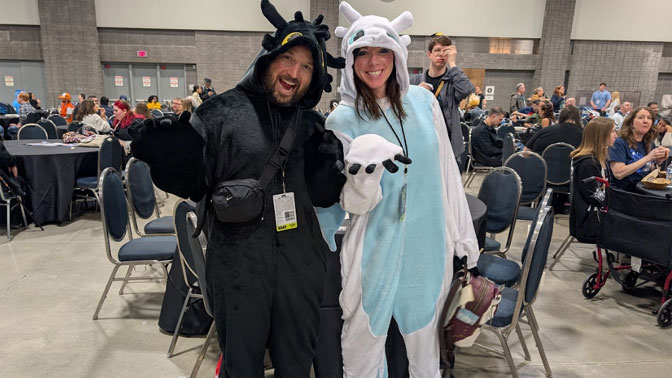 Accessible seating is another area where small changes could have a big impact. Ensuring clearly marked, unobstructed seating areas for wheelchair users and others with mobility needs (and planning paths that do not require risky maneuvering) would reduce anxiety and physical strain. For those using powered mobility aids, easy access to electrical outlets for charging devices during long days of panels and events would be transformative. Additional ADA wristband–only seating in the Exhibit Hall and vendor areas would also support attendees who cannot stand for prolonged periods or who need a brief rest without leaving the action entirely.
Elevator access deserves continued attention. AwesomeCon’s Accessibility site indicates that elevators are reserved for Accessibility or Companion wristband holders and attendees with strollers, yet there was no on-site signage reflecting this policy, and enforcement appeared inconsistent. Lines for elevators were long and frequently crowded with non-ADA wristband wearers, which many mobility aid users cited as a major frustration. Additionally, the elevator doors closed very quickly, making it difficult for mobility aid users to enter and exit safely and that contributed to bottlenecks and missed rides. Partnering with venue and vendor teams to adjust timing and signage could significantly improve every disabled attendee’s day.
 Another promising idea is scheduled low-sensory hours. Some conventions open the Exhibit Hall early with reduced noise and crowds, creating a calmer environment for sensory-sensitive attendees. For mobility aid users, that same quieter window can mean easier navigation, fewer blocked aisles, and a better chance to interact with vendors without fear of being jostled or stuck. It is a simple adjustment that communicates: you belong here, and your comfort matters.
A Different Perspective: Why This All Matters
I have been attending AwesomeCon for over a decade, long enough to see it grow, change, and slowly become more deliberate about accessibility. The shift from attending as a non-disabled fan to attending as a disabled mobility aid user, and then as a disabled member of the Press has been profound. It could have made the convention feel smaller, more limiting, or less joyful. Instead, thanks to the work of the Accessibility team, supportive staff, and fellow attendees who step aside or offer help, it remains a space I genuinely look forward to returning to each year.
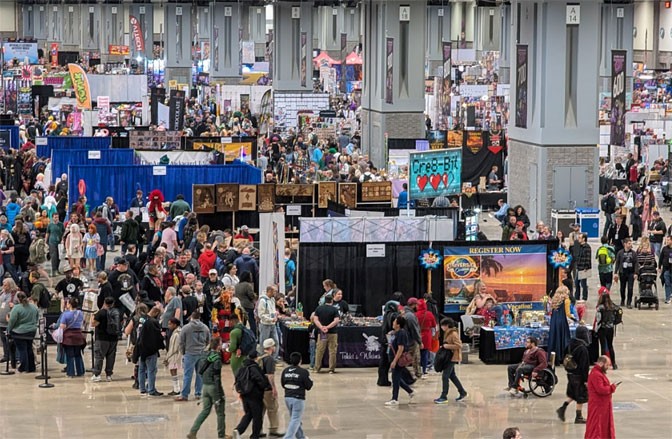 The transition into disability is rarely easy. There is grief for the way things used to be, and there is real work involved in learning how to participate in the world differently. Conventions like AwesomeCon become a kind of measuring stick: do I still get to be part of this world I love? Am I welcomed, or merely accommodated? When I collected my press badge and navigated the convention floor and realized that I still belong in this narrative and could still be part of the story here, I felt the scale tipping decidedly toward being welcomed.
I applaud the strides AwesomeCon’s planners have made in addressing the needs of disabled attendees, and I am hopeful about where they can go next. The Accessibility team is warm, engaged, and clearly committed, and I appreciate their efforts more than they probably know. With thoughtful tweaks and the voices of disabled fans woven into planning, AwesomeCon can keep evolving into a place where accessibility and inclusion are not special features, but the standard everyone expects.
Special thanks to the members of the disability community who generously shared their experiences and insights with me: Erin, Sarah and Paul, Sal, Audra, and Barbara and Viktor. Your perspectives shaped this article, and I hope will help shape future conventions too.