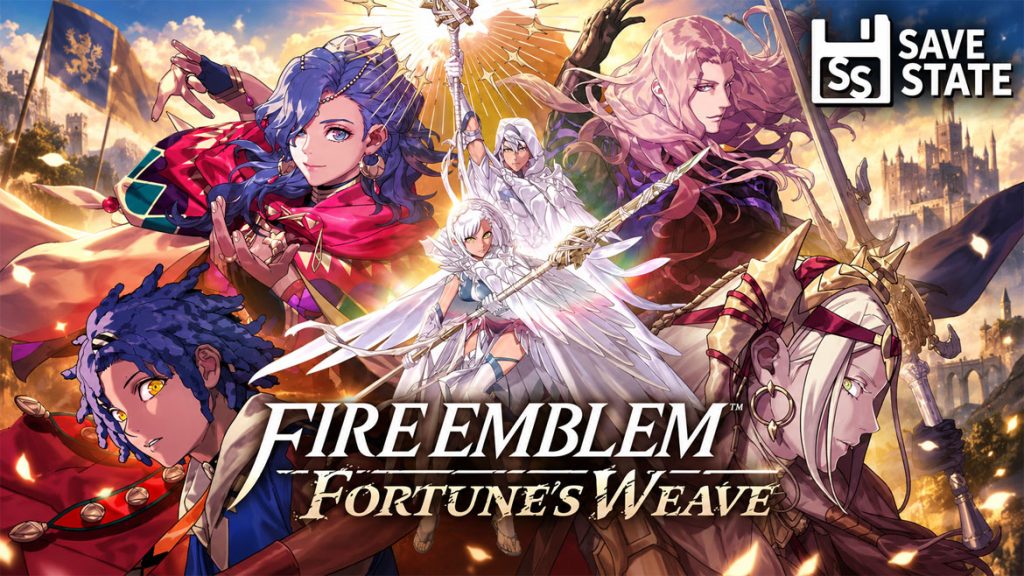

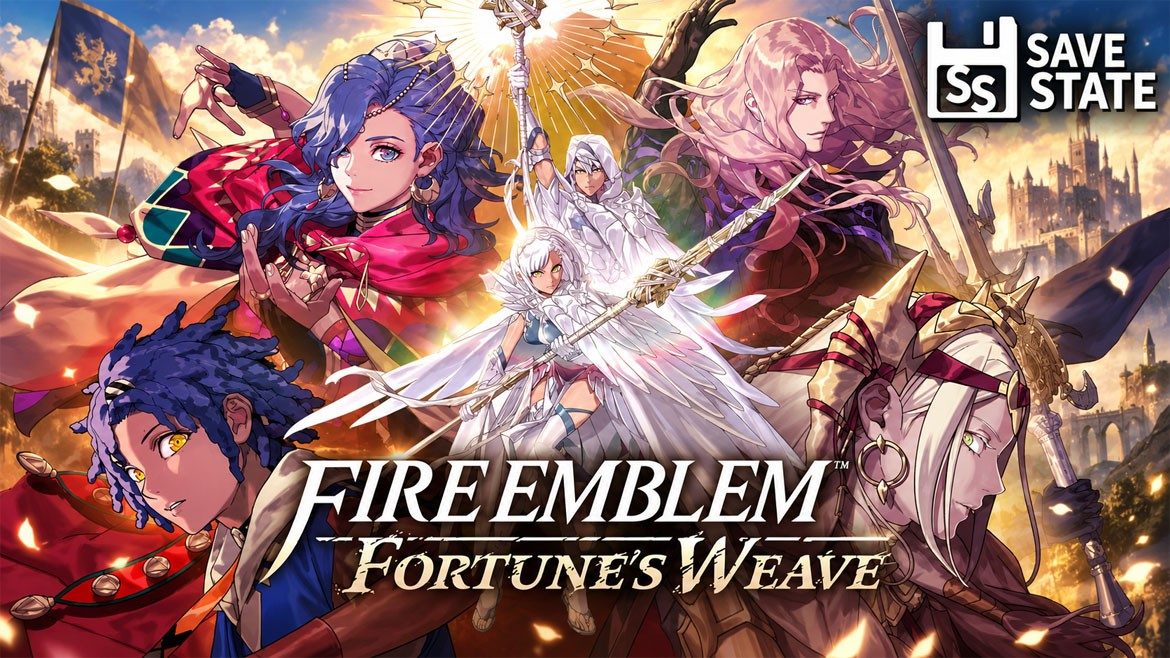
Welcome back to Save State, where the rules are made up and the points don’t matter. I’ve been in the middle of a pretty major move, uprooting my family to work at a completely different place and in a completely different industry. It’s a lot of uncertainty, but if there’s any one thing that is certain, it’s that the grind never truly stops. One bright spot with all of the craziness I’ve had to do in between long drives and sleeping on air mattresses is that Nintendo released Fire Emblem: Fortune’s Weave in the last week, and I had an opportunity to play a little bit of it during my down time.
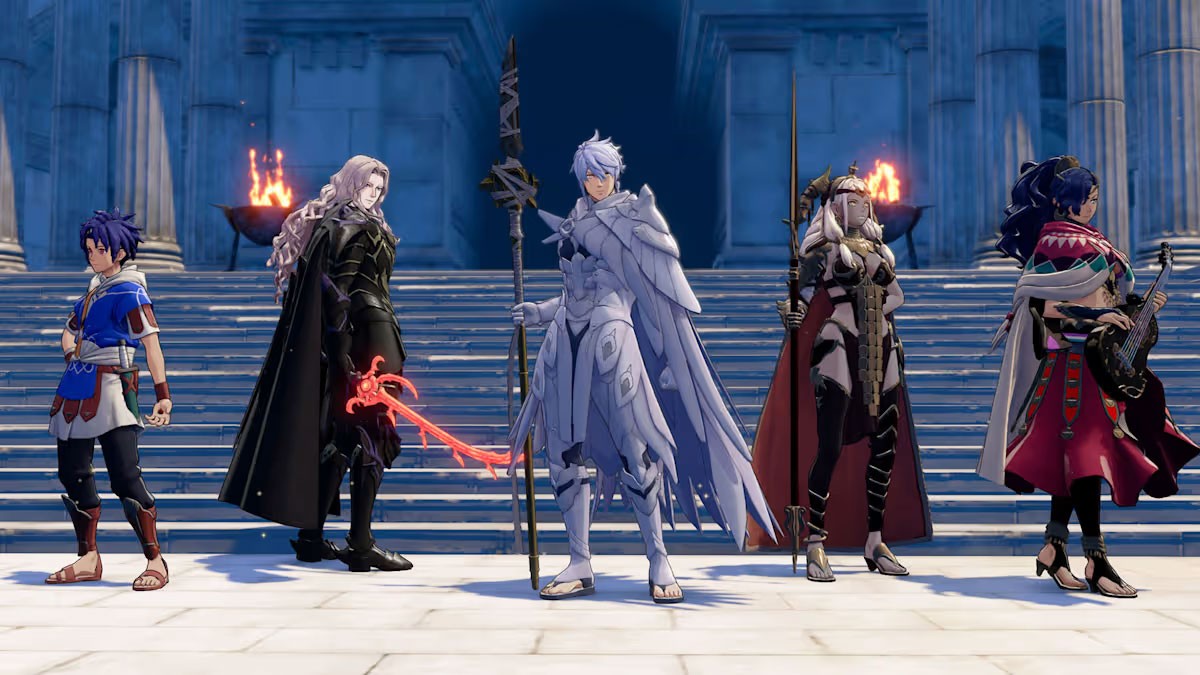 I am one of those types of players who tries to avoid looking up information on titles that really interest me, and I was able to refreshingly go into Fortune’s Weave a bit blind. I do enjoy looking up information on titles, especially Monster Hunter, but there are times when I want to just sit back and let video game Jesus take the wheel. All I knew going into Fortune’s Weave was that there are four main routes and an avatar character. And also the fact that one of the characters has the name Leda, and she already had thousands of instances of fan art before the game had even been released.
Starting up Fortune’s Weave, I had no idea that the game was going to begin in a somewhat futuristic post-apocalyptic scenario. Characters wielding guns, an avatar being created in a rejuvenation tank straight out of Namek, and none of the prologue was information I knew ahead of time. The presentation, however, had me so enthralled with its excellent voice acting, cutscenes, and dialogue that I didn’t even question the abrupt change in story formula for the series.
 The prologue of Fortune’s Weave is a great introduction to the adventure, and you ultimately are given the option to use a goddess’s power to go back in time to save the four main protagonists, characters who should be powerful enough to reverse the fate of the world. You could also say screw that and run out to face the final boss with just your avatar and the couple of characters Fortune’s Weave gave you in the prologue. It’s also totally possible, but extremely difficult, to beat the final boss right out of the gate. It’s totally not recommended, but that approach to design is both incredibly fun and incredibly funny.
Starting Fortune’s Weave, I was largely determined to play Leda’s campaign first just because I really enjoyed the blurb about her story, but apparently young Cai’s path is a better introduction to the title as a whole, so I adjusted my expectations and started with Cai. Cai’s tale makes up one of the four major paths of Fortune’s Weave, and it seems like players are recommended to pick a route and play it through its first two acts because you’ll get a variety of bonuses once you reach the third act where all of your characters come together to fight the existential threat in Fortune’s Weave.
Beginning Cai’s route, I was treated to some fun cutscenes of Cai and his friends trying to capture a large white bird that ultimately turned out to be the avatar from the prologue. After the brief meeting, Cai’s life is quickly turned upside down by the threat of death looming over his father and a strange jewel that gets embedded in his palm, allowing him to use the power of hellfire. In order to save his father, Cai determines his best option is to compete in the arena and win his freedom.
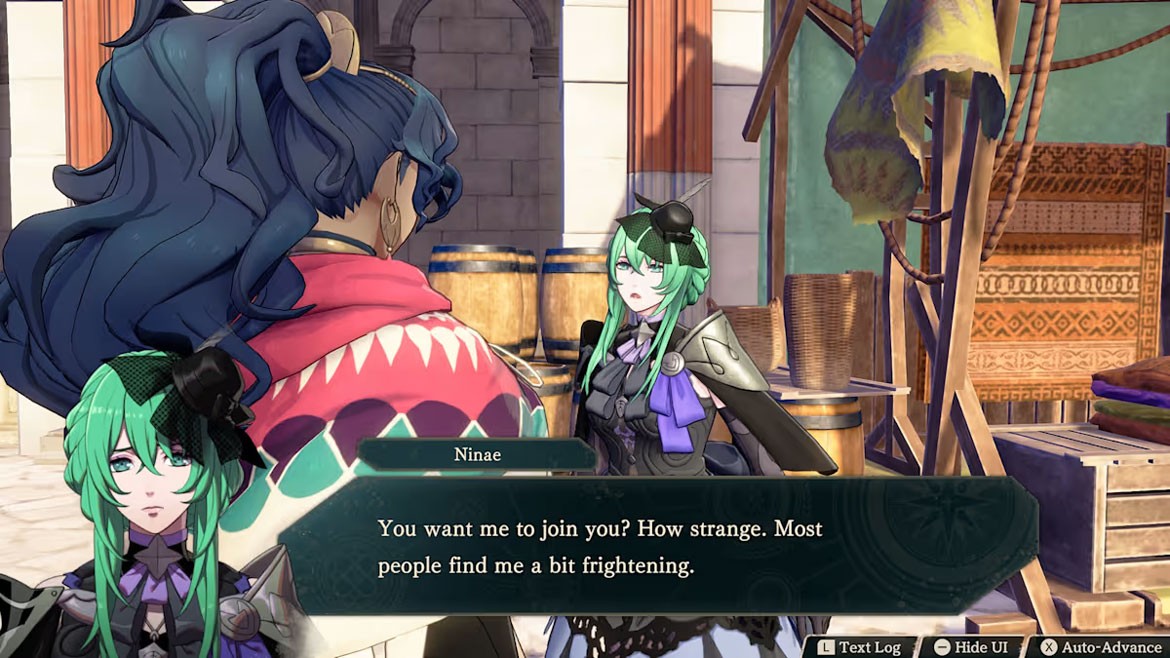 You’ll have a lot of time in between arena matches in Act 1 of Fortune’s Weave, and during this downtime you’ll be able to complete side quests, buy items, give gifts to characters you hope to recruit, have meals with recruits and team members, pray at temples, crawl through dungeons, spend time with the bird version of your avatar, and act in the theater. There are so, so many activities to do in between story battles. Time management is key, and so is watching the calendar so you know what events you can do each week. You can really pile on advantages and recruit a large number of the arena competitors into your force by taking advantage of many of the title’s systems. As it stands, the actual combat in Fortune’s Weave is quite easy, even on hard difficulty, but optimizing free time may be important when, or if, a Maddening/Lunatic level of difficulty gets added in an update.
Returning and somewhat changed from Fire Emblem: Shadows of Valentia are dungeon exploration segments that are neat the first few times you do them, but they are quickly revealed to be a bit on the shallow side. The developers turned combat during these segments into relatively straightforward turn-based JRPG combat to speed things along, but the streamlining makes these clash battles seem a lot more lifeless than they should be. There isn’t a lot of strategy to be had. In fact, the developers even gave players an option to auto-battle and outright skip the non-strategy RPG combat. These battles can be useful for gaining EXP and support levels, though.
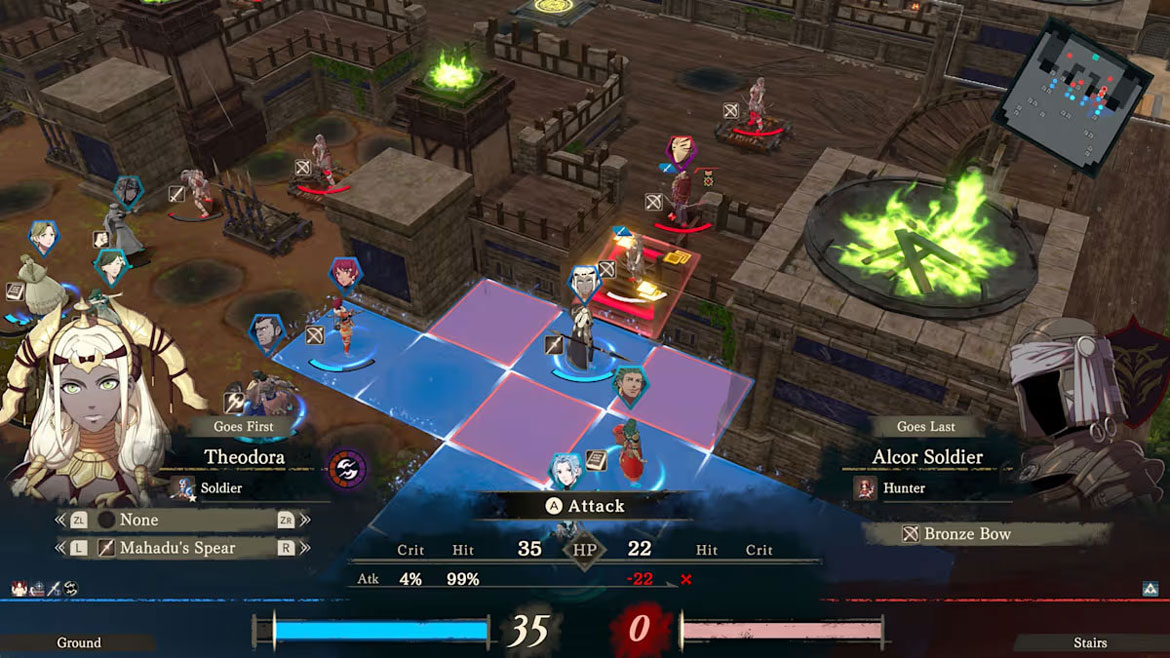
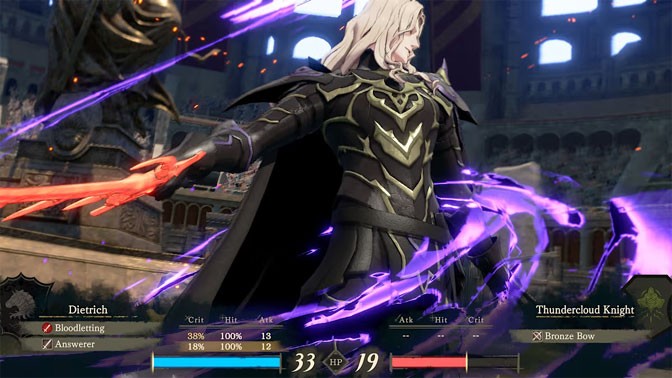 The actual turn-based strategy battles that Fire Emblem is known for, however, are alive and well in Fortune’s Weave. You may not experience them as much as you’d like, but there are a ton of characters to recruit and use on a pretty wide variety of maps. Your units learn equippable skills from their classes, and you can change classes after specific story events and renown levels, assuming your characters meet the requirements of their new job.
A lot of Fortune’s Weave’s systems overlap with others and are coupled with resource and time management, as recruiting new characters to your forces will require you to meet specific support and renown levels with them. Support is limited by giving gifts and eating meals, and your amount of renown is heavily limited by story progress, side quests, and various bonus events.
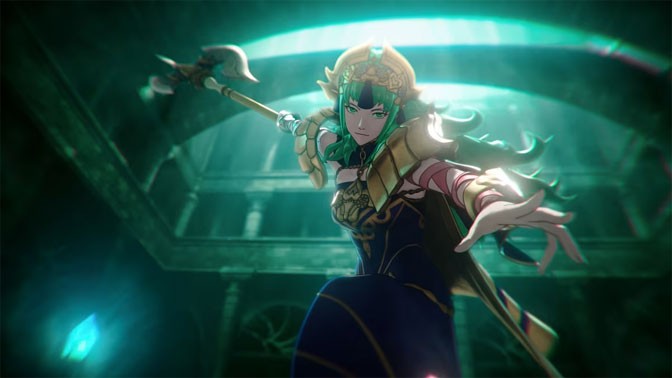 There are a lot of microsystems in Fortune’s Weave, so if you enjoyed managing your army’s attributes to perfect your fighting force to your exact specifications in Three Houses, this is the Fire Emblem for you. There is so much to engage with here that you can spend real-life hours in between strategic combat encounters, and while all the customization is nice… I really just want to send my guys a-stabbin’ to win battles like they’re a puzzle to be solved. As it stands, I haven’t hit the point where the extracurricular activities are tedious, but I could see this tiring someone out as you get deeper and deeper into the adventure and are spending hours completing side quests, requests, and grinding out currency and items to optimize your use of time in between story events.