
Company of Heroes 3: Final Stand is a standalone release built around the core Company of Heroes 3 experience, but it does not require players to own the base game. You can buy and play Final Stand separately, although if you do own Company of Heroes 3, it integrates into the main interface as a choice from the menu. That is a good deal given that Final Stand is about $25 on the Steam platform, or it can be bought as part of a bundle with Company of Heroes 3 for about $40.
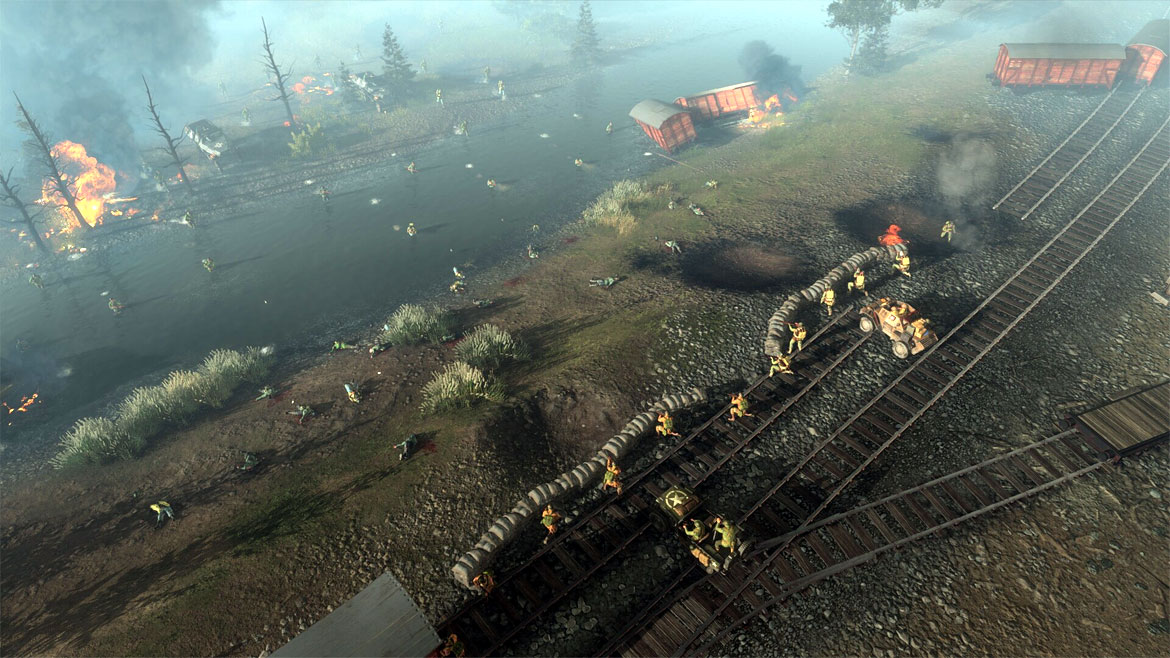 As a standalone experience, Final Stand is a wonderful choice for defensive-minded players. Those who like to turtle, set up elaborate defensive lines and let the enemy come to them will find a lot to enjoy across the five World War II battlefields included here. And, of course, it’s all built on the Company of Heroes core game (which again you don’t need to own in order to play). That is one of the best real-time strategy wargames out there right now. It earned a solid 4 (of 5) GiN Gem score when we reviewed it at launch back in 2023.
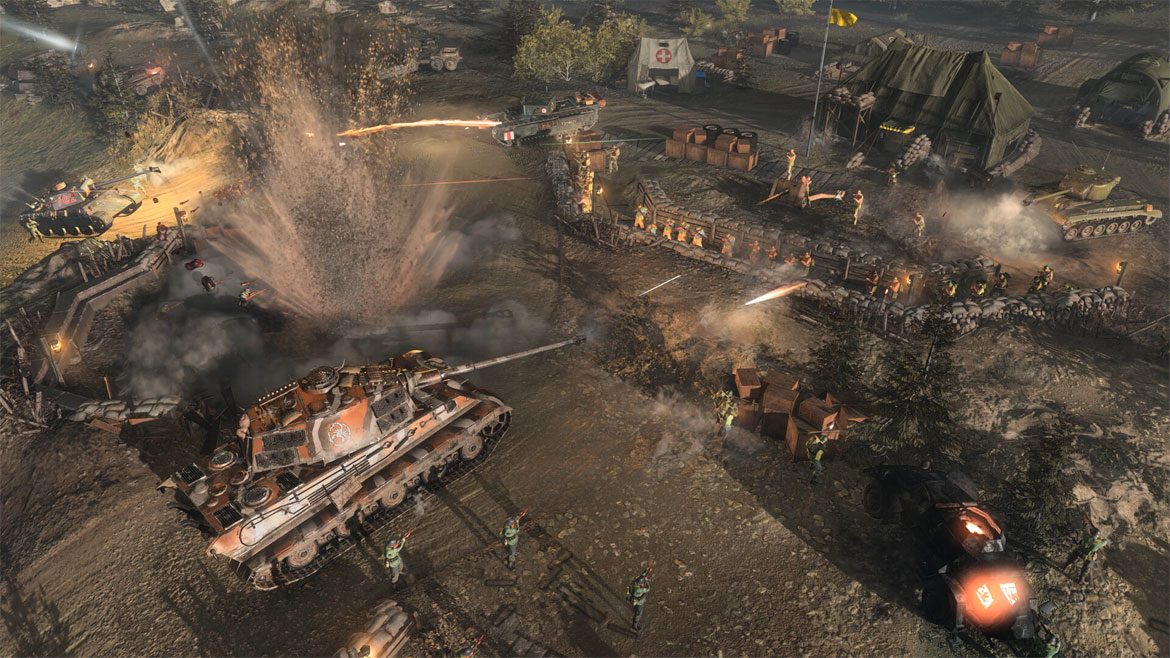
Players face off against a relentless opponent over 12 waves of increasing strength while trying to defend their headquarters. Each of the five maps is designed for this kind of gameplay, with the HQ at the very back and several strongpoints or outposts sitting at strategic points closer to the front lines.
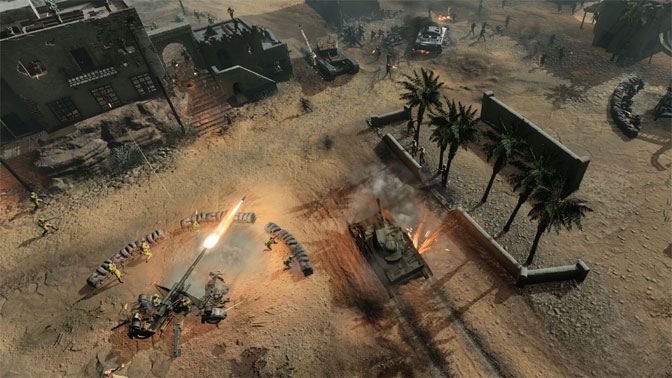 Those outposts are staffed with a few troops and basically act as strongpoints that players can rally around to give their team a little extra support while defending. There are also generally three paths that enemies can use to try and crack your defenses. One map has a few more approaches, but it also has more outposts ringing your core defensive area. Enemies will normally attack through one route at a time, but limited resources mean you will be hard pressed to defend everywhere at once. A good strategy is to keep a blocking force in strong cover along the front line while maintaining a mobile reserve that can shift quickly to wherever that wave is hitting hardest.
Final Stand reminded me a lot of Stonewall, the defensive-heavy multiplayer mode from Company of Heroes: Tales of Valor that I reviewed way back in 2009. Stonewall had players defending a town from waves and waves of attackers, and as a defensive RTS player by nature, I loved the idea of building fortifications, creating defenses in depth and then seeing whether the enemy could break through.
Final Stand feels like a modern evolution of that same defensive fantasy. It is not a straight remake of Stonewall, but it scratches a very similar itch. The difference is that it has been rebuilt around Company of Heroes 3’s systems, better visuals, roguelike progression and more structured escalation. The result is a mode that feels familiar to longtime players like me while still having enough new systems to stand on its own.
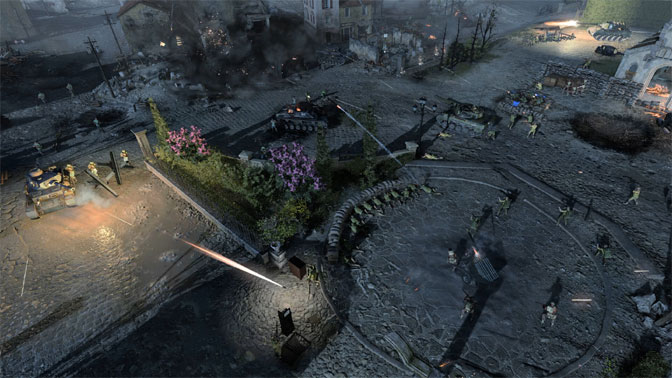 Unlike the core Company of Heroes titles, players do not need to capture points to gain resources. Instead, Final Stand awards increasing amounts of manpower, fuel and ammunition as the battle progresses, ramping up your available resources as the attacking waves also become stronger. There are a few things players can do to boost production, such as using special vehicles to salvage wrecked equipment on the battlefield. In general, though, simply staying alive increases your resources over time. Even then, there never seems to be quite enough. That is especially true at the beginning of a new battle, when your defenses are extremely thin. You may be trying to stop the first wave with little more than engineers, a squad of infantry or a few hasty sandbag positions.
In addition to earning more resources as you defeat waves, Final Stand uses a roguelike reward system. Each time you beat a wave, you are given a choice between upgrades. These might include the ability to call in airstrikes with very long cooldowns, healing troops in battle or unlocking new units and vehicles.
Sometimes the reward is a new tank or advanced fighting unit blueprint that you can start producing back at headquarters, assuming you have enough resources. I often picked those new units as my reward for beating a wave, only to discover that I could not build them right away because I lacked enough manpower, fuel or ammunition. If you save up and let supplies trickle in, you can eventually afford almost everything. But it may take a while if you get an expensive vehicle blueprint after defeating one of the first few waves.
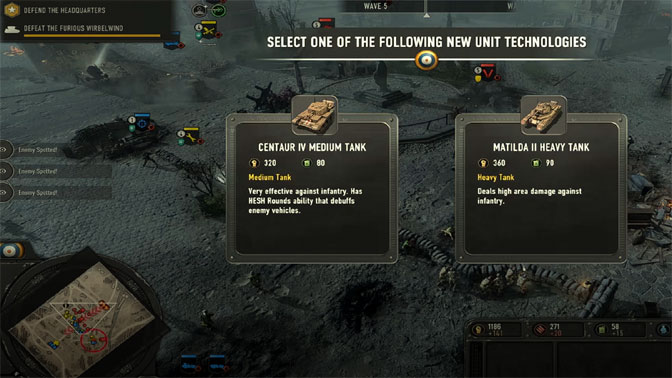 Those perks are random, so each run plays out a little differently. That adds replay value, but it can also be frustrating because some rewards are clearly more powerful than others. For example, in some battles, the RNG gods smiled on me and handed over powerful offensive perks like artillery barrages or circling aircraft that automatically attacked every 40 seconds, thinning out enemy waves before they even reached my defensive lines. Other times, I mostly received support perks, such as the ability to construct an ammunition depot that boosted fire rates in a small area around it. Useful, yes, but also more conditional and limited in value. It’s possible to go through all 12 waves and never receive a great offensive perk or an advanced unit, but that is the luck of the draw.
In addition to the five maps, Final Stand includes the four armies from the core game: US Forces, Wehrmacht, British Forces and Deutsches Afrikakorps. Each one plays pretty differently, just as they do in Company of Heroes 3.
For example, the US Forces offer a diverse army with strong combined-arms options, allowing players to create complementary builds for many situations. US troops are also dependent on gaining experience points to unlock powerful special abilities. In the core game, that can be challenging because you need to expose them to danger while attacking. In Final Stand, however, the enemy comes to you. That means your troops can bunker down behind sandbags, eliminate attackers and gain enough experience to unlock special abilities naturally over time.
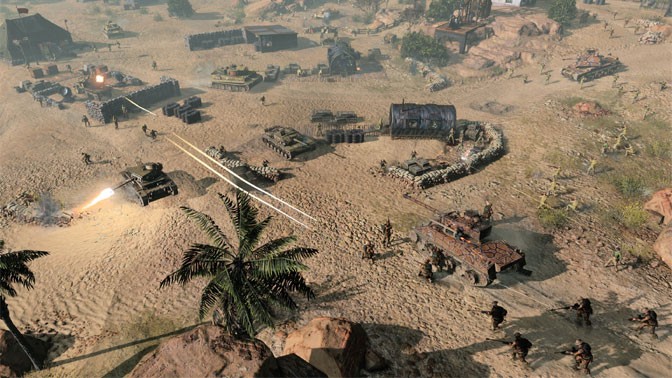 Meanwhile, the Afrikakorps, which was the other army I really enjoyed playing in the core game, has a lot of vehicles and fast-moving mechanized units. That may seem more suitable for attack, but they are also great in Final Stand because they can quickly get to flashpoints along the front lines, shift powerful forces to where they are needed or retreat away from the action and out of range for repairs if things get too hot.
There is a nice cadence to the gameplay. Final Stand gives players some time at the beginning to set up basic defenses, although limited resources mean that will probably consist of a few sandbag emplacements or machine gunners hiding inside ruined buildings along likely enemy approaches. Players are given a couple more short reprieves later on to readjust their defenses between certain waves, including just before the final two extremely powerful waves get ready to break against your lines.
Like most roguelikes, Final Stand also lets players invest earned points from surviving waves into a universal perk board. Those perks provide advantages that remain in place during future runs. The universal perks are army-based, so if you are playing as the British, you cannot invest those points into your Wehrmacht forces. The perks are useful, and there are enough choices to put together several unique builds. They can, for example, add a machine gun squad to each of your outposts, strengthen vehicle armor, increase the flow of resources into your armory and provide many other advantages. Most have several levels too, with additional investments unlocking more powerful versions.
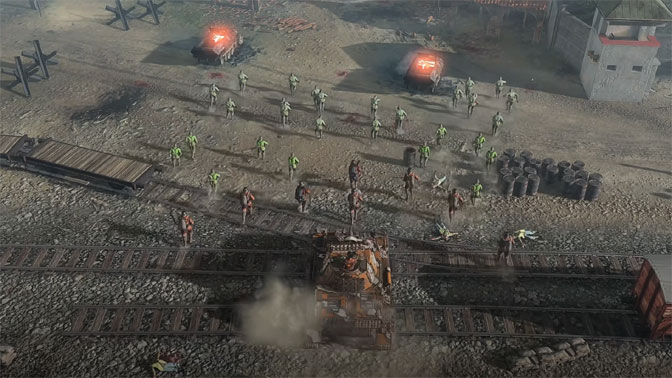 The graphics, as always, look amazing. Company of Heroes has long offered some of the best-looking top-down wargame action around, and Final Stand continues that tradition. Because the battlefield is so detailed, it feels great when you do something heroic like getting a rear shot on a powerful enemy vehicle, causing it to burst into smoke and flames.
The sound is also really well done. Each unit has something unique or cool to say when selected, and the soundtrack helps sell the scale of the battles. The loading screen music sounds like the opening to a blockbuster movie and helped get me excited to start a new round.
As much as I enjoy Final Stand, it’s not quite perfect. Having only five maps is kind of a bummer. There is also no editor where players can create new battlefields or modify the existing ones. I initially thought perhaps that each of the four armies would get its own set of maps to fight on, but all four factions fight across the same five battlefields. At least players can set up battles without restrictions. You could, for example, have allied forces fighting each other like an advanced wargame.
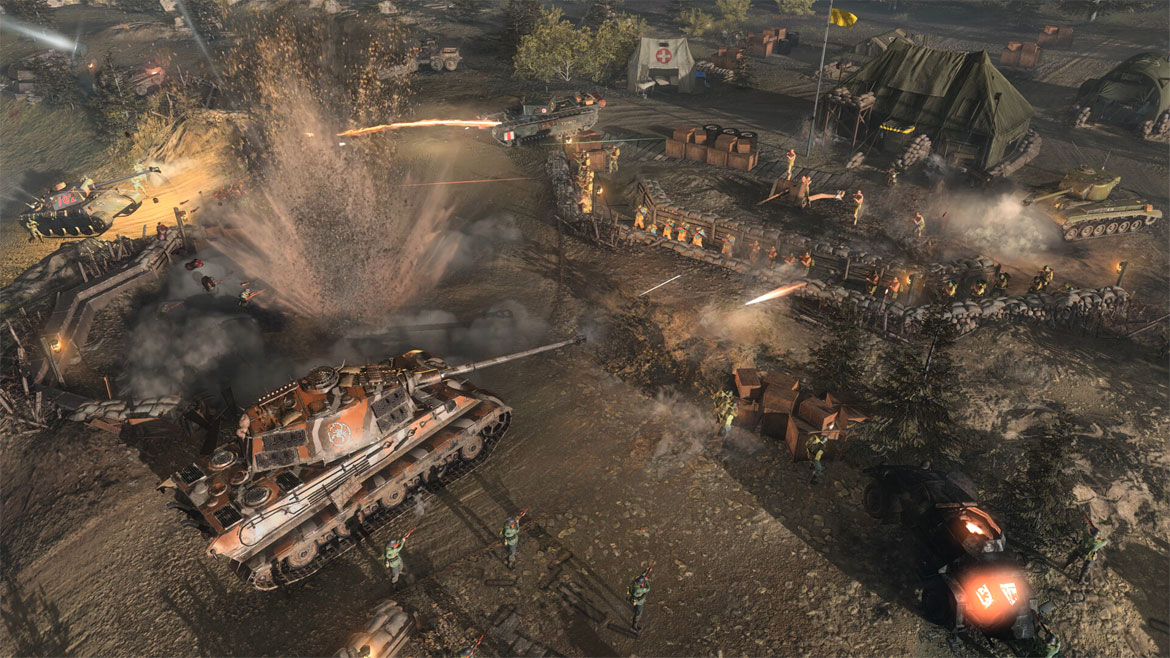 The gameplay, while balanced, is also a little slow to get going. I would have liked to be able to better plan out my defenses with a little more time and a few more resources when starting out. I could do a lot with just a bit more time and tools at the start of a battle, and it would be nice to be able to set or modify little things like how much time there should be between waves.
And while Final Stand is a lot of fun, it can start to feel repetitive after extended play. The day it came out, I must have played for eight or 10 hours. Honestly, by the end of that stretch it did start to feel a little bit like the same thing over and over again. There is only so much that perk points and random upgrades can do to shake things up across five maps. The multiplayer is a nice touch which can add a new element to the fights, but I mostly played Final Stand solo.
Even with those limitations, I had a ton of fun with Final Stand. It takes one of my favorite parts of real-time strategy titles, the art of building defenses and holding the line, and makes that the entire point of the experience.
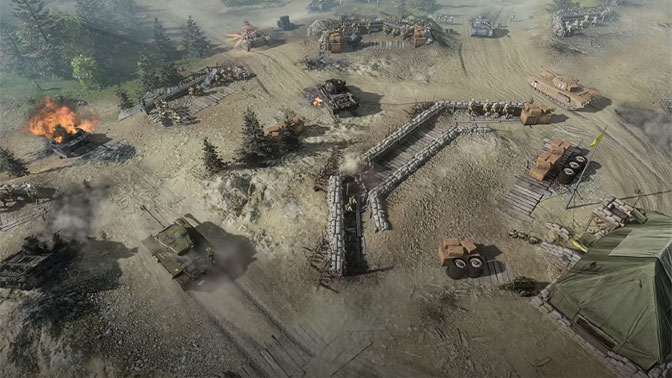 When Final Stand is at its best, it creates exactly the kind of desperate defensive battle that Company of Heroes does so well. Engineers throw down sandbags under pressure. Infantry squads dig into ruined buildings. Anti-tank guns rotate toward the next armored threat. A battered reserve rushes across the map to stop a breakthrough, while aircraft and artillery arrive just in time to thin out the next enemy wave. That is the magic of Final Stand.
Sure, the experience could use more maps, more variety and perhaps a few more options for players who want to customize their starting defenses. But what is here is polished, tense, gorgeous and extremely satisfying for anyone who enjoys defensive RTS play. It may share Stonewall’s old weakness when it comes to variety, but it also captures the same thrill I remembered from 2009: the joy of looking at a defensive line you built yourself and wondering if it can survive one more wave. Finding that out is always a thrill with Final Stand, so best of luck to all my fellow defensive players in holding that line.