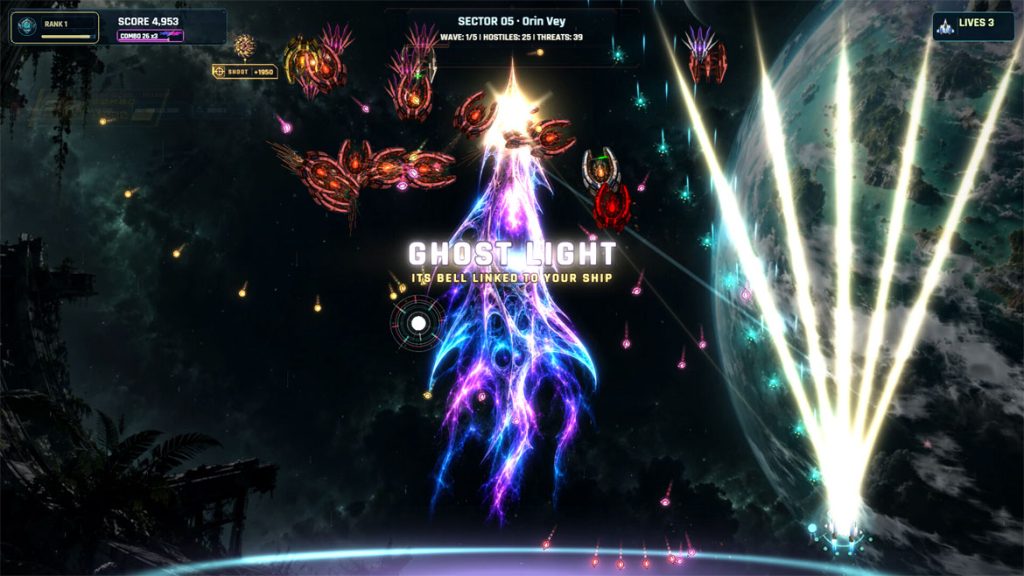

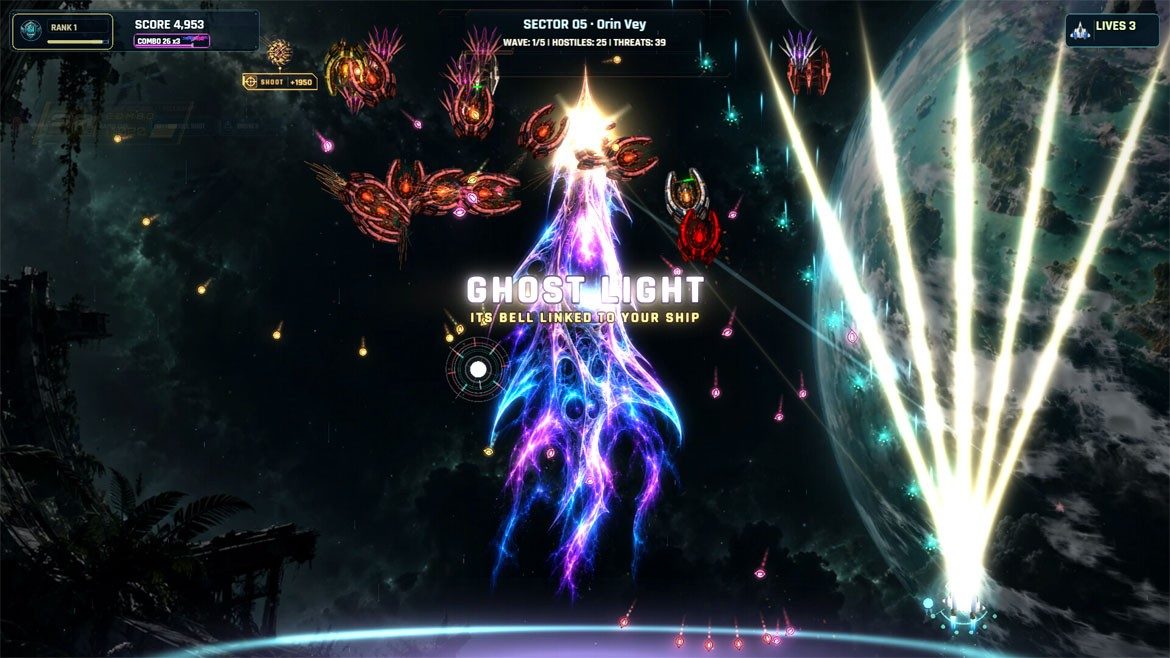
Nova Swarm is an arcade bullet hell reminiscent of classic titles like Galaga or Space Invaders, the kind you’d find in classic arcade cabinets. In Nova Swarm, developer Tiny Foundry wanted to capture the essence of those games and modernize them, and it has found a way to turn the thrill of an arcade ship-bullet hell into an addictive roguelite.
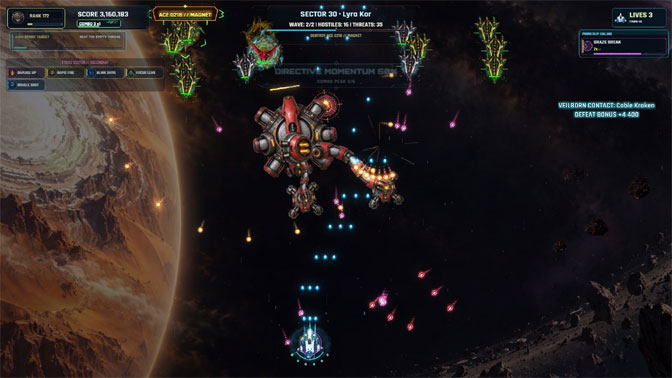 Fight off hundreds of enemies and bosses with unique mechanics as you aim to reconquer your part of the universe as the sole survivor. Build diverse teams, unlock distinctive ships, earn power-ups and venture into multiple game modes, all while receiving aid from ghostly ships, with each run feeling different. Nova Swarm is available on Steam for $4.99 and is unconfirmed for Steam Deck compatibility at the time of writing, but it would be a perfect fit if it were.
The control layout is easy to follow. It’s what you would expect of a spaceship bullet hell, with WASD, Spacebar/M1 and a few other buttons for extra abilities.
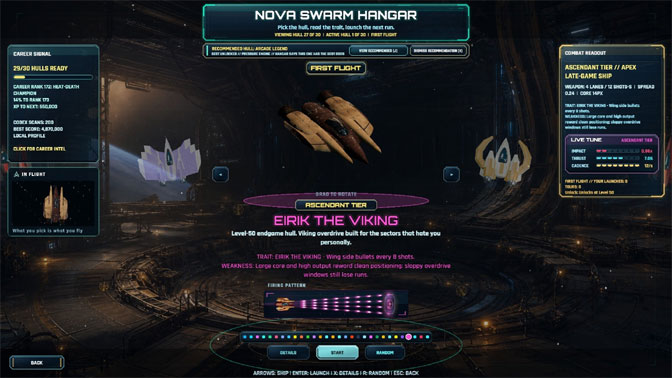 The tutorial is also well done: it has you practice movement and its other unique mechanics for a couple of rounds, and it doesn’t drag on, so you can jump right into the action. The first few levels also feel like a mini-tutorial, since they aren’t difficult, letting you get a feel for it. With its roguelite elements, you can take a few different build paths, and some upgrades merge into ‘fusions’ that combine to grant an extra ability. It can feel overwhelming for a new player, but it includes an in-game glossary that explains the eclectic keywords and how they work.
The story is a recent addition to Nova Swarm as of this writing, and it’s a congenial, easy-to-follow addition to it. The narrative is straightforward and improves gameplay in positive ways, having you do different things instead of just shooting enemies, like following specific lines, protecting the ships and gaining buffs, which is a great mix-up for the gameplay loop. After every 10 sectors (levels), you get a cutscene that gives more context for what’s happened in deep space, and which enemies and allies are fighting against or with you. The cutscenes aren’t long either, so you can grasp what’s going on and get back into the action with haste.
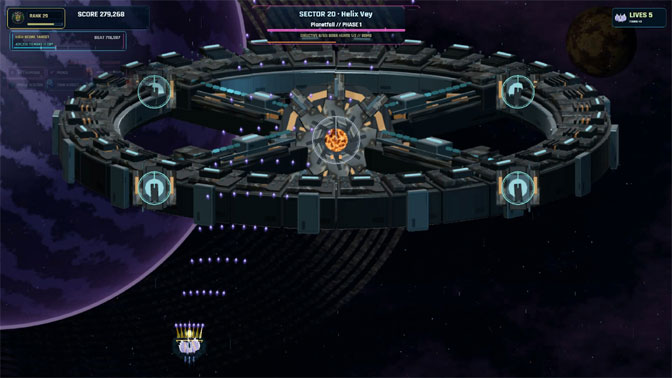 As mentioned previously, Nova Swarm has gameplay similar to arcade classics like Galaga or Space Invaders. If you’re unfamiliar with this style, you manage your own spaceship, dodge enemy bullets, collect power-ups, customize your ship and push as far as you can to earn the highest score on the leaderboard.
A unique mechanic Nova Swarm has is its build potential with its upgrades, opting for high maneuverability and dodge opportunities, serious damage spread with either fire rate or packing a harder punch, choosing to go a mechanic’s route with supportive fire and constant bombs, and mixing and matching others you can find in-game. Enemy diversity is also healthy, as you rarely see the same boss twice. Enemy types vary, ranging from swarms and multi-layered enemies to periodic enemy ships above you on the leaderboard, and a rare few that try to jump into your face.
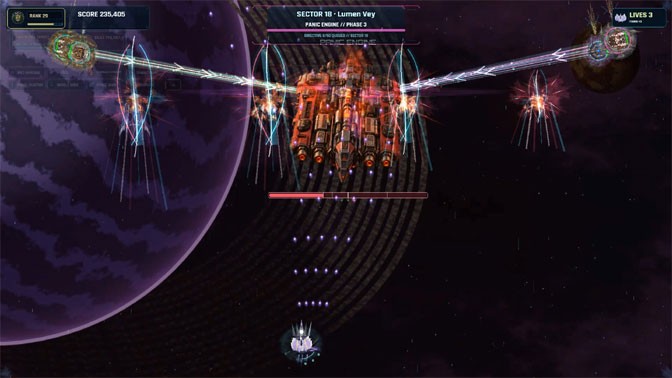
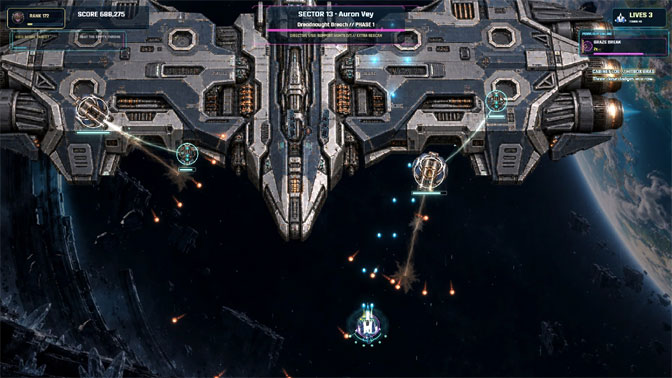 I have two gripes with enemy types, and one is that most bosses, while looking distinctive from one another, have the same attack patterns and don’t feel intuitive. For example, most lead off with a giant beam, then possibly a second one, which can get dull quickly. Because, if your ship has a decent build, the boss will do those two attacks and then die, even if you’re in far sectors at 40 or 50. I even think most enemy encounters before the boss room are more engaging than the boss fights themselves. Bosses that have you shoot a core or multiple facets are a good mix-up, and I think more boss diversity that can protect themselves on later levels would make the title more challenging and engaging. For example, lasers that spawn and plague the field and suck you in, or a periodic shield that reflects your bullets at a slower speed when alone.
The second grievance is the lack of bullet diversity, but I can comprehend a case for it. Most bullets are a small orange or purple shade, differentiated by flying at a slower pace or in a wave-like pattern. This makes most levels feel like ‘samesies,’ where levels start to feel the same despite visually different enemies since you’re mainly focused on dodging bullets rather than enemies at the top of the screen where your eyes typically go. However, I understand the creative argument of keeping the bullet hue the same throughout to avoid confusion and build consistency; maybe shift the hues a bit per sector, but never to the point of using your bullet’s colors? Despite these gripes, the overall gameplay still feels good and is addictive, especially with updates and patches that add content and improve quality-of-life aspects.
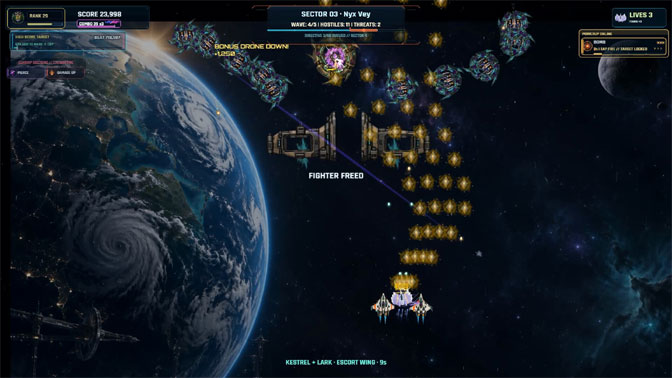 Nova Swarm also features three distinctive game modes. The main mode is story mode, which starts you at the beginning and leads you through the story. The second mode is a “test your build” mode where you start in sector 51 and test whether your chosen build can last into the late game. The final mode is a daily challenge that changes every day and lets you log in without a big commitment if you just want to spend a little time and play something new each day. These modes offer a solid variety of content besides the base game, and they let you pick what mood you’re in that day.
For its visuals and audio, I do have to disclose that Nova Swarm is stated to use generative AI for its content. The visuals for the enemies and bullets look good and distinctively unique, and I don’t believe these were AI-generated. However, the surrounding backgrounds and story cutscenes have that typical AI gloss that’s rampant and is unfathomably noticeable. With different worlds seemingly having hurricanes that loop after a second, or opaque creatures that are PNGs that cross your screen and seem uncanny, it definitely hurts the atmosphere in my opinion.
 The audio when you shoot or destroy something also ticks a part of your brain that feels satisfying as well, especially when multiple enemies blow up at the same time. My only issue with the effects audio is when you take chained lightning; the effect of the chained lightning across multiple enemies tends to come across as louder than everything else, making it very distracting and noticeable. The menu music is pretty catchy, and there is background music whenever you’re playing. It has a sci-fi feel and an upbeat, faster-paced tempo to match the theme.
The voice acting (which can be turned off) is also stated to be generated and sounds like it too. It tends to have a mixture of funnier quips and more serious stated tones, but both have the same monotone AI pitch, leading to most quips falling flat and undermining the overall tone and delivery. If you care strictly about the gameplay and don’t care about background assets or audio, you won’t notice these issues too much. If you want to be invested in the atmosphere, you will notice these things within the first hour of gameplay due to the visuals clashing with the prominent assets.
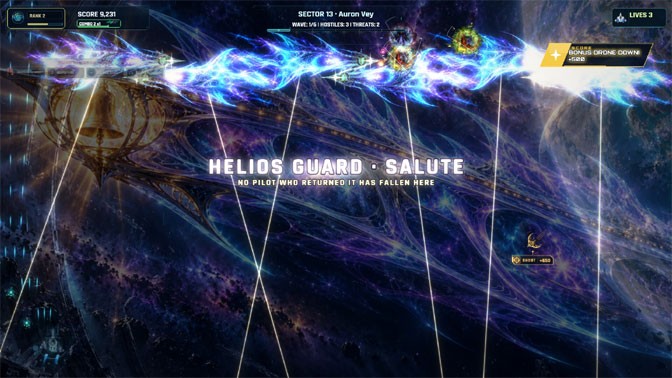 Another major gripe is the optimization, since the recommended system requirements show you don’t need a graphically intense setup, with 8 GB of RAM and equivalent to those from the 2010s. Essentially, most modern laptops should be able to handle Nova Swarm, and don’t even need to be expensive. When there’s a large number of enemies, Nova does start stuttering here and there until some of the visual clutter clears, which ruins immersion. The developer has been fixing multiple memory leaks and other graphical hiccups, and they’re optimizing it further with each patch, which shows passion and care for Nova Swarm.
Despite the grievances, Nova Swarm is deeply cared for by Tiny Foundry, with the consistent stream of patch updates adding new game modes, fixes, aesthetically pleasing changes and so much more to try. With its highly addictive gameplay, fast patches and content updates, you will find yourself sinking hours into the title without even realizing it. They transform the classic ship shooter into a roguelite phenomenon worth the price and your time.