
I love tower defense games. Even when I’m playing real-time or turn-based strategy titles, I often like to turtle, so tower defense is pretty much the ultimate form of that kind of play.
That said, the tower defense format can sometimes feel a little copy and paste. Even some recent tower defense titles that I really enjoyed, like Artisan TD, mostly made the genre more beautiful without changing the core defensive format. Thronefall did a bit more with its mounted protagonist who could ride around shooting, leading troops into battle and planning defenses in depth using limited resources, which was innovative at the time but has since been picked up by a lot of mobile titles. Meanwhile, The King Is Watching added careful resource management where fields and other production buildings would only work while you were highlighting them, but it really left the purely tower defense genre to become a new hybrid type of game.
 So, I did not really know what to expect from Sir, We Have an Orc Problem, or whether it would do anything special with the genre. It’s on the Steam platform for about $10, so I figured it could be quite a value if it was good.
Thankfully, it really is.
Sir, We Have an Orc Problem is kind of like the essence of tower defense. There is no real plot, and the mismatch between thousands of orcs marching toward the goal line at the end of a level’s path is pretty striking considering they are facing machine guns, lasers, flamethrowers, satellite-based weapons and A-10 Warthogs. Why this war is happening or where it is happening does not really matter. Your job is to stop the orcs from getting through.
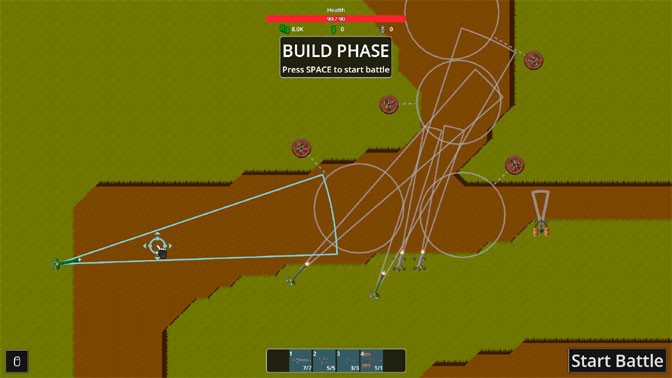
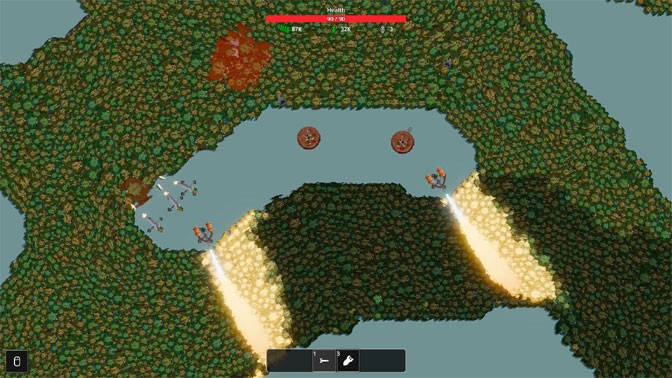 You do that, of course, by placing towers. You start with machine guns and then move to more powerful or specialized weapons like flamethrowers, cannons and other advanced defenses. The levels start very simply. The first one is just an S-curve with a few hundred orcs trying to crash through. Turrets also don’t track enemies like in most games. They will either fire straight ahead where you place them or move back and forth along a little arc that you set up. If you place your turrets poorly, you will likely lose very quickly as the orcs skirt by them.
But that may not matter too much at first because players will lose levels, quite a lot.
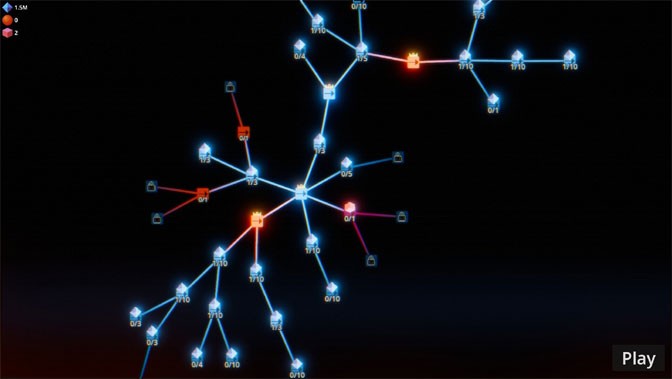
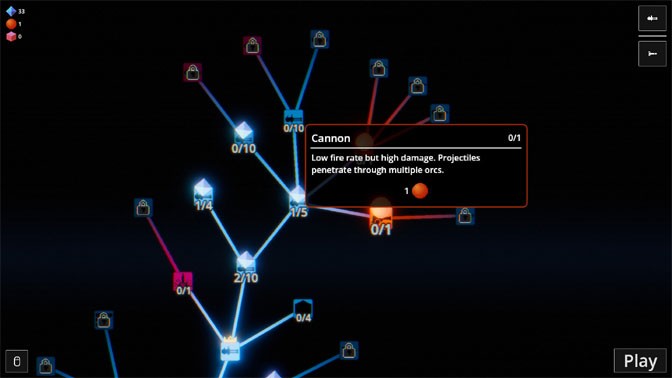 That is part of the design. Sir, We Have an Orc Problem gives players resources whether they win or lose a level. At first, you don’t have anywhere close to enough equipment to defend even that little S-curve on the first stage. But every orc you pick off earns currency, which can then be spent on an extremely detailed skill tree that looks like something out of an RPG or a Civilization-style advancement map.
That means if you earn a few hundred of the base currency with your current defensive layout, a good idea is to run the level again and again to rack up more money even if you already know you are going to lose. There is no penalty for losing a level, so you can run stages as much as you want while slowly building towards a better defensive plan.
The skill tree basically does one of three things depending on what you buy and concentrate on. The first and most obvious thing it can do is unlock the ability to place more turrets, which is good because there are never enough. The second key aspect is upgrading those towers, making machine guns fire faster, adding more burn damage to flamethrowers or giving cannons more penetration so they can shoot through more orcs at a time. The final thing the skill tree does is unlock new technologies. Since you only start with machine guns, you will need to buy all the other tower types before you can start improving them.
 Playing a level and killing orcs earns the baseline currency. But there are two other currencies needed to unlock new branches of the skill tree, which often guard new tower types and advanced technologies. Those feel more like keys than money. You can earn the lower tier unlock key by simply surviving a level. If you have 40 hit points and 39 orcs get through, congrats, you still lived and get the unlock bonus. The higher-level key, however, is only earned when you kill every single orc in a level.
That creates a really effective loop. You can scrape by with a survival win, use that to unlock more options and then come back later to chase a perfect victory. Or you can keep hammering away at one stage until your defenses are strong enough to eliminate every last orc. Either approach works, but because the best unlocks are guarded by those higher-level rewards, working toward total victory is often the smart strategy.
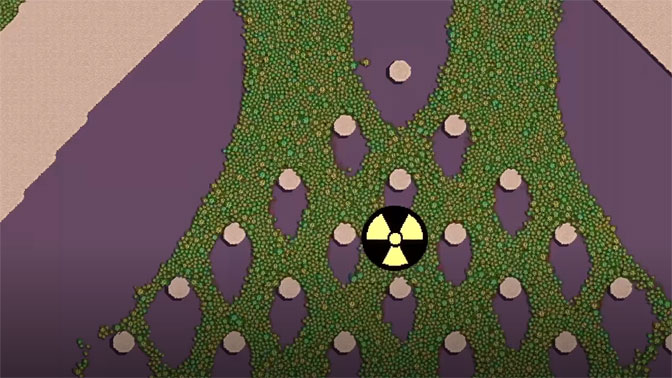
It also becomes pretty addictive. As you get new tower types and improve your arsenal, you can fiddle with the placement of your defenses and run levels again and again until you get it perfect, or at least until you earn enough money to fully trick out your defensive line. The number of orcs and the complexity of the levels ramp up very quickly, so there is almost always something else to buy, improve or test.
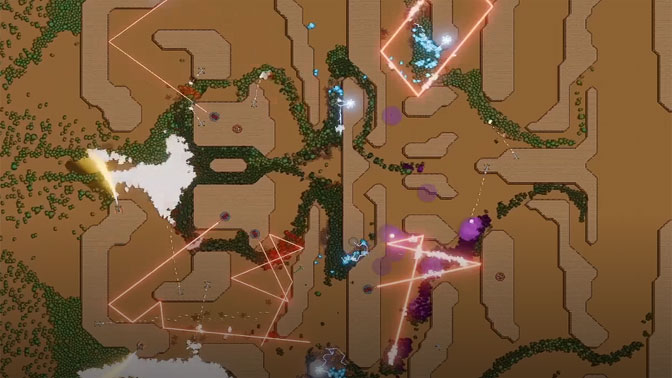
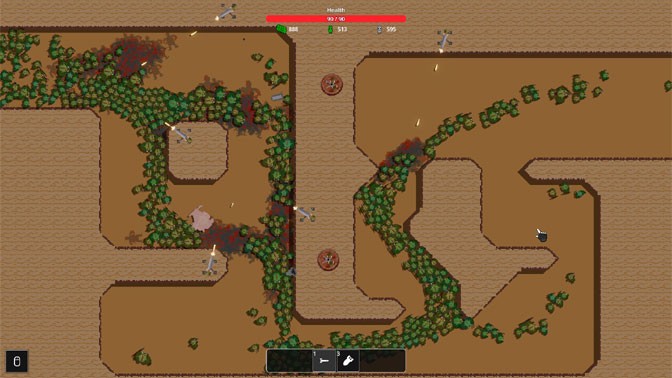 Some levels are very challenging because they have multiple paths the orcs can take and multiple goals they can reach to chip away at your hit points. Many maps have physically separated paths, so you need to set up defenses across all of them to stop the raging hordes from reaching your base. Eliminating every orc on one path does no good if hundreds of others can simply walk into your base untouched. As such, there never seems to be enough towers, and you will likely lose new levels many, many times before you earn enough currency and unlocks to beat them.
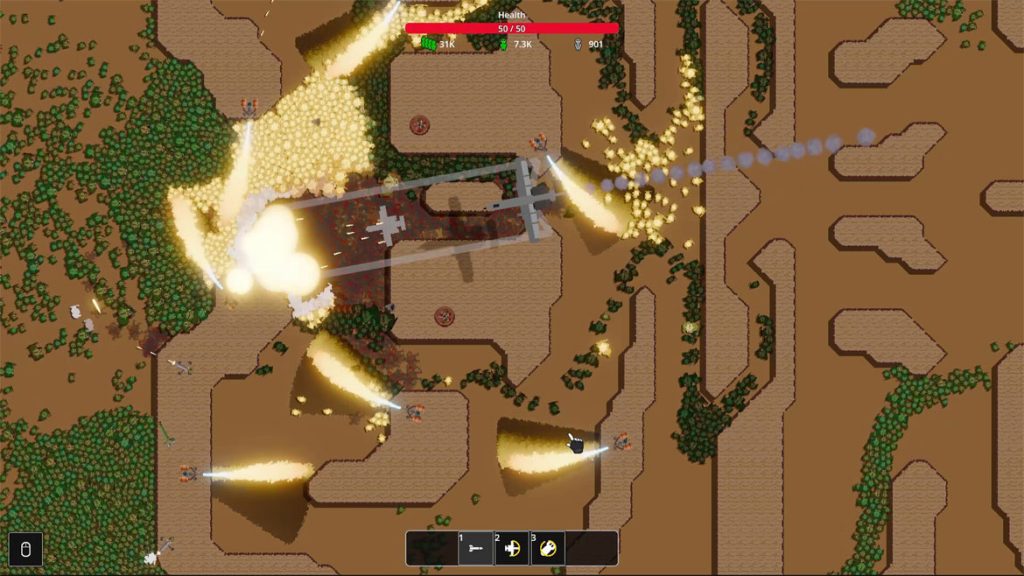
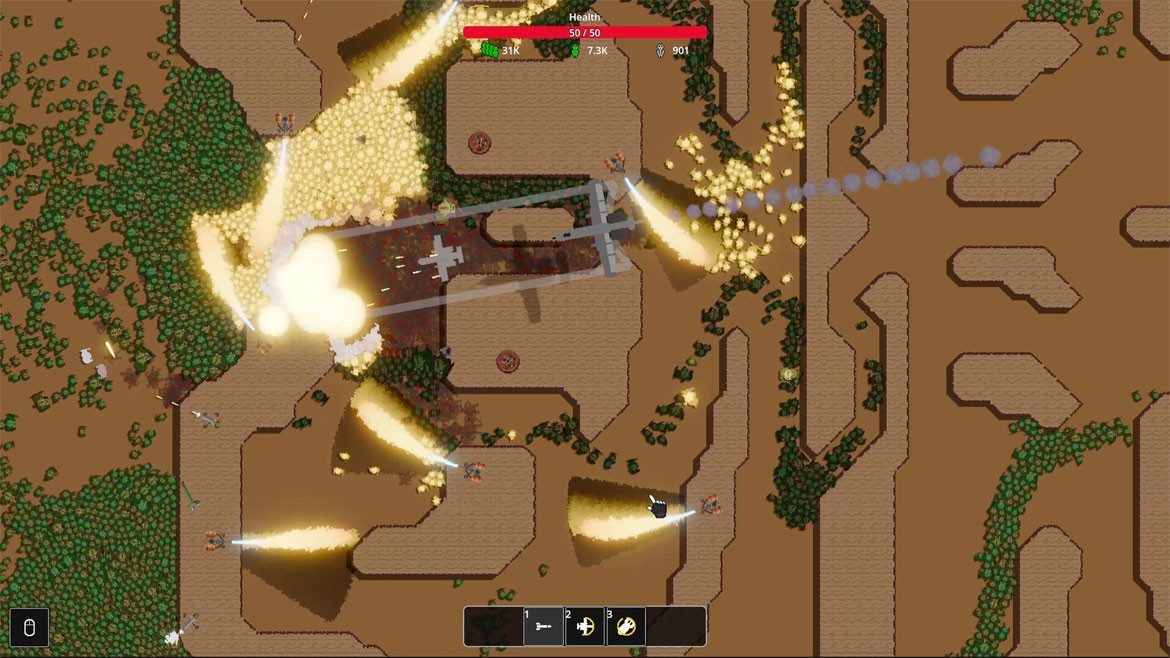
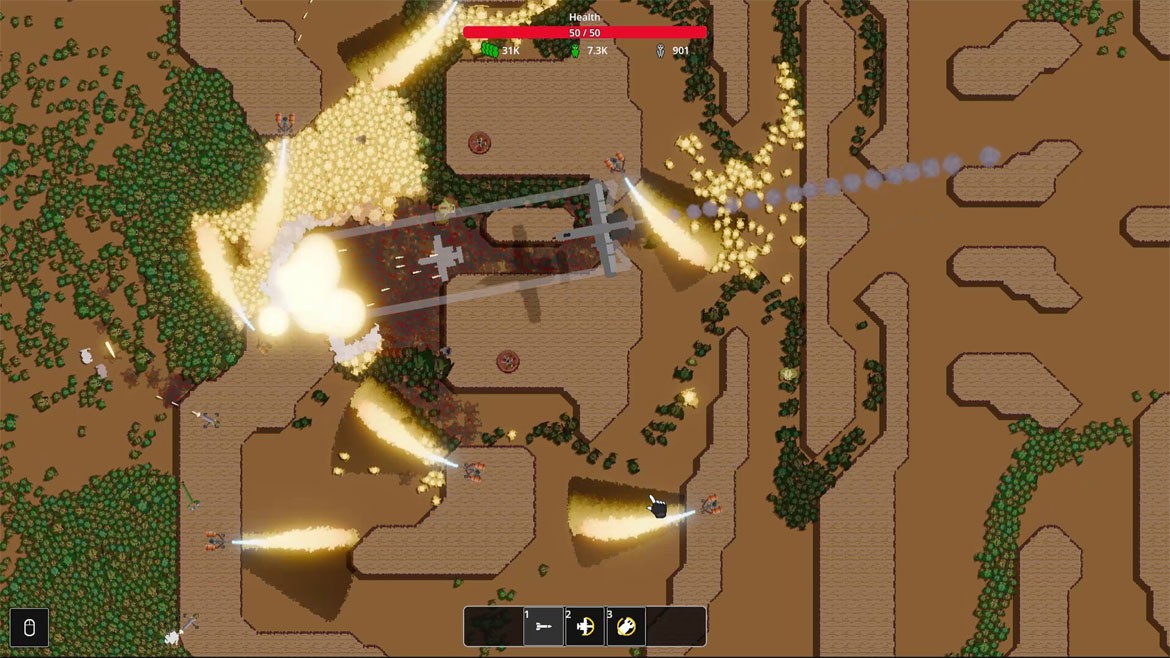
There is also a way for players to directly interact with the environment. At first, this involves shooting a little rocket at orcs with about as much power as a commercial firework. Eventually, you can work your way down the tech tree to improve your direct contact with the battlefield. This can increase the power of your rockets and unlock bigger options like calling in an A-10 Warthog to do a strafing run or firing a massive satellite weapon that can clear a huge section of the map.
Personally, I kind of consider that sort of direct intervention to be messing around with the purity of a tower defense game. It almost feels like cheating. But given how many orcs are attacking you in later levels, it’s probably required. I’m not sure if some stages can actually be completed with just towers alone.
 Graphically, Sir, We Have an Orc Problem is pretty basic. There is even a setting to make the levels look like they are being played on a CRT monitor if you want to reduce the resolution and graphical presentation even further. On the bright side, the simple presentation is probably one reason the game can run smoothly on almost any semi-modern computer, even with thousands and thousands of orcs on the screen at the same time.
The audio is also fairly simple. It does what it needs to do, especially once the battlefield gets busy and your defenses start chewing through wave after wave of orcs. But this is not a title I would recommend because of its soundtrack or sound effects. The fun comes from watching a doomed defensive line slowly become a killing field through careful upgrades and stubborn repetition.
 I had a lot of fun with Sir, We Have an Orc Problem. Yes, it got a little bit grindy after a while, but that grind is also kind of the point. I would often spam the reset button and let my towers rack up points until I had many thousands of currency units. Then I would jump into the skill tree, buy new technologies or upgrades and return with a better defensive plan. There is something deeply satisfying about losing a level badly, investing in a few key improvements and then watching the same orc horde get shredded on the next run.
That is also what makes it such a good value. At around $10, Sir, We Have an Orc Problem gives tower defense fans a focused experience that can last quite a few hours depending on how much time they spend mastering each level. I spent about 15 hours getting through all six stages and the various sublevels, and I was very happy with the experience. It was fun while not overstaying its welcome.
 I doubt that many players will go back and replay everything again once they have beaten all six stages (and reset all their upgrades), but that is fine. Not every title needs to last forever. Sir, We Have an Orc Problem knows exactly what it wants to be: a short, focused tower defense game with incremental-style progression, huge enemy counts and a satisfying march from hopeless survival to overwhelming firepower.
It’s not flashy. It’s not story-driven. And it’s not trying to reinvent the entire genre. But it understands the core appeal of tower defense extremely well.
Sir, We Have an Orc Problem is about being outnumbered, losing, upgrading, trying again and slowly building the perfect defensive machine. For players who enjoy tower defense at its most basic and addictive, this little orc-slaying surprise is a great find.