
IRON NEST: Heavy Turret Simulator on the Steam platform is one of the most unique simulation titles I have played in a very long time. That is saying something because Steam is filled with simulators these days. There are marketplace sims, store sims, cleaning sims, power-washing sims, renovation sims and just about every other kind of everyday-task simulator imaginable. Some of them are great, but a lot of them start to feel very similar after a while.
IRON NEST is not like those games.
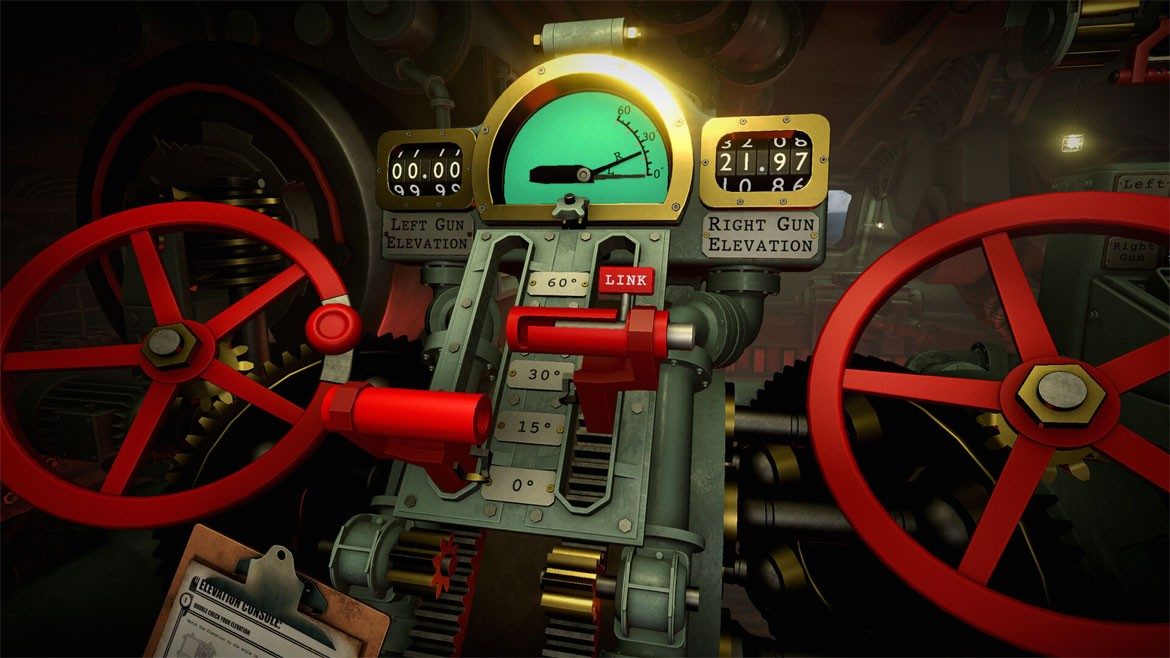
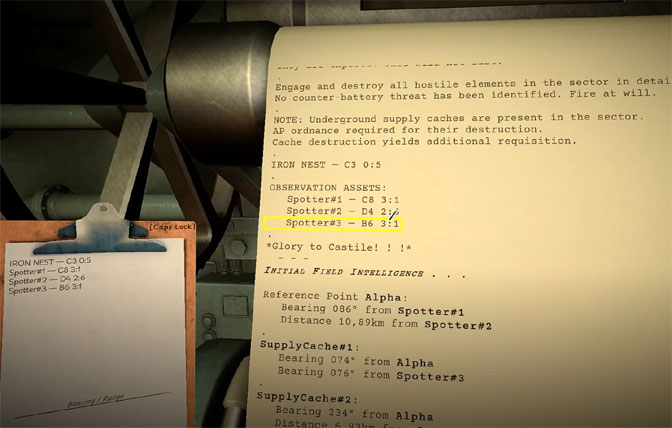
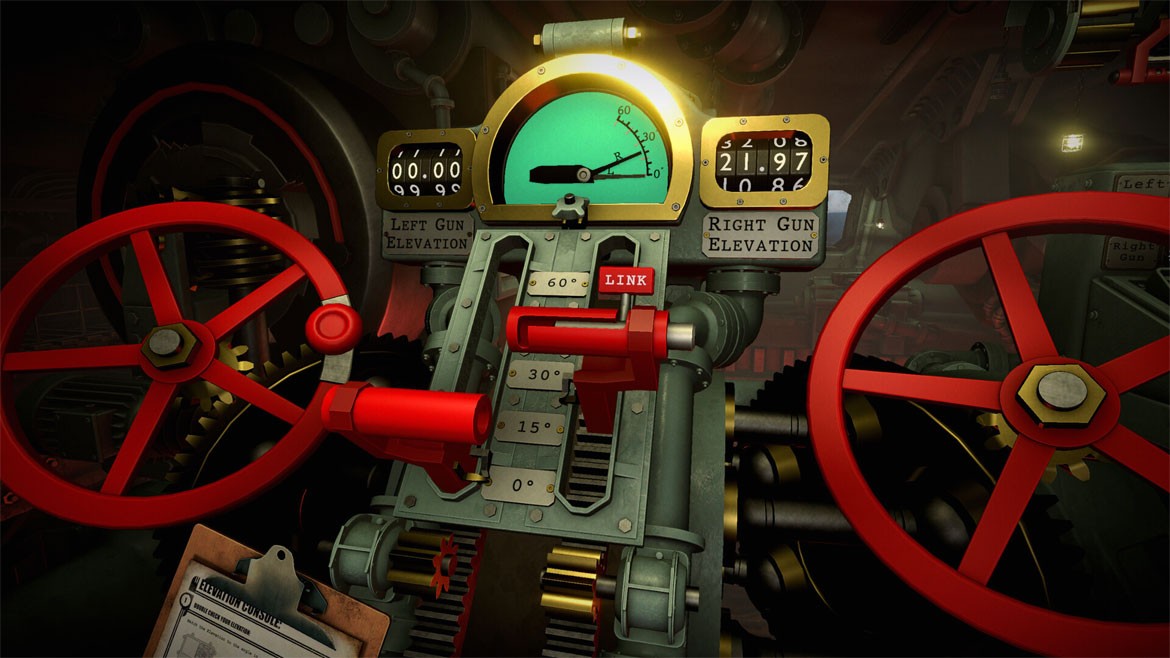
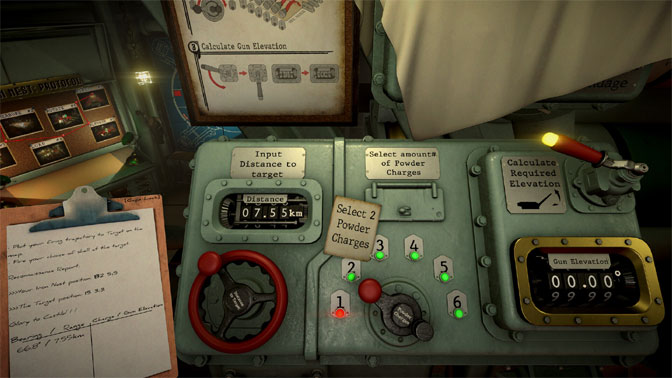
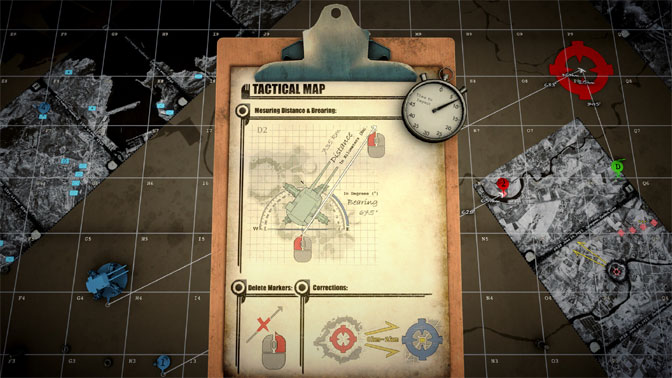 Instead, it drops players into the belly of a massive diesel-punk artillery machine and asks them to operate nearly every part of it by hand. You are not just clicking on enemies and watching a cannon fire. You are reading orders, studying maps, calculating coordinates, setting elevation, choosing ammunition, generating shells, loading the gun and physically bringing a giant war machine to life one shot at a time.
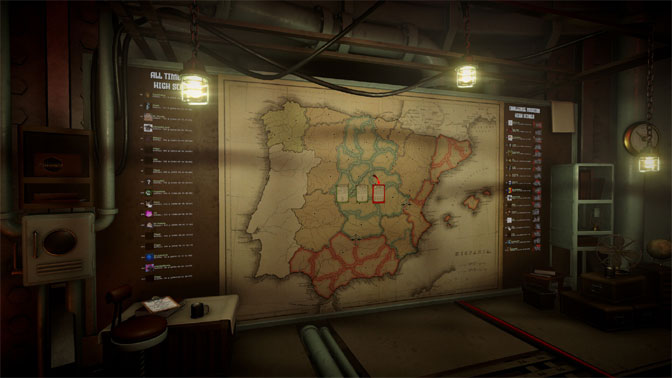
The campaign is set in an alternate-history version of Spain in the late 1920s, on the brink of civil war. In this timeline, the monarchy still holds power while a republican uprising spreads across the country. Your role is to operate an enormous, armored weapon platform that can dominate the battlefield, assuming you can make the thing work properly.
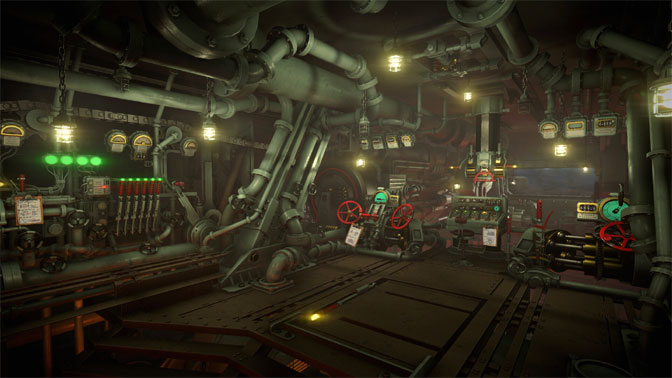 The iron nest is a strange, retro-futuristic machine that looks like something between a battleship turret, an analog computer and a mechanical bunker. Nothing like it existed in the real 1920s, and certainly not during the Spanish Civil War.
It also feels like something that should probably require an entire crew. It’s huge, complicated and powerful enough that I kept wondering why any military would entrust it to one person. Even if that operator were perfectly loyal, what happens if they have a heart attack? Your massive weapon suddenly falls silent. But plot quirks aside, IRON NEST sets players up as the ultimate artillery operator, someone who can bring this beast to life with mental skill, careful planning and plenty of physical effort.
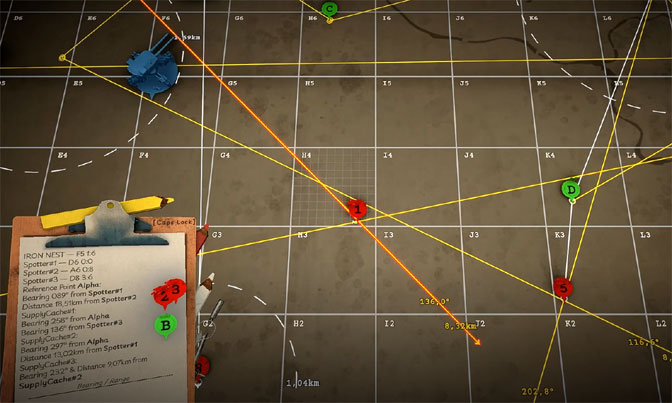 That is where the title becomes fascinating. If you enjoy big machinery, manual processes, calculations and working hard for a perfect shot, then IRON NEST may be close to perfect for you. As missions progress, players learn new ways to triangulate targets for both accuracy and speed. Spotter reports help narrow down enemy positions. Later, you can even launch scout planes to assist with locating targets. But in the end, everything comes back to how well you can interpret information, determine where the enemy is and position the turret correctly.
That means IRON NEST often feels less like a traditional action title and more like a puzzle game disguised as a heavy artillery simulator. Each mission gives you a target and any special conditions that might apply. Sometimes civilians are in the area. Other times, friendly troops may be close to the impact zone. You then need to work through the process of finding the target, plotting its position and calculating the shot that will destroy it as efficiently as possible.
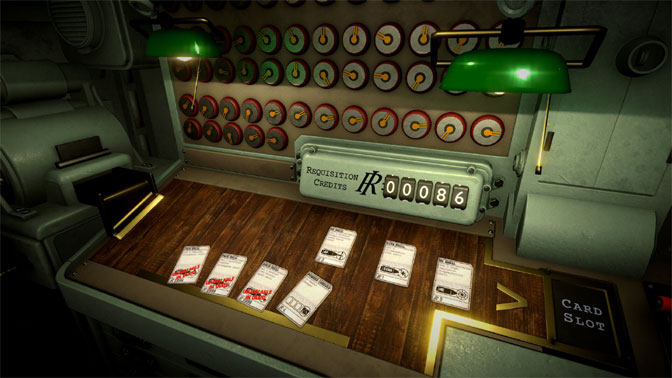 That sounds simple until you actually have to do it. Players operate heavy machinery by turning gears, pulling levers and working systems directly in front of you. The whole place feels hot, loud and mechanical. You can almost smell the diesel and oil fumes, or feel the heat building inside this armored metal nest. The interface is physical in a way that many titles are not. You are not telling the machine what to do from above. You are inside it, wrestling with it. There were times when I felt like IRON NEST could be great for virtual reality.
But all that effort means that firing the main gun is not instantly exciting in the normal video game sense. A lot of the work involves triangulation, measurements and math. You study the map, line up the gun, prepare the shell, load it, fire it and then watch the projectile move across the battlefield on your map while hoping you did not make a tiny mistake that will multiply over distance.
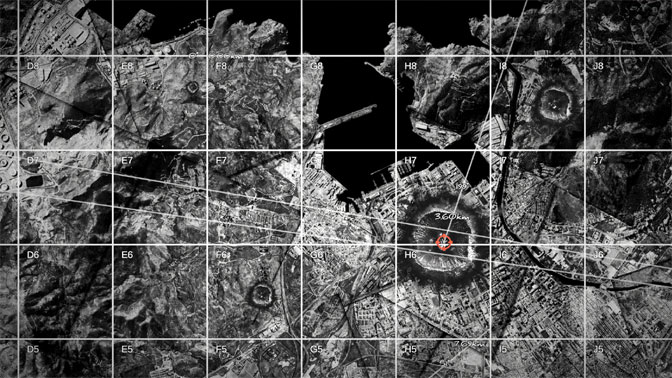 When the shot lands perfectly, it’s incredibly satisfying. But even when it does not, that can be memorable too. There were more than a few “oops” moments where my calculation was off just enough to create problems, including hitting civilians or friendly troops. IRON NEST does not need graphic gore to make those mistakes sting. A small skull marker on the mission table is enough to let you know that something went very wrong.
For me personally, all of those calculations made my brain hurt after a while. That is not a criticism, exactly. It is more an admission that IRON NEST is not perfectly built for how I like to play. I was able to muddle through most of the missions, and I could appreciate how smart the whole system was even when I was not always enjoying the mental workload. This is a rare case where I can say a title is extremely well made while also admitting that I am not the ideal audience for it.
 Puzzle gamers may actually enjoy IRON NEST as much as simulation fans. Figuring out how to fire the main gun efficiently during each mission is often the challenge. The turret is your tool, but the real gameplay is in working out the solution.
There are also new systems and tools introduced gradually. Players slowly upgrade their arsenal with different shell types, including high-explosive, armor-piercing and smoke rounds. In general, though, IRON NEST gives players new shells, weapons and tools as they are needed for specific missions. That keeps the campaign fairly linear, but it also helps prevent the experience from becoming overwhelming all at once.
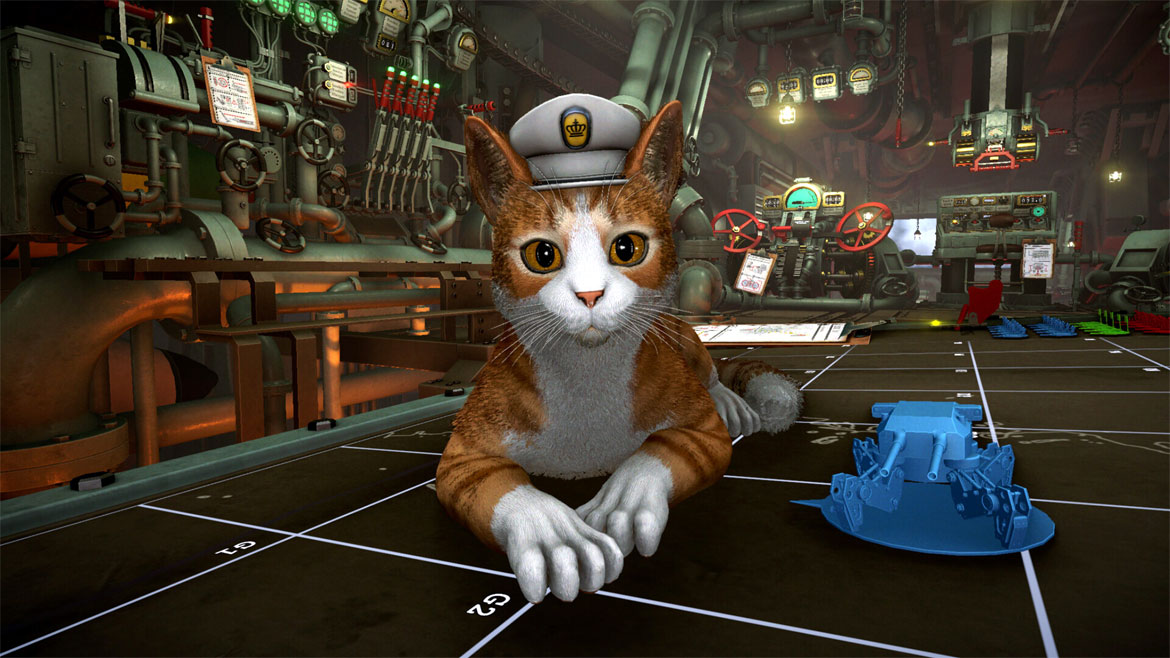
 The visuals are quite good, though this is not a game built around sweeping outdoor vistas. Almost everything happens inside the giant machine, so there is only so much to see. Thankfully, the machine itself is detailed enough to carry the experience. There are small touches that make the space feel lived in, including your bunk, a coffee machine, a record player and even a cat you can pet if you unlock that ability in the settings menu.
The sound design is incredible. The machine creaks and groans. Chains rattle. Metal shifts. Deep mechanical sounds echo through the compartment. When the main gun fires, the boom is massive enough to shake the screen and sell the power of the heavy shells being launched. The audio is a huge part of what makes IRON NEST feel convincing, and it may be the strongest part of the whole experience.
The campaign is fairly short, taking about six hours depending on how long it takes players to figure out the machine’s systems and how quickly they can make the required calculations. It took me a while.
 But I think the length is about right. IRON NEST does not overstay its welcome. It is so focused and specific that stretching it too far could have made the core process feel repetitive. As it stands, it gives players enough time to learn the machine, appreciate its cleverness and complete the campaign before the novelty wears thin.
The developers also seem to have plans for more levels and additional content, which makes sense. This is a strong foundation, and players who really connect with its artillery-puzzle structure will probably want more missions to solve. And at under $20 on Steam, IRON NEST is also a very good value for the right player.
 This is not a game for everyone. Players looking for fast action, cinematic battles or simple point-and-click destruction may bounce off it quickly. IRON NEST demands patience, attention and a willingness to do the mental work behind every successful shot. But for players who love complex machinery, artillery, diesel-punk worlds or puzzle-like problem solving, IRON NEST is something really special.
It’s smart, original and extremely atmospheric. It turns the act of firing one huge gun into an entire game, then somehow makes that process tense, thoughtful and satisfying.
 IRON NEST is not exactly my kind of simulator, but I respect it a lot. More importantly, I can see why the players who connect with it are going to enjoy it. In a crowded simulation market, this heavy turret experience manages to do something genuinely different, and that alone makes it worth celebrating.