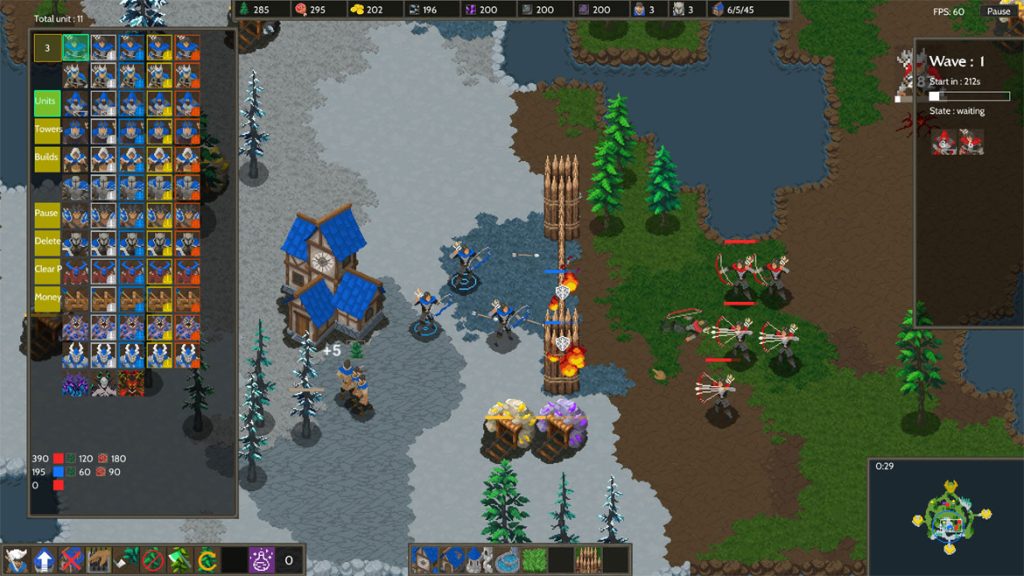

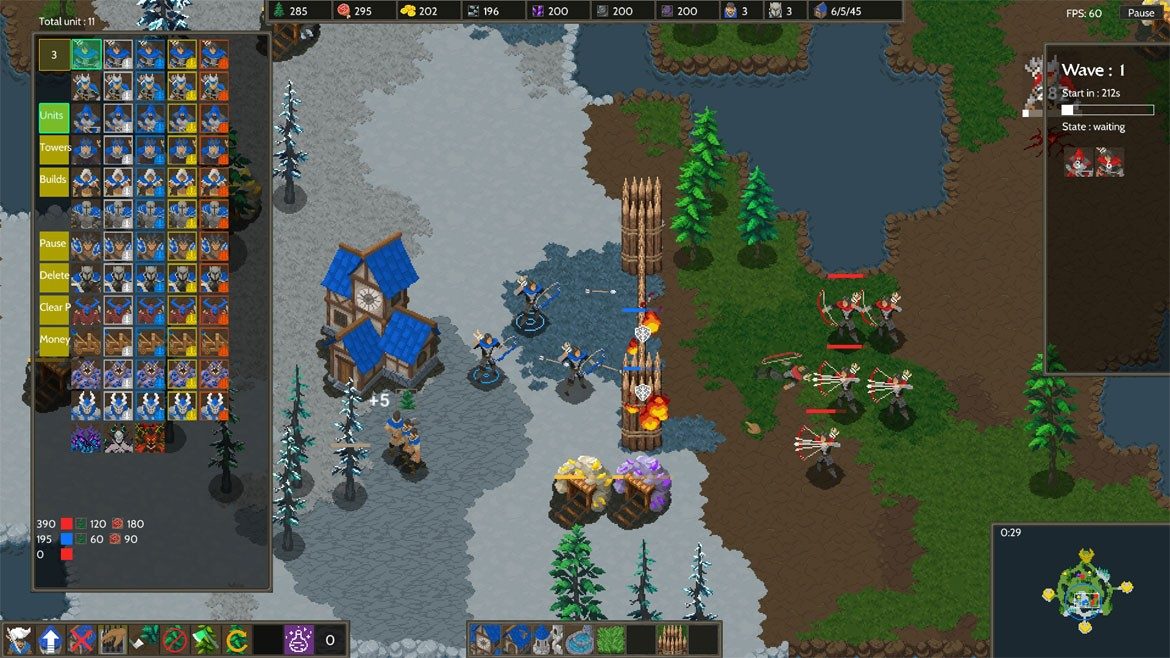
I thought that I would continue my world tour of tower defense titles this week, following up on my review of Sir, We Have An Orc Problem with Flow of War, which is also available for the PC on the Steam platform for a very reasonable $12 price. The only thing is that Flow of War turned out not to be tower defense at all, at least not technically. It’s much more of a modified real-time strategy game, although one that relies heavily on defense.
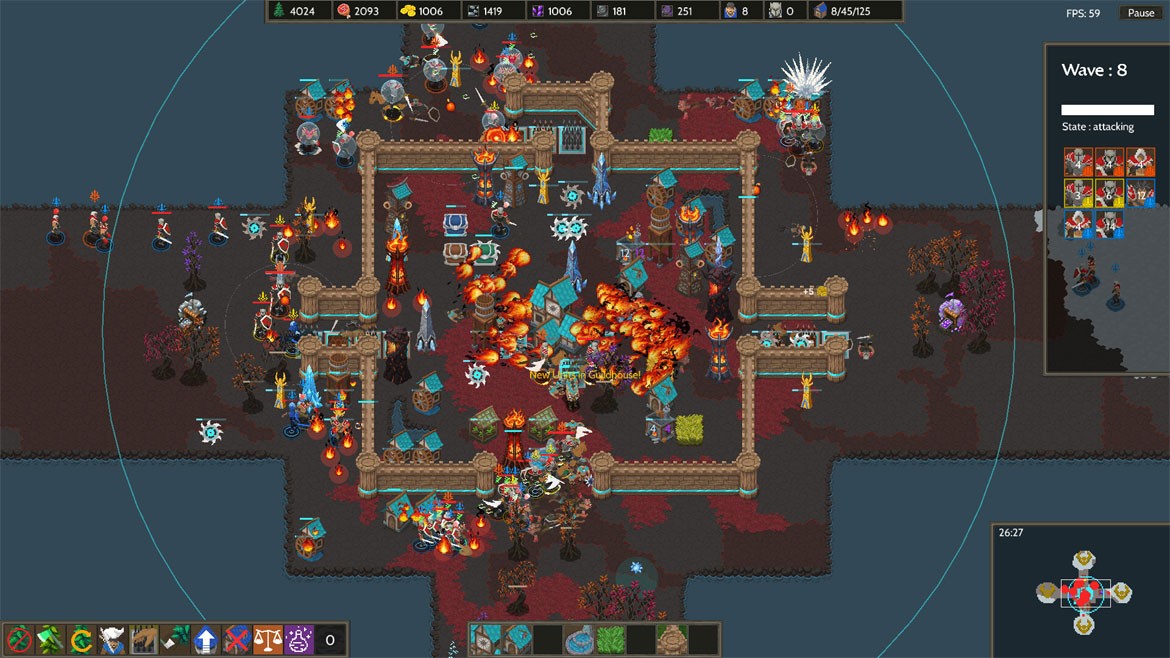 Despite my surprise at Flow of War not being a tower defense title (I mean you do use towers as a core of your defensive network), I was happy to find out that the game is heavily defensive focused. That seems to be a popular theme these days with titles like Company of Heroes 3: Final Stand leading the charge, or I suppose breaking up charges. Flow of War could fit right in with Final Stand because it challenges players to build up a defensive web that can withstand waves of enemy invaders. To make that happen, you deploy archer towers, traps and plenty of walls to funnel enemy troops down narrow approaches (you know, like a tower defense game).
You also can enlist your own troops to meet the enemy on the field of battle, although smart players will use them in conjunction with your defenses for maximum effect. That aspect of Flow of War reminded me of the combat in Circle Empires II which was functional but not overly advanced.
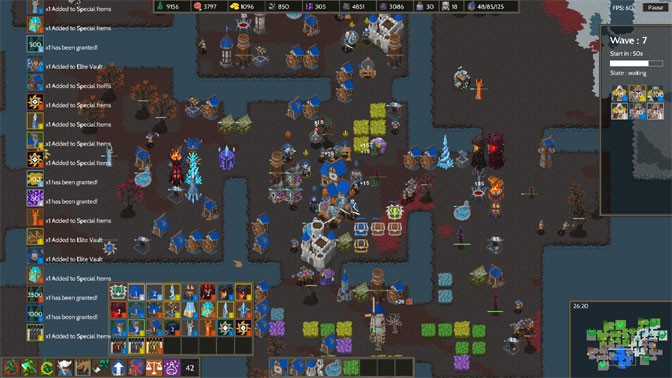 Before you can work on those defenses, however, you have to build up your economy, which is where Flow of War turns solidly into real-time strategy. But unlike most RTS titles where you place resource buildings and then worry about staffing them up, only the placement matters in Flow of War. Your people will automatically go to nearby fields, forges or other work sites and get to work as they pass by. Of course, having more people will speed things up, but having a carefully designed infrastructure matters even more.
That is the key mechanic that makes Flow of War interesting. It takes away a lot of the tedious micromanagement that can sometimes bog down RTS titles and replaces it with planning. You are not clicking on every worker and telling them to chop this tree, mine that gold or harvest that field. Instead, you are designing a settlement where workers can efficiently move through the space and do useful things along the way without any extra help or supervision.
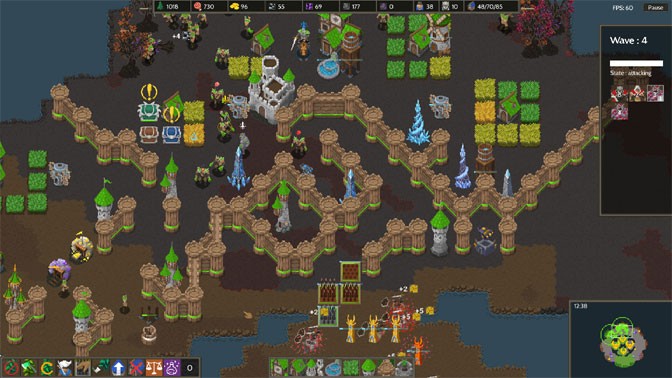 In that sense, Flow of War almost feels like an RTS about traffic flow as much as war. If your town is well laid out, then resources start moving smoothly. Workers pass farms, forges, mills and mines, gathering what you need without too much direct intervention. If your town is poorly planned, then people wander too far, take inefficient paths or fail to bring in key materials quickly enough. Since enemy waves are always coming, wasted time can become just as dangerous as a weak wall.
The workers are smart, but you sometimes have to trick them into doing things. For example, if there is a gold mine some distance from your town hall, they won’t necessarily go over to it on their own. To get them to grab that gold, which you need for higher-tier buildings and upgrades, you might need to place something like a wheat field near the gold cave. Then, when workers head out to water or harvest the plants, they will pop in and grab a few nuggets of gold as well.
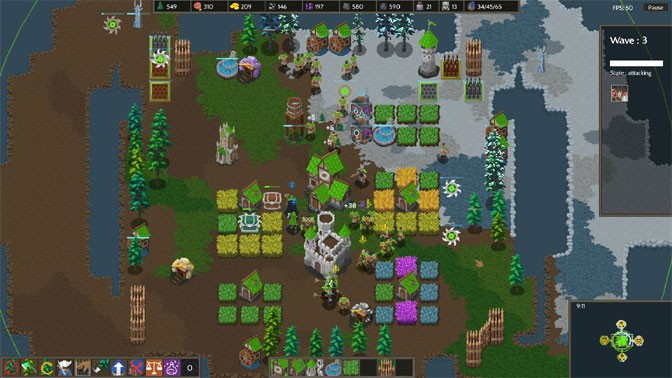 That might sound odd, but I actually liked it because it made base building feel more thoughtful. You are not just placing buildings wherever they fit. You are thinking about why a worker would travel through a space, what they will pass on the way and how to make each trip useful. It is a very different kind of RTS control, and it took me a little while to stop wishing I could command everyone directly.
The lack of direct control over the workers is meant to make Flow of War more accessible to new players or those who are not familiar with RTS titles, and it works. Players who might be intimidated by heavy worker micromanagement can focus on the big picture: where to build, how to expand, what to upgrade and how to survive the next attack. But it can also be frustrating. Veteran players like me have to relearn how to precisely control the workforce, not by selecting them and issuing orders, but by designing a better settlement. It was a nice change of pace.
As you play, you will start learning little tricks. Don’t put wheat fields right beside each other, for example. You need to leave space for your workers to walk directly between them. Otherwise, they may take a very long route to get there, costing you precious time and artificially extending your supply lines. That kind of thing becomes important because Flow of War is really about squeezing as much efficiency as possible out of a small, growing base before the next group of enemies arrives.
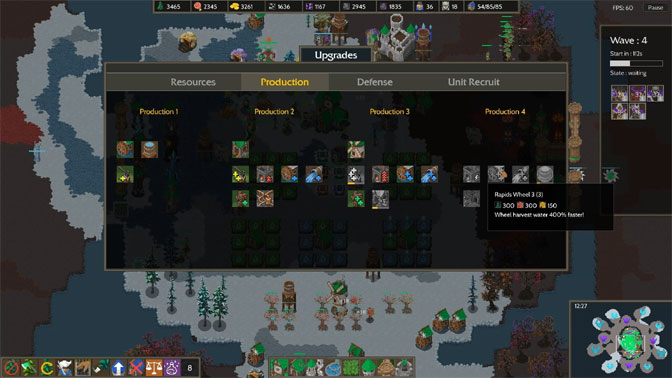 The combat is pretty balanced, and you get a good amount of time before each enemy wave attacks, especially the first one. In almost every case, I was able to build at least a few walls and towers, if not some traps, to break that opening wave. After that, the pressure begins to build, and the quality of your early planning starts to matter quite a bit.
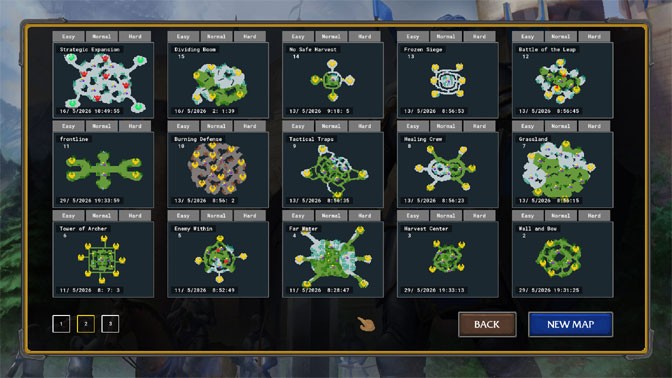
There is a map generation system so that players can make custom battle scenarios, and there’s quite a few that are already provided as part of the story-based campaign. Most of the pre-made maps seem to be set up so that there are at least two ways to get into your town and sometimes more. This makes things more challenging, although it’s often possible to wiggle your town planning around a little bit so that your walls collapse those approaches into perhaps just one path, or at least two paths close enough together that some of your towers can perform double duty on defense. That is where Flow of War comes closest to tower defense. You are not simply waiting for enemies to march down a fixed lane. You are trying to shape the battlefield so that their best choices become bad ones.
The tower and wall system gives you a lot of room to be clever. Archer towers can cover approaches while walls slow or redirect attackers. Traps can soften up or slow enemy waves before they reach your troops. When everything works, the result is very satisfying. Enemy forces crash into your carefully planned chokepoints, your towers start firing, your soldiers hold the line and your economy keeps producing enough resources to repair, expand and prepare for the next attack.
 Combat itself is fairly simple. There are a few things you can do to maximize your chances, like placing your own archers behind your walls, or putting tank-like units at chokepoints to slow down enemy assaults while your ranged units and towers devastate them. But really, a lot of the fighting comes down to running your units into theirs. You win by using the power of your defenses in combination with your offensive troops.
That simplicity is not necessarily a bad thing. Flow of War is not trying to be StarCraft or Age of Empires with intense micromanagement. Its strength is in the broader planning loop. Build a better base. Shape better approaches. Keep your workers moving. Use troops and towers together. Survive the next wave.
The graphics are pretty basic. Flow of War looks like a late 1990s RTS in a lot of ways. You can see everything clearly, which is good, but it won’t be winning any eye-candy awards. The units, buildings and terrain are all readable, and that matters more than visual spectacle in this kind of game. Still, players looking for a flashy modern RTS presentation may find the visuals a little bit too plain.
The audio is similarly functional. It supports the action and gives the battles some energy, but it is not something I expect players will remember after they are done. Like the graphics, it does the job without really standing out.
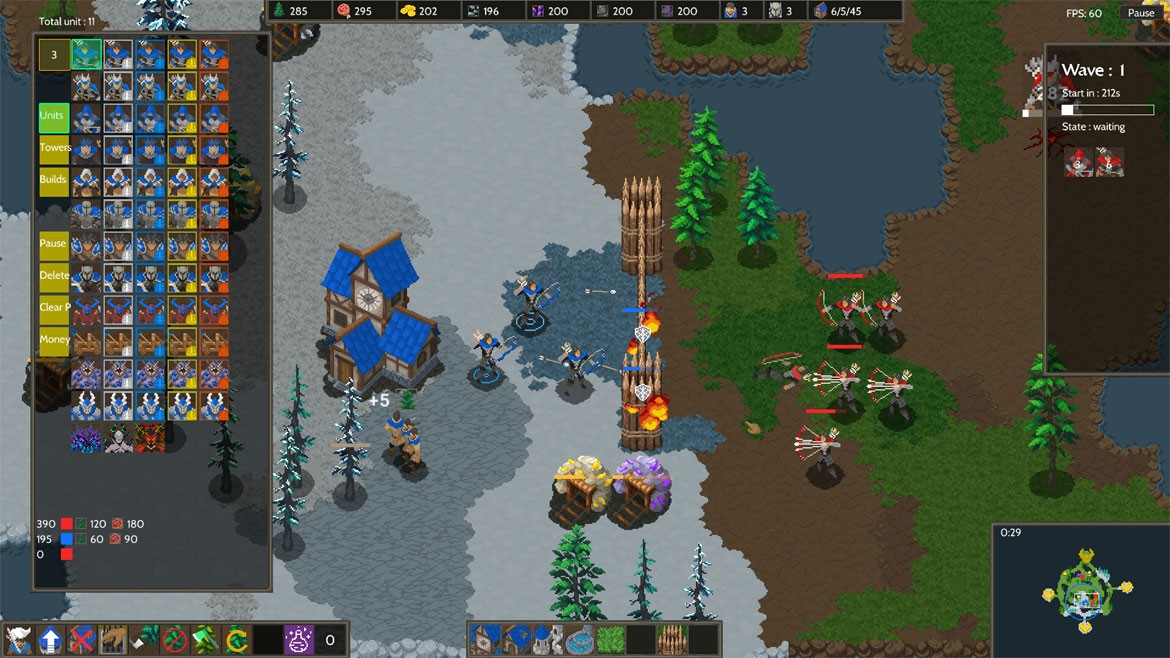 Thankfully, Flow of War does not need to be flashy to be fun. Its appeal comes from the way it simplifies some of the most stressful parts of RTS gameplay while keeping the satisfaction of building, defending and improving a base. Watching workers move through a town that you designed, gathering resources automatically and keeping your economy running while enemy waves approach is genuinely rewarding. When a plan works, it feels like you built a machine and then watched it defend itself.
That makes Flow of War a very good fit for players who like real-time strategy but don’t always enjoy babysitting every worker or issuing dozens of tiny orders every minute. It’s also a good fit for players who enjoy tower defense concepts but want something with more base building, resource gathering and unit production. It sits somewhere between those genres, and that middle ground is where it finds its identity.
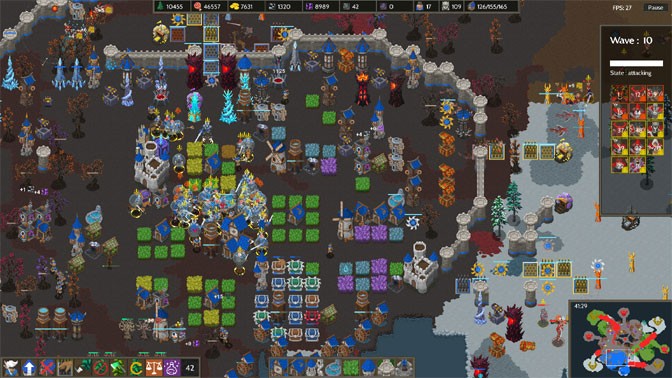 Flow of War is not a perfect RTS, and its combat could probably use a little more depth. The presentation is modest, and veteran strategy players may occasionally wish for more direct control. But the automated worker system, defensive focus and emphasis on smart infrastructure planning give it a personality of its own.
For a $12 Steam game, that is more than enough. Flow of War surprised me by not being the tower defense title I expected, then won me over by turning base layout, worker movement and defensive planning into the real heart of the experience. Players looking for a lighter, more accessible RTS with a strong defensive streak should find a lot to enjoy here.