
Welcome back to Save State, where sometimes we occasionally have decent finds at bargain prices. While browsing the Switch eShop a few weeks ago, I discovered Teenage Mutant Ninja Turtles: Splintered Fate. It’s a game that I had been aware of when it released as it was most often referred to as a slightly easier Hades with multiplayer. While I was a huge fan of TMNT as a kid (specifically the 1987 cartoon, no shade on the comics, but if the turtles aren’t color-coded then it’s not for me), the price point wasn’t to my liking for something I was unsure about buying. Stumbling across a whopping 90% off for the Nintendo Switch 2 version of the game, I bought it without even thinking twice and even pulled my wife in to play a little bit so we could test out the co-op features. So, without further ado, this is what we do.
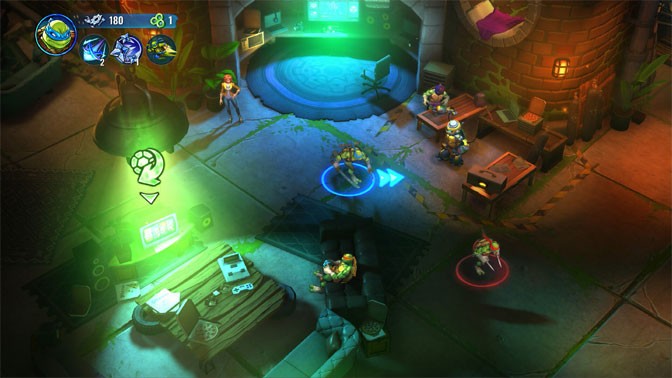
 The story of TMNT: Splintered Fate is told through character portraits and excellent voice acting, but it’s basically a paper-thin premise for the cyclical nature of the game to exist. Effectively, the Turtles and Shredder get pulled into a strange competition by an otherworldly force who isn’t even named, and the trophy for the victor is Master Splinter, the mentor of the Turtles. So, the impetus of this makes complete sense in that Shredder wants to have Splinter to kill him, and the Turtles want to see their master back safe and sound. Unfortunately, after rescuing Splinter, the story abruptly ends and you don’t find out the identity of the antagonist nor that of the helpful disembodied voice who offers you magical challenge portals. Apparently, TMNT: Splintered Fate follows the IDW Turtles comics continuity, so there are clues to the identities of these individuals, but the story as it stands now isn’t finished. Here’s hoping for updates!
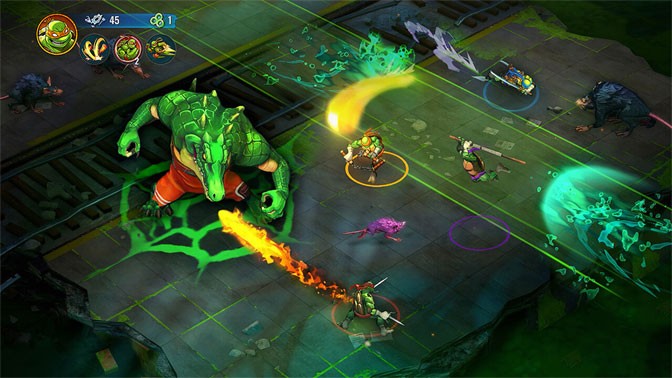
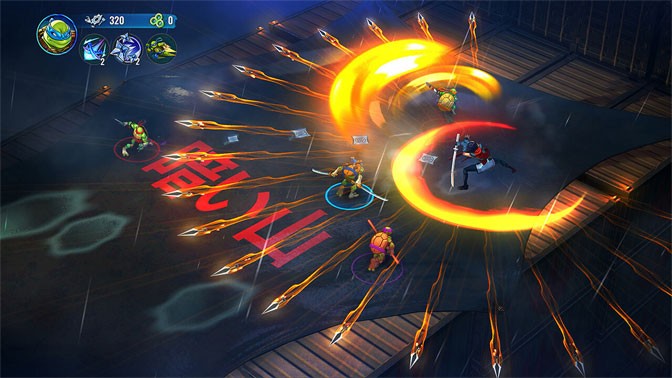 TMNT: Splintered Fate takes a lot of inspiration from Hades in that it’s an isometric action roguelite that offers you a selection of options to power up your selected character with each encounter you clear. Most encounters you will find in Splintered Fate will be ones where you need to clear waves of enemies to advance, but you’ll also be able to buy items from a shop with the scrap collected during your run, fight mini-bosses, and powerful bosses too. After clearing the game once or twice, you’ll be offered different paths after a cleared encounter via Shimmering Portals and Gauntlet Challenges, both of which increase the currency rewards you gain in exchange for increased difficulty for either the rest of the run or during the boss encounter.
Each character in Splintered Fate has their own attack string, dash attack, special attack, and tool. Your special attack and tool recharge over time by using your regular attack, though there are powers that can strengthen all three of these or cause your special and tool to recharge over time or through another method. You can dash with a single button, making you temporarily invulnerable and giving you significant mobility, which will be your primary method for staying out of harm’s way. Beyond that, you can unlock additional dashes, a charging power, the ability to deal fire or lightning damage with your special attack or tool, and even the ability to deal damage with your dashes alone.
 After clearing an encounter, players will be given a variety of options for rewards, such as Turtle Powers, Upgrades, and health recovery or increases, tools, and temporary boosts. Or you can forego the other rewards to receive currency for permanent upgrades or for the shop. Turtle Powers come in a pretty great variety, as players can add the power to burn enemies by dashing into them, deal water damage with an attack, and electrify enemies that have been shocked with a special attack so they take damage over time. Each type of power has its own niche it specializes in, such as fire scaling well with critical hits due to their high damage nature, water enhancing multi-hit abilities, and ninja abilities enhancing players’ mobility and allowing them to throw shurikens off of attacks or dashes.
What’s great about Splintered Fate is that the different types of powers tend to mesh well with one another, and there are strong legendary powers you can unlock by finding the right combination of skills. Taking enough Utrom and light powers, for example, can unlock a legendary one that increases your electric damage by your health value, which can get pretty insane even on high difficulties. Even more fun: As you play and encounter more characters and win runs of the game, you’ll unlock artifacts that give more control over the types of powers you’ll be shown after clearing an encounter, which can help you craft very strong builds if you know what you’re doing.
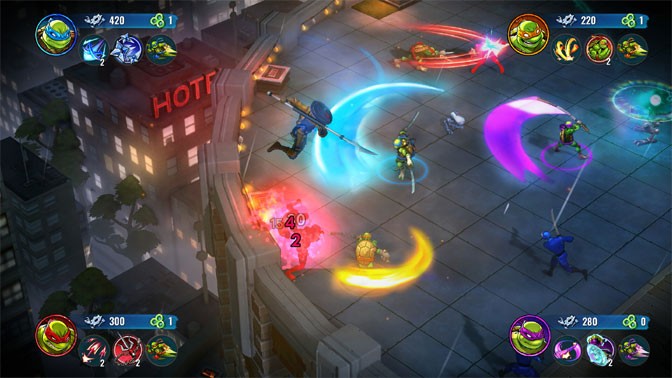 Runs of Splintered Fate take around 18-25 minutes solo, and this takes longer in multiplayer if you’re dealing with someone indecisive. But even then runs from start to end are pretty quick to complete. This is good because you’ll quickly start accruing Dragon and Dreamer coins to help further bolster your turtle power. Dragon Coins are used to increase the stats of your turtles: higher health, revives, move speed, damage, and things of that sort, while Dreamer Coins are spent to improve your odds of getting currencies, chances to be offered Turtle Powers after clearing a room, or the ability to reroll encounter rewards. These upgrades tend to snowball on each other a little bit because as you acquire more of each, the more challenge portals you can take which will improve your run-end yield of coins to do even more upgrades and can be pretty addicting!
So, there you have your gameplay loop for TMNT: Splintered Fate: beat up enemies to get scrap and upgrade currencies, fight a boss, spend your scrap at the in-run shop to increase your chances to make it to the end, and repeat that until a climactic showdown with Shredder at the end. Every run will give you more artifacts and coins that will make each subsequent run a little bit easier. There’s even cooperative multiplayer so you can play locally with a friend through GameShare if you have a Switch 2 or with randoms online. Cooperative multiplayer Hades is, quite possibly, one of the best ideas of all time, unbalanced though it may be because it’s just fun to beat up Foot Clan ninjas with friends.
 The largest issue with Splintered Fate on Switch 2 is that the game will freeze a lot, like at least a couple times every ten runs you attempt. If you’re playing by yourself, it will spawn you back at the start of the room the game froze in, but if you’re playing multiplayer with friends or randoms online it can be significantly more annoying than that. You can join a game in-progress if you get dropped, but it will continue running while you’re not there, typically meaning your character is a sitting duck, losing all of your health and revives until you close it and come back in, which really, truly sucks. The crashes in Splintered Fate almost universally seem to be the game software and don’t lock up the Switch 2’s operating system at all, so it’s easy enough to hit the home button, close the software, and boot back into it where it’ll prompt you to re-join the in-progress run, but you’ll almost always be worse off than you started should this occur.
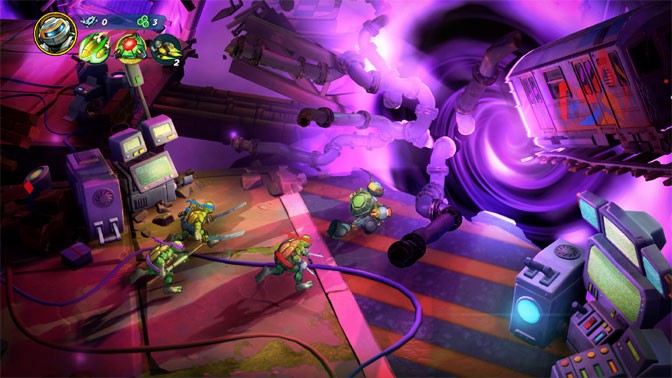 That being said, for a title that was purchased 90% off, I’ve definitely played worse. TMNT: Splintered Fate after a few upgrades is simple enough to pick up that even my wife, who games but would never touch something like Hades with a 10-foot pole, had some fun running around and killing enemies as Metalhead and Alopex until she discovered how broken some of the builds in this game can get. If you can find it on sale for a nice discount, this is definitely one I can recommend if you enjoy the gameplay loop of roguelites like this.
With that, I think we can bring this entry of Save State to a close. If you or someone you love has been transformed from the norm by nuclear goop, please call our office using the number 1-800-Turtle-Power. See you in two weeks!