
Welcome back to Save State. Let me take you all back twenty years to the time of 2006. Italy won the World Cup, Pluto was demoted from being a planet, and a bright-eyed kid with an afro put his very first computer together using money from his first job. This was an exciting time- everything was together, and the system even POSTed on the first try! No longer would this child have to use his grandmother’s Compaq Presario that was auspiciously located in the dining room, with a keyboard covered in cigarette ash and a mouse turned yellow with tar.
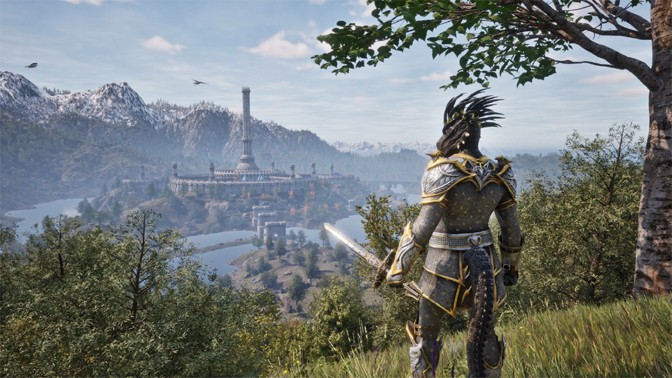 There were so many games to try first. The sheer volume of options was astounding, but he already knew the very first one he had to try. It was a title that he picked up after seeing it in a magazine, an RPG where you play in the first person. Like Goldeneye or Halo, no less! This was his first time seeing something like that, so he cracked open the game’s case, put the CD into the disc tray, and read the manual while it installed on the 128GB hard drive he purchased from a man at a flea market.
This is the story of how I found my very first Elder Scrolls title, Oblivion, the first game I ever installed and played on the very first computer I ever bought with my own money. I got to relive a lot of those memories recently due to Elder Scrolls IV: Oblivion Remastered releasing on Nintendo Switch 2, and while I won’t say the game’s performance led to a perfect play experience, I’ve had an absolutely joyous time trying what I remember of old character builds from probably two decades ago. My full review of Oblivion Remastered on the Nintendo Switch 2 will be running soon, so keep an eye out for that.
Oblivion is one of those titles that was special to both me and my group of friends, where my best friend would come over every few days just to try out a new spell craft idea or test out some new beneficial glitch that they read on GameFAQs.
Oblivion Remastered starts simply enough – you pick your race and design your character, though the visuals of the game made it pretty easy to make a horrific, blue eldritch abomination that would be known as none other than Dingleberry. It begins with you in a prison cell, providing you with a chance encounter with the emperor of Tamriel, Uriel Septim, who believes meeting you to be fate as he’s seen your face in his dreams (and with how I designed characters, likely nightmares too). Apparently, he’s seen visions of a hellish invasion from the plane of Oblivion, and somehow Dingleberry is the one thing that can stand up to the Daedra on behalf of the mortal realm.
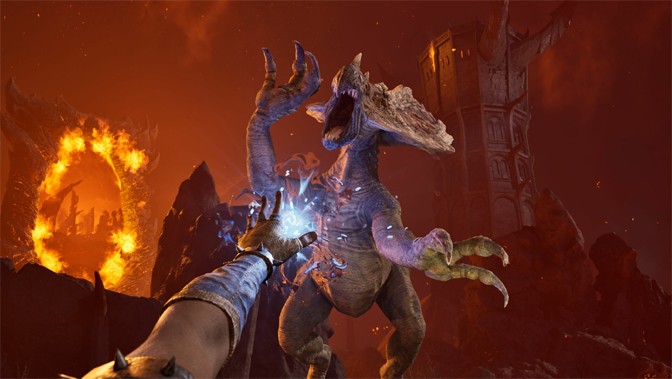 Emperor Septim is on the run after assassins have killed his heirs, and you’re given free rein to follow the emperor and his escort through the catacombs’ escape route while learning lore about the world and being given brief tutorials about how to fight, sneak, and other various useful actions. Unfortunately, even with your assistance, the emperor is killed, and you’re given the task of venturing through the sewers to deliver an important amulet to Septim’s illegitimate heir, else all of Tamriel be damned to ruin. The start of the game is enough of an impetus to get you going, but that’s not what made Oblivion special.
What made Oblivion special was making your way through the sewers alone, fighting rats and skeletons, and finally choosing a class to determine your specializations to view the sheer wealth of options available to you. Even more than that, though, what really, truly made Oblivion special was finally exiting the sewers near the Imperial City to see just how vast and incredible the Cyrodiil province in Tamriel is after having spent probably an hour wandering around in a dark crypt and sewer. That feeling – the sensation of leaving the sewer and just how much of the world could be seen immediately in front of you…was incredible back in 2006. It may seem rote or commonplace now, but a lot of kids and teens back then were playing Mario Kart DS, Castlevania Dawn of Sorrow, Resident Evil 4, or Shadow the Hedgehog, so when you’re used to games with smaller scopes like those, the expansive world of Cyrodiil really makes an impact on you.
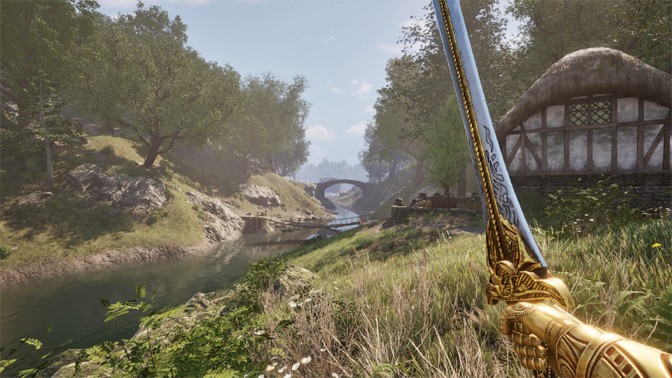 That moment of exiting the sewer is what secured me as a lifelong fan of the Elder Scrolls, and why I went back and played Daggerfall and Morrowind after getting my fill of Oblivion. If you know how Elder Scrolls titles play, then Oblivion should be very familiar to you. You can play the game in first or third person, but you pick your race, class, and the skills you want to focus on, and then go looting and killing all across the land, completing either the main quest or every side quest that comes your way. As you complete quests and explore caves, ruins, and dungeons, you’ll soon encounter gates to Oblivion, portals that allow the denizens of a hellish otherworld invade Cyrodiil. You’re basically the only one capable of venturing through those portals, defeating the beasts that lie on the other side, and closing those gates for good. That potential to stand against Oblivion is what Uriel Septim saw in you; that and probably also your capacity to make crazy spells that refund their magicka costs.
Wandering through Cyrodiil and encountering all of the wacky characters in your journey to aid the emperor’s heir was as impressive twenty years ago as it is today. You’ll encounter obsessive fans, an alchemist concerned with the punishment for necromancy, and a guy that attempts image training but winds up locking himself in his own dream. It was remarkable to see just how well the world of Cyrodiil and its NPCs held up even after twenty years because I can’t imagine many, or any, of their voice lines were really touched. The mid-2000s were really the wild west when it came to dubbing video games, which just goes to show how ahead of its time Oblivion was when compared to a lot of its contemporaries.
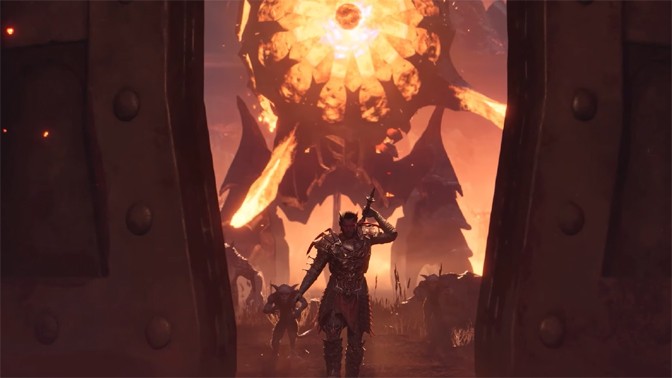 The main thing about Oblivion Remastered on the Nintendo Switch 2 is that it’s the same Oblivion we knew and loved 20 years ago but with a new coat of paint, effectively meaning that many of the goofy bugs and tricks we used way back when, such as item duplication or stacking fortify spells until you have enough in your magicka stat to crash the game are still possible. There have been some changes that improve the early game experience as well, such as changing the Endurance stat so the bonus health you get from improving it apply to your earlier level ups, something that made players unaware of that mechanic much easier to kill than they should have been.
Really, I’ve just been having fun playing a title from when I was much younger. At times, Oblivion Remastered looks absolutely gorgeous, especially when you see a location wreathed in the eldritch light of an Oblivion Gate, though there are also times where it looks poor because a character in the distance is leaving DLSS-styled afterimages of themselves, or the frame rate stutters or hitches while trying to snipe a Daedra with an electrified ice ball spell at a distance.
 Even in spite of those issues, I’ve been having a ton of fun with Oblivion Remastered, though a more comprehensive detailing of its performance will be a major point during the actual review.
That being said, I think it’s about time to bring this entry of Save State to a close. I’m sure you’ve had enough of me gushing about my memories with a game from two decades ago that a modern remaster let me relive. Be sure to come back in two weeks for more of the same. Maybe it’ll be a new indie title, or maybe I’ll share my favorite pancake recipe. You never know.