

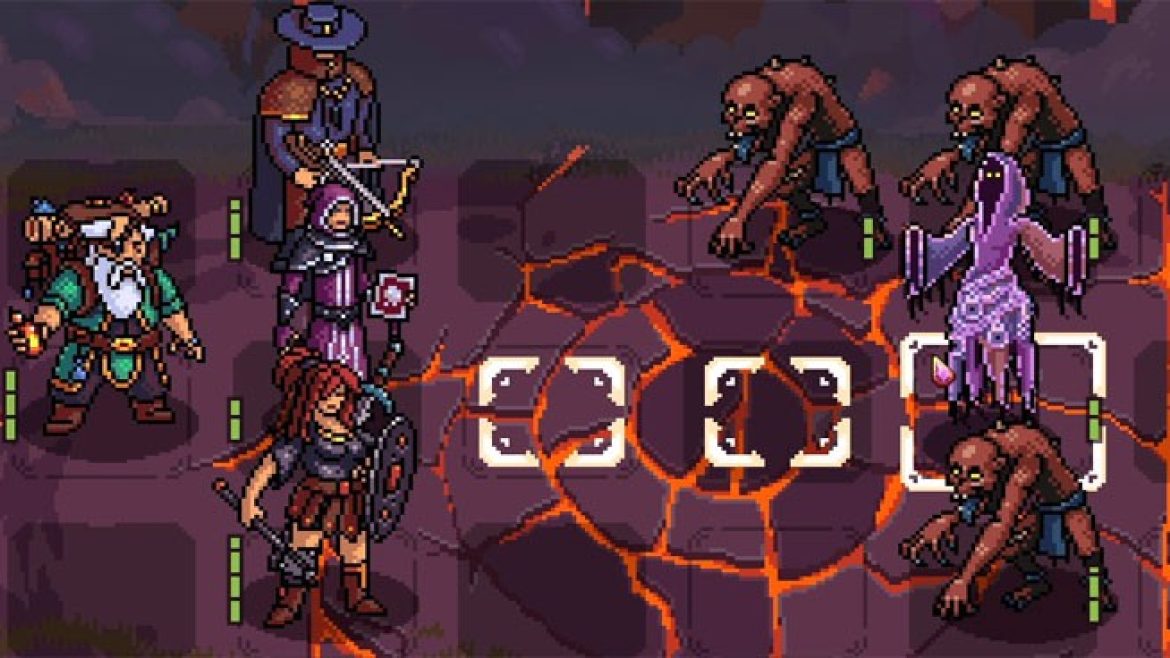
Turn-based strategy games often ask players to survive impossible odds, manage chaos, and somehow come out ahead against overwhelming enemies. Guards II: Chaos in Hell does all of that while wrapping its tactical battles in a demonic fantasy setting that is more playful than grim. Beneath the pentagrams and infernal monsters is a game with remarkably simple mechanics, making it a strong pick for both newcomers and strategy fans looking for something quick to learn but still satisfying to master.
Plot Ahoy!
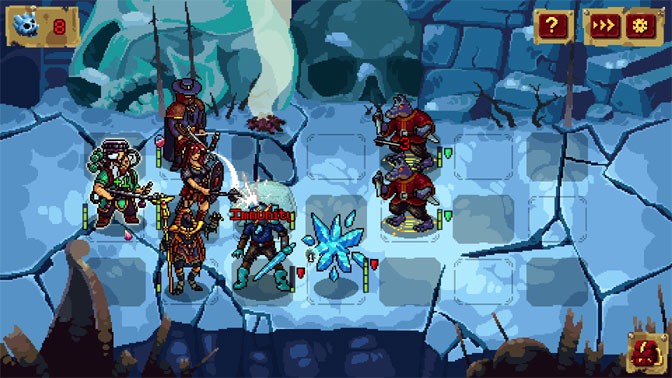 The story for Guards II: Chaos in Hell is pretty simple, you perform a summoning which immediately goes awry, accidentally bringing forth a creature who tasks you with recruiting a team of heroes and sending them into hell to kill the current devil in charge. The story is quick and to the point, taking up only a minute or so of your time before you’re thrust right into the action and are learning the controls of the game and how to play in a nice tutorial.
Review Notes
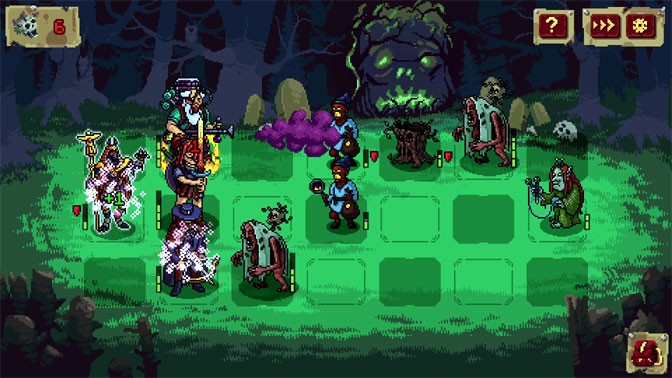 The actual gameplay of Guards II is very simple: Your chosen warriors and their enemies stand on a grid, with the enemies advancing slowly but surely. Your characters in the front stand in place and defend themselves, while the ones at the rear recover or support the frontline fighters. Combat is entirely turn-based, as in you attack with your characters and then the enemies fight back. Characters have specified attack ranges, and each time you swap characters around on the field, they’ll perform an attack and the enemies will attack or move into their effective ranges.
 As a turn-based strategy title, each stage in Guards II functions like a puzzle you need to solve before you get overwhelmed by regularly spawning hell beasts, with bosses testing the limits of your characters and strategy. Due to the fact that you start your turn by exchanging the positions of your chosen party of heroes, combat becomes about efficiency and overall harm reduction. Swapping a hero to the backline will heal them while the one being brought to the front will utilize their special move, whether that be healing a teammate or tossing a shield to damage distant foes.
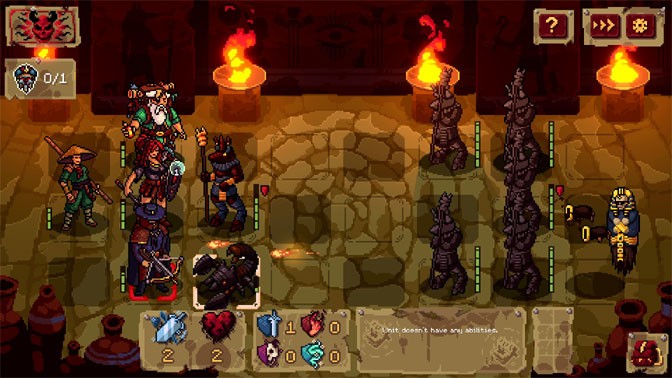 A melee warrior can only deal damage to adjacent foes and obviously has more health to compensate. Your mage and archer can deal out slightly smaller amounts of damage while enemies approach, with their low health making enemies who get in range to attack very dangerous. Much of the time, managing which characters were getting hit and spreading out the damage among the smallest points of interaction possible was the most important thing to learn. If you allow too many enemies to get into their effective range by not properly utilizing your ranged units or leveraging their abilities, you may have multiple characters taking damage simultaneously, something you want to avoid since swapping to the backline doesn’t recover large amounts of health.
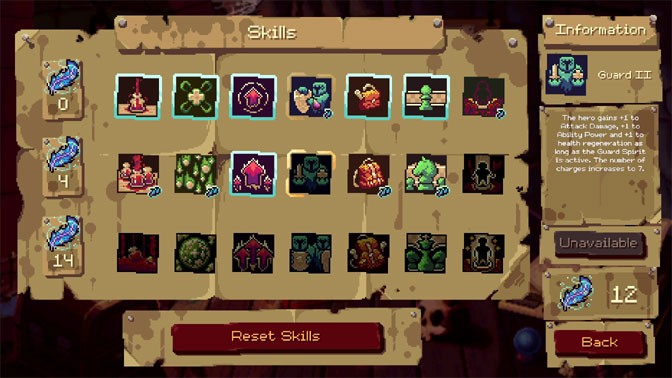
Clearing a stage is as simple as defeating the specified number of enemies, and this grants you rewards that can be spent on upgrading your team. After successfully clearing a stage, you’ll earn a currency you can spend to permanently upgrade either your heroes or yourself, with the upgrades for the heroes being things like boosting damage, health, and their special ability. The permanent upgrades for you will increase your available choices for temporary buffs in-between levels of a stage or increasing the health that the hero in the backline recovers.
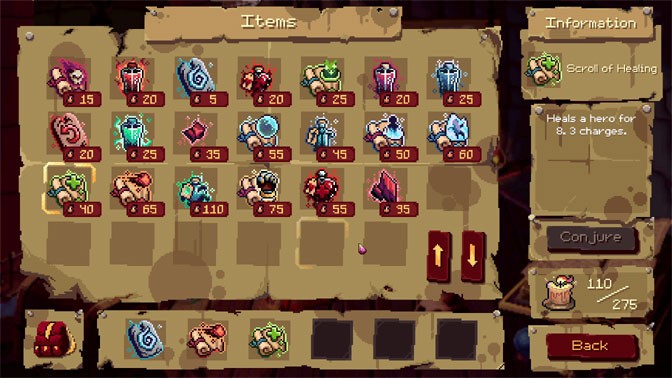
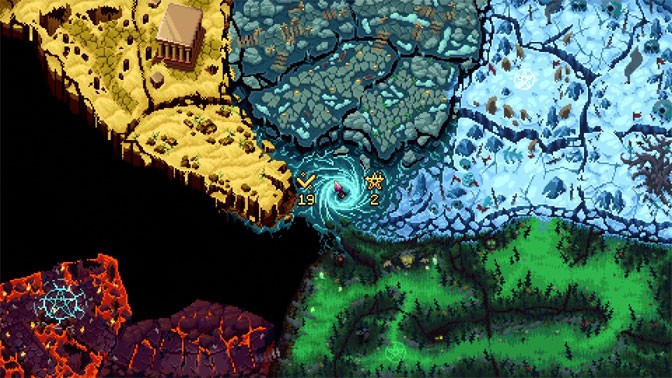 Some stages consist of more than one level you need to fight through, and after clearing one part, you’ll earn some demon blood you can use to confer temporary buffs to your team. These buffs carry over into the next battle but are lost whenever you complete the stage and return to home base. The buffs are typically very simple statistics improvements: higher health, more damage, and things of that nature, but all of them are very valuable in helping you clear a tough level or boss.
 Visually, Guards II looks phenomenal, with colorful, chunky pixel art and a great soundtrack that really fits a more adventurous feel, though some of the music definitely makes it sound like players are in Hell and in danger. So, you’ve got solid visuals, great music, an interesting combat system, and great progression mechanics that provide permanent upgrades for your party as you progress and unlock new characters with which to delve into Hell.
TLDR
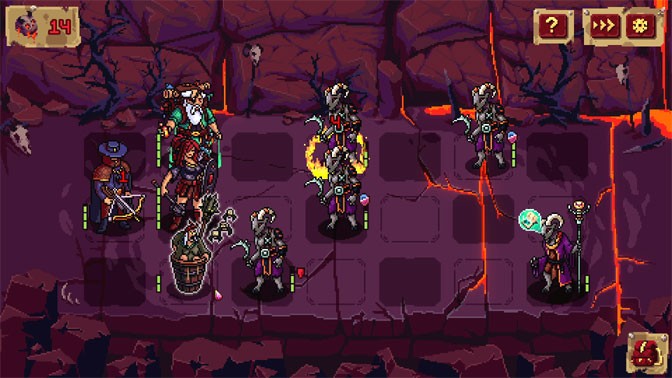 Guards II: Chaos in Hell is a fantastic combination of turn-based strategy and auto battler gameplay. The simple rules make it easy to pick up and play whenever there’s a free half hour, and while it seems simple at first, players will definitely have more than a few moments where they will have multiple choices available and won’t know which is the optimal play. There’s a brief tutorial to help get you acclimated, and once Guards II: Chaos in Hell clicks, you’ll be swapping heroes and cutting swathes through denizens of Hell before they know what’s hit them.















