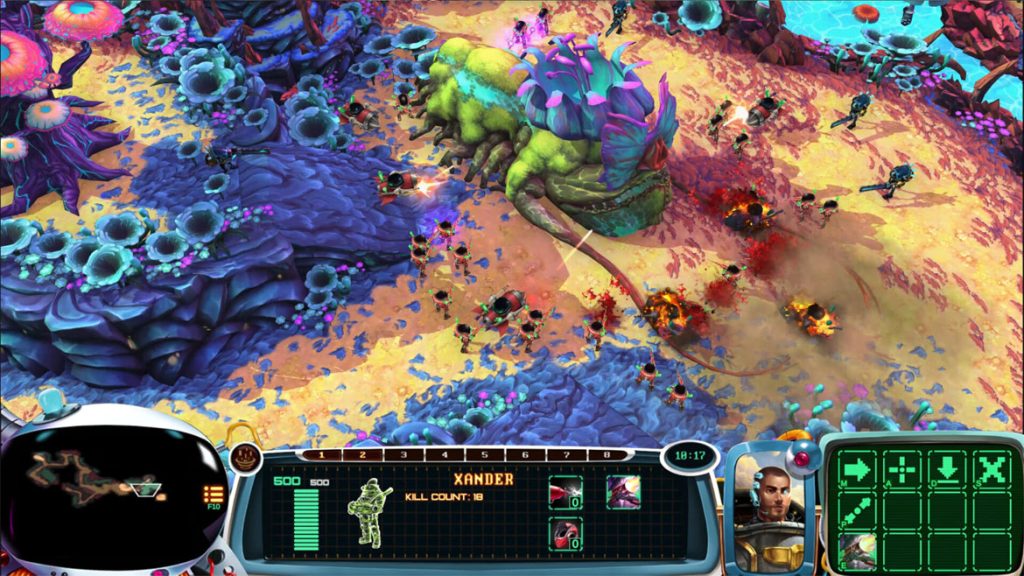

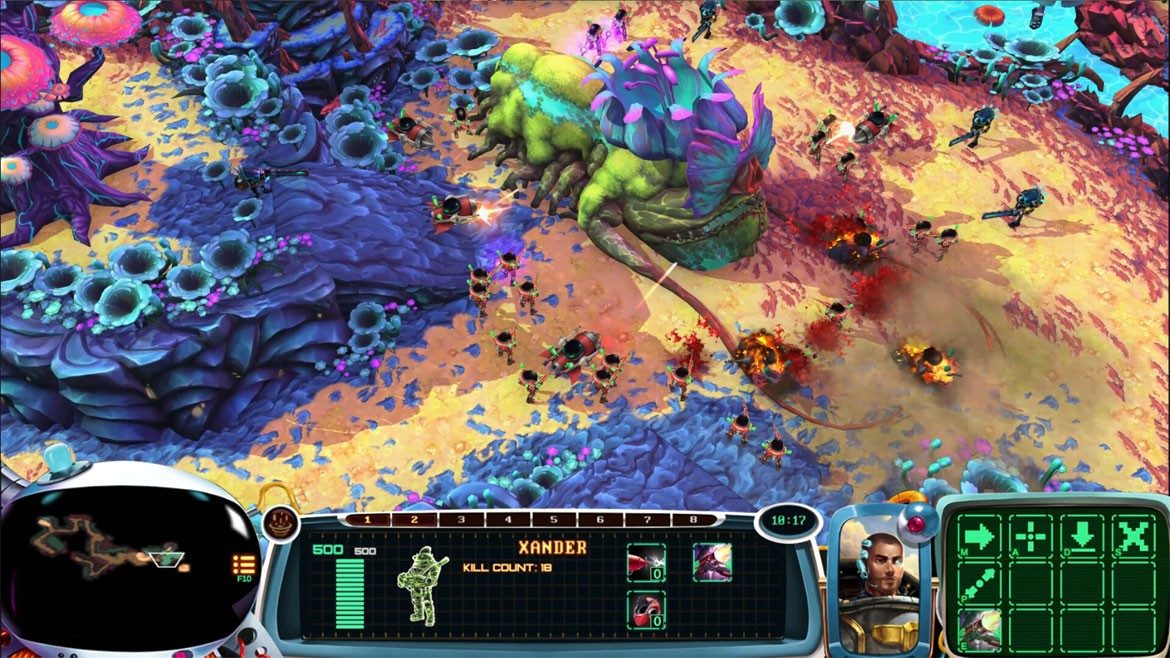
Space Tales is a real-time strategy game with player-versus-environment elements developed by Saigon Dragon Studios, and it features gameplay similar to StarCraft and Grey Goo. You travel to a foreign planet where your crew is overrun by alien forces and otherworldly beings. You must build defenses and adapt to creatures that threaten your survival as you try to find your way home. You can summon captured monsters and create defensive structures, but ever-changing battlefield conditions keep you on your toes and test your quick thinking. Space Tales is available on Steam for $14.99.
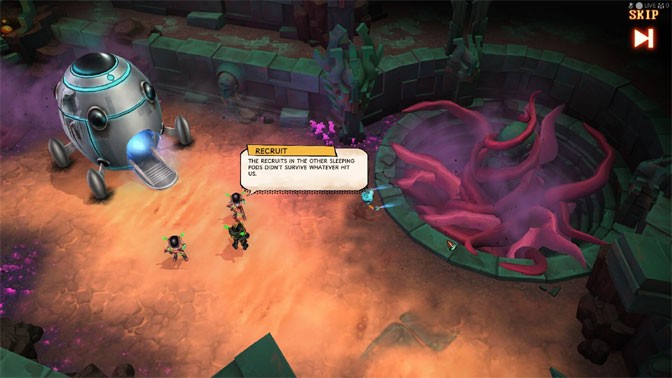
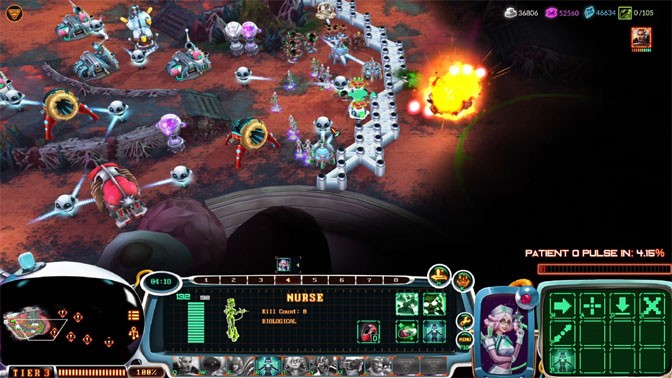 Space Tales drops you into the action immediately, teaching you how to move and defeat enemies. The tutorial is simple and effective, and it doesn’t drag on for experienced RTS players. You begin as a young commander named Xander Falcon, who is thrown into an intergalactic war and forced to take charge. Vespera helps by serving as your eyes back at base, guiding you in the right direction. As you conquer new worlds, you encounter other factions, including robots, where a strategy that worked against alien bugs might falter against mechanical enemies. Luckily, there are many ways to approach combat, with a strong selection of units to support different strategies.
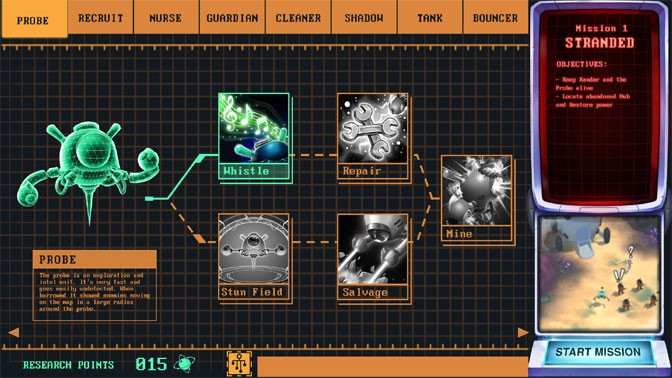
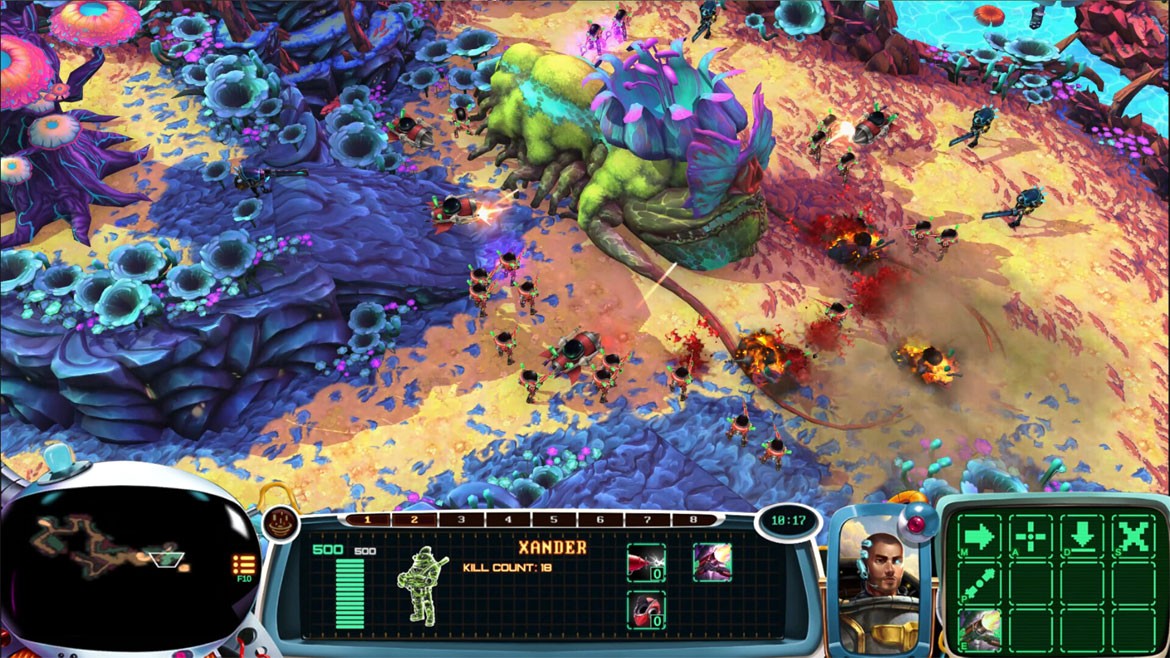
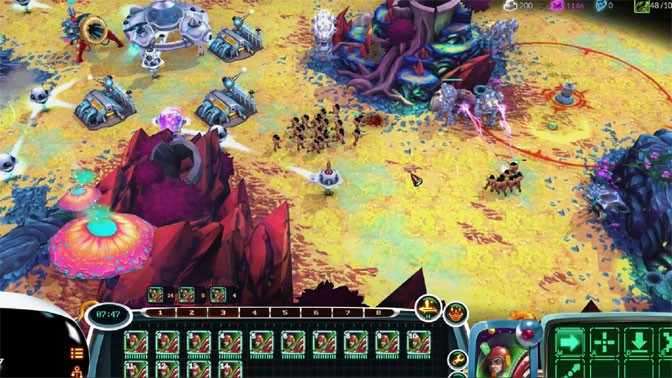
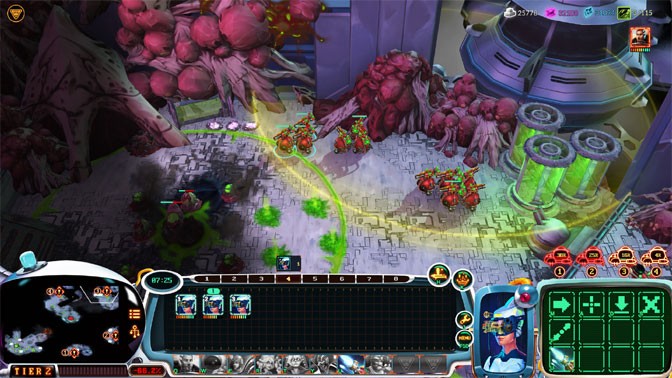 Once you’re past the tutorial, most levels task you with defending your command hub from enemy units while completing objectives. You place additional hubs that establish control over areas and allow buildings to be constructed within designated spaces. Essential buildings to place early include processing plants and boot camps. Processing plants passively generate concrete and steel, although they can only be placed on specific tiles on each map. These materials are essential for constructing buildings and recruiting units. Glass, the third material, can be converted from concrete or steel and lets you upgrade units, improving attributes such as damage and health. Boot camps serve as spawning points for recruits, nurses and other ground units needed to explore maps and complete objectives, such as destroying enemy nests or spawning stations. After completing missions, exploring the map can earn skill points that can be used to upgrade various skill trees.
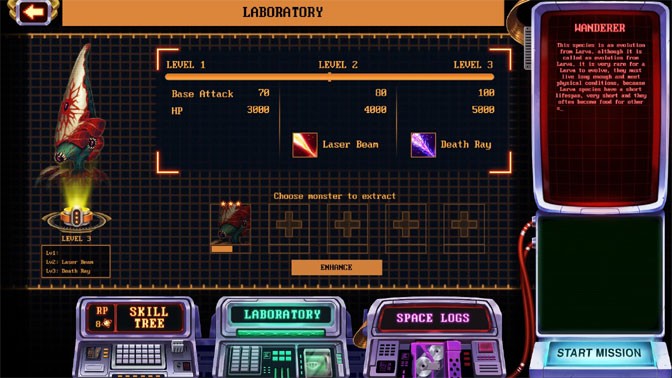
 Other important buildings include industrial complexes, universities, rebirth chambers, worker unions and walls. Industrial complexes let you build defensive units with a wide attack radius, while universities allow you to upgrade units using glass and steel. Rebirth chambers let you revive your main hero unit or summon captured monsters, and worker unions spawn bouncer units that soak up damage to protect recruits and heroes. Meanwhile, walls help protect your base and keep valuable buildings safe from enemy advances.
Space Tales’ narrative and worldbuilding are well done. You gradually uncover the mystery behind the voyage’s failure, with Vespera serving as your main contact back at the base and helping guide you toward your destination. You can discover clues about what happened by exploring and examining logs and computers scattered throughout the environments with some left behind by previous crew members who may have met unfortunate ends. The writing between characters is enjoyable with distinct personalities and lighthearted moments that don’t detract from the seriousness of the situation.
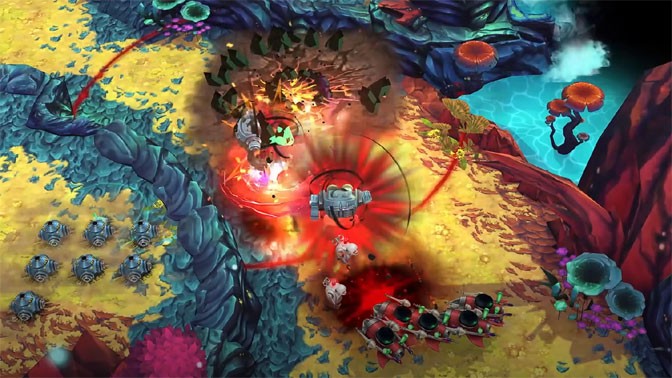
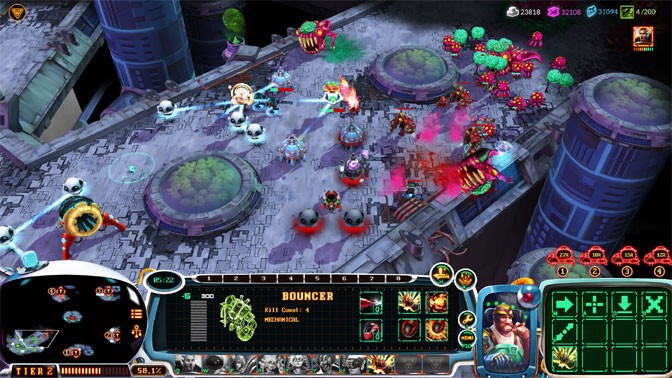 Most of the audio and visual effects are also well done with a unique style in both areas. Space Tales takes an interesting approach with low-poly, retro-inspired visuals reminiscent of early 2000s games, mixing vibrant colors with darker and more ominous environments. Buildings are bright and colorful, making them easy to distinguish from the surrounding terrain. Even with multiple units onscreen, visual clutter generally isn’t a problem, which is important for an RTS. However, the loading screen that appears after exiting a mission doesn’t quite fit with the rest of the art style and looks more outdated than the other visual elements.
 The sound effects and soundscapes have a strong sci-fi feel with large lasers and healing beams helping create a sense of urgency. The background music complements the retro science fiction aesthetic with synthetic sounds, and it makes you feel like you’re on a mission to return home. There are some minor audio issues, however. When multiple enemies are defeated simultaneously, their sound effects can overlap and create sudden volume spikes. Another concern is the limited number of voice lines for units. Most seem to have only a couple of responses when ordered to move. So constantly rearranging your forces across the map can become repetitive.
 Space Tales also includes a disclosure about AI-generated content. According to the developers, all visual art, effects and textures were created by human artists, while its code was written by the development team. Approximately 90% of the audio, including music and most sound effects, was created by musicians and sound designers, while the remaining 10% consists of supplementary AI-generated ambient effects. Similarly, the developers state that 90% of the voice acting was performed by human actors, with AI-generated voices used for some background NPCs and the in-game AI companion.
 Other gripes I have involve the title’s settings and customization options. There isn’t an option to rebind keys if you don’t like the default layout, and I couldn’t find a way to run it in full-screen mode. This made playing on my dual-monitor setup less convenient because I had to be careful not to move the cursor onto the second display. The highest resolution I could select was 1920×1080, limiting the visual quality on higher-resolution monitors. A difficulty setting would also be beneficial because the charming atmosphere and straightforward RTS gameplay may attract newcomers who could find some encounters overwhelming.
 Finally, the save system can be frustrating because there is no manual save option. Missions tend to last around 20 to 30 minutes, and failing near the end means restarting the entire level. That can be especially discouraging after spending considerable time building a base and preparing your forces. Adding checkpoints or manual saves would make those situations much less frustrating. These quality-of-life improvements could significantly enhance the overall experience.
 Despite these issues, Space Tales is a good experience for players familiar with real-time strategy games who are looking for a roughly 20-hour adventure in a colorful, low-poly science fiction world. Its relatively low system requirements also make it an appealing budget-friendly option for RTS fans. If you’re looking for a title with especially complex systems or deep resource management, however, you may want to look elsewhere because Space Tales places more emphasis on unit-based combat.
Still, with its enjoyable story, varied enemy factions and engaging battlefield encounters, Space Tales has plenty to offer. With some additional polish and quality-of-life updates, it could become a standout entry in the indie strategy genre.