
Editor’s Note: The spooky season is upon us once more as October brings us ghosts, goblins and all kinds of Halloween fun. First up for our coverage is the new Fire’s Edge DLC for Darkest Dungeon, one the spookiest and most demanding RPGs around.
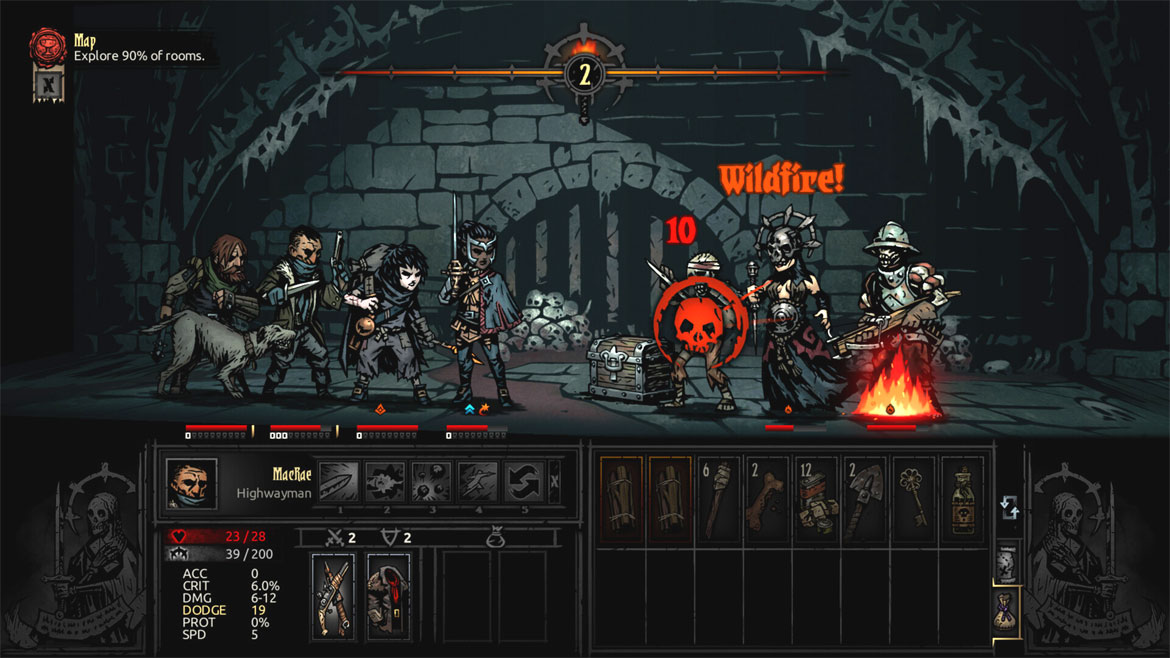 Darkest Dungeon is a roguelike dungeon crawler developed and published by Red Hook Studios, where you explore multiple dungeons and test your mental fortitude in stressful situations. It’s available on Steam and consoles. The title blends psychological horror elements with gothic Lovecraftian themes while forcing you to manage stress, afflictions and punishing modifiers. You embark on journeys with different classes, uncovering the secrets of an old, cursed lineage while managing a villa for your heroes to live in.
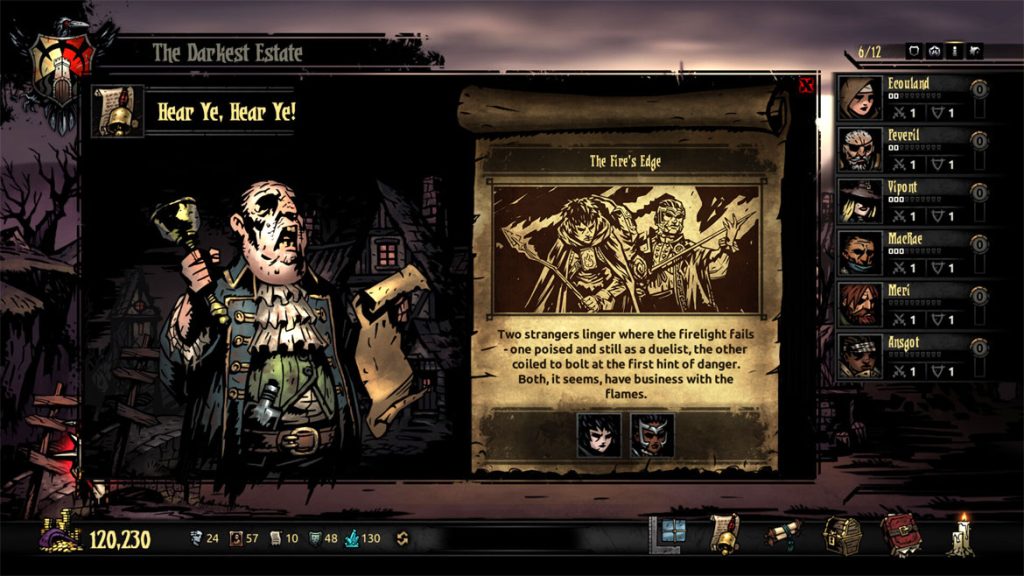
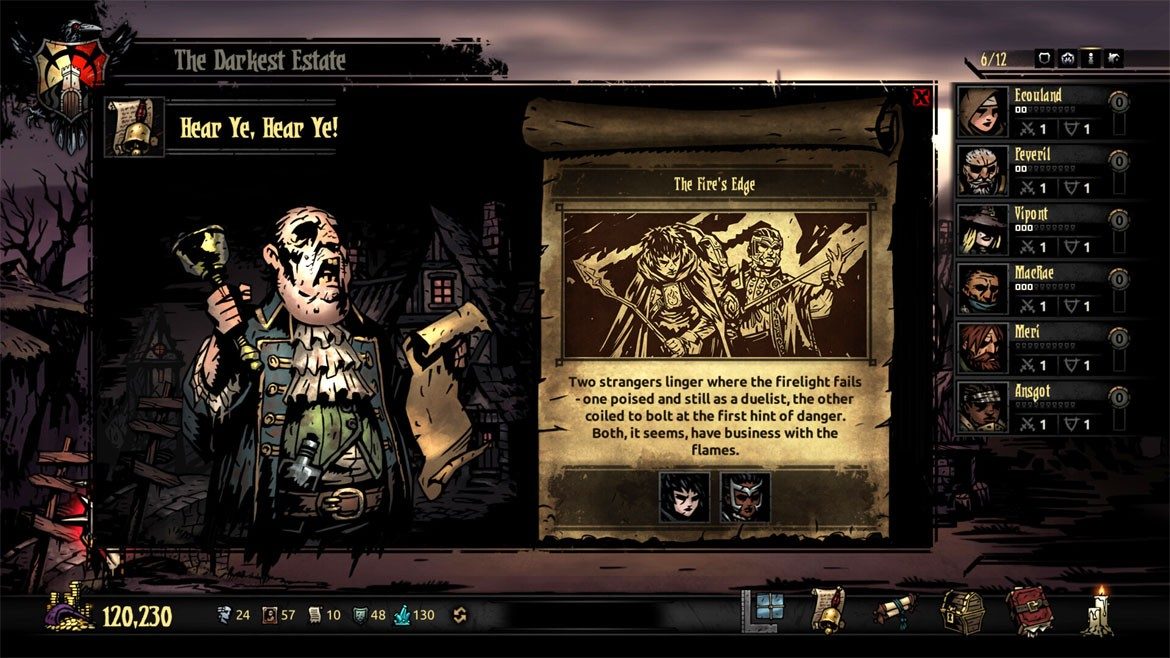
Although Darkest Dungeon has been around for quite a while, it is still receiving updates. Its newest DLC, The Fire’s Edge, adds two new characters, the Runaway and the Duelist, bringing its roster to 20. It is available on PS4 and PS5, PS Vita, iOS, Switch, Xbox One, Epic Games Store and Steam, with full mod support through Steam and Steam Deck compatibility for $25.99.
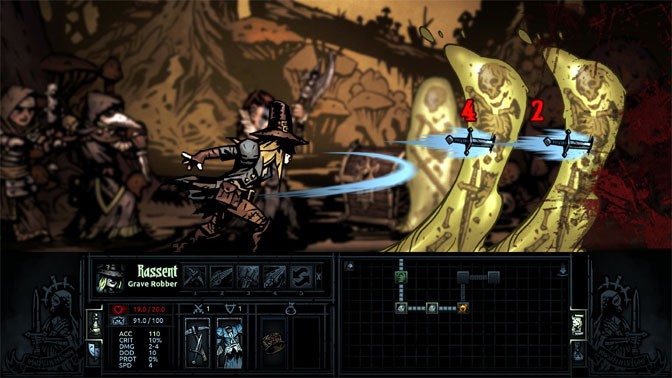 Darkest Dungeon is a typical turn-based RPG experience in some ways, with different skills for each character and a multitude of debuffs and status effects you can inflict or suffer. The beginning is both helpful and punishing as you navigate early dungeons and figure out how the systems work when you return to your estate of operations. The title is a little lenient at the start, but as you unlock more upgrades and venture on more expeditions, you’ll quickly realize why you have to pay attention to factors that can permanently kill any of your characters. Luckily, there’s also an in-game glossary that lists most keywords you will encounter on your adventures, so if you run into something you’re unsure of, you can look it up and keep the gameplay flowing without constantly searching externally for what certain keywords mean. Once you get past the initial adventures in your playthrough, unlock every property and start getting to bosses and harder experiences, I personally wish you luck.
Stress is a mechanic discussed throughout this review, and it is very important, but what is it? In Darkest Dungeon, it’s a mechanic many enemies or outside factors love to inflict on you, and you have a max of 200 stress, with a checkpoint at 100. When a unit reaches 100 stress, it has a chance to suffer a debuff called an affliction or a small chance to gain a buff called virtuous. Please avoid 100 stress if you can as debuffs can range from nerfing your stats to making a unit refuse heals of any sort, attack your own units and more. Every unique affliction will cause your entire party to accumulate stress every turn. If you’re lucky, a character can enter a virtue state instead, where they reduce your party’s stress each turn while also buffing stats and applying other effects depending on the keyword, such as healing your party or buffing your teammates. When a character reaches 200 stress, they suffer a heart attack and immediately reach 0 HP. They don’t die immediately, but the next tick of damage has a chance of permanently killing them. After the expedition, if your hero’s stress levels are too high, you can send them to relieve their stress by praying, gambling, drinking and other means, if their quirks allow them to, at least.
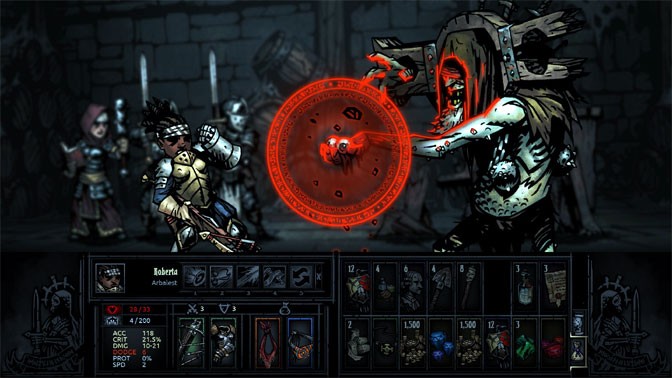 The next major gameplay mechanics you need to know in Darkest Dungeon are quirks, unit placement and party order. Whenever you recruit a unit or finish a dungeon, your units have a chance to acquire a positive or negative quirk. These quirks can range from stat bonuses to always having to check corpses with no cure, leading to a chance that a sickness can cripple your unit. You can always choose to keep or remove quirks at the estate sanitarium for a price in gold. The title lets you keep a maximum of five positive and five negative quirks, and they can be shuffled after each adventure if you reach the limit. You can reinforce positive quirks so they don’t get rearranged with something less suitable. Get rid of negative quirks that incapacitate your unit to a higher degree because they can become reinforced as well, making them more expensive to remove.
Unit placement is crucial for combat fluidity, as different units have skills that only work in specific slots, ranging from slots one through four. For example, there’s a class called the Leper that’s a heavy-hitting damage dealer but sacrifices accuracy for damage. The Leper has high-damage skills that can only be used in the first and second slots, and he is unable to hit the backline unless you run a specific skill, but you sacrifice the heavy-hitting damage for the ability to hit the backline for that turn. Turn order is affected by speed and RNG, as speed is dictated by all units rolling a hidden one plus a D8, an eight-sided die, plus the speed value for your unit. A unit with 9 speed is more likely to go first compared to a unit with 5, but it’s not always the case. I wish you could see who goes next in the turn order. You can tell with a little golden bar next to a unit’s HP bar that they haven’t taken their turn, but I wish it were more in-depth per turn.
 At its core, the story is about figuring out the narrative by watching your runs and seeing what happened in the Narrator’s life. On every expedition, you will find curios, generally graves, bookshelves and more. They have a wide variety of effects or grant you items, and to learn more about the story, some curios have pages. You have to piece the letters together to figure out what’s going on in this gothic town and the Narrator’s mystery. Other items could include torches, gold, food and so on, which ties directly into your survival. Depending on the region, expeditions can inflict debuffs that force you to bleed or suffer blight, and in rare cases, encounter eldritch beings in a combat phase.
You can opt out of exploring through curios, since the outcomes are random, and you may prefer consistency over randomness, but you’ll miss out on supplies that can bolster your run. A tip is to save curios until after you finish the main objective and exhaust your supplies so you can bring back more rewards than you normally would if you opened the curio with max inventory space. You can bring specific items before you venture off on your expedition, and you can use them on specific curios. For example, you can use herbal medicine on corpses to prevent diseases and gain treasure, or use keys to open shelves with no consequences to prevent bad chances, and the rewards are usually better than if you rolled the good option.
Managing your limited inventory space is another challenge as you’ll typically have to sacrifice items on your run between supplies, trinkets, gold and heirlooms gathered from combat encounters or curios. All of those categories are important to the flow, so choose wisely. Supplies are items you bring before venturing forth, such as torches, shovels, food, keys or items that cure various crippling effects, like bandages for bleeding or antivenom for blight.
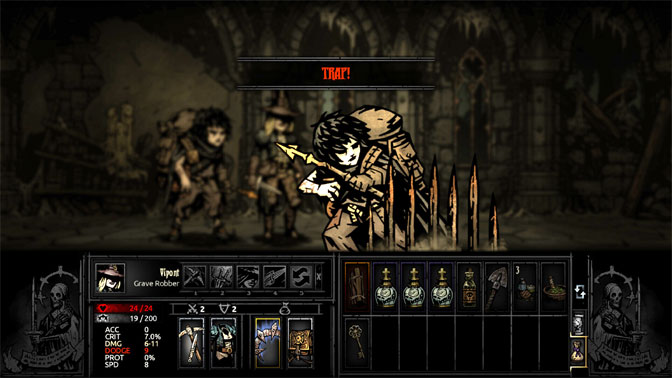 Torches are a very important component of the gameplay in Darkest Dungeon, as dungeons will gradually dim whenever you walk. This can be dangerous because as the dungeon gets darker, enemies will hit harder, have a higher chance to critically hit, leading to double damage, surprising your units, which leads to enemies moving before yours and messing up your units’ positions, and having higher accuracy against your characters. You are rewarded for venturing in this condition, as you also have a higher chance of getting better rewards, creating an engaging risk-reward system. When it’s brighter, all of these conditions reverse in your favor, but with smaller rewards. Bringing a shovel or two on your expeditions is also very helpful, as you will encounter obstacles that punish you for not having one to clear them by heavily stressing your allies and dimming the dungeon lights. Food is the last vital supply you should bring along on your runs, as it’s the only way to heal your units without the use of abilities in combat from certain classes, and you will have checks where, if you don’t have food in your inventory to feed your party, they will all suffer immense stress.
Every dungeon has different lengths, which means you have to explore through more rooms and bring more materials, ranging from short to medium to long. This dictates how many supplies you take per run because if you run out of torches or food, your run will become extremely difficult. For short runs, I would recommend six to eight torches, one to two shovels, 12 pieces of food, a key, two medicinal herbs for curios and then one to two damage-over-time cleansers depending on the area. Gradually then increase each item’s number limit as you move to medium and long runs. Once you become more comfortable with the dungeons, you can take fewer resources for more rewards.
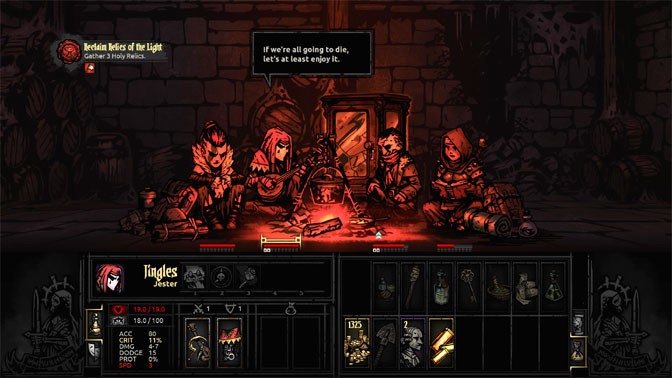
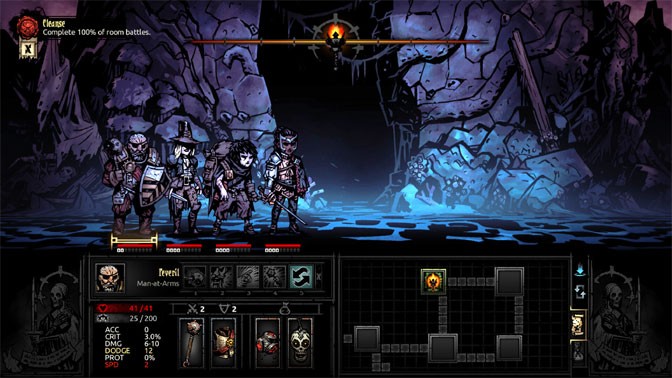 A unique mechanic in medium to long runs is the camping system your party can use once your party’s HP or resources are low or nearing the end of the dungeon. You’re able to heal others, reduce stress levels, buff party members or even find extra treasure, but beware of being ambushed or having the DLC Shieldbreaker class after a night’s rest. There are even more mechanics, such as heirlooms upgrading your buildings, traps, scouting that reveals an area and trinkets used to upgrade your units and equipping gear, but they are less important mechanics required to begin your journey into the abyss.
The latest DLC, as of this writing, is The Fire’s Edge, mentioned at the beginning, which follows the Runaway and the Duelist as playable characters. Going more in-depth, the Runaway class features a burn-affliction-heavy build that specializes in either spreading the burn debuff to multiple enemies and dealing double damage to those enemies, or prioritizing a stealth build that can swap your position and drag backline enemies to the front. You can build her so she can either be a backliner or a frontliner. The Duelist is a stance-swapping class that makes you balance your aggressive and passive stance to keep your Riposte keyword active and can be placed in slots one through four. Riposte allows you to retaliate against enemies that attack you, and a weighty dodge build that lets you stun and take a second action in the same turn has worked wonders for me, as you can still hit back despite dodging.
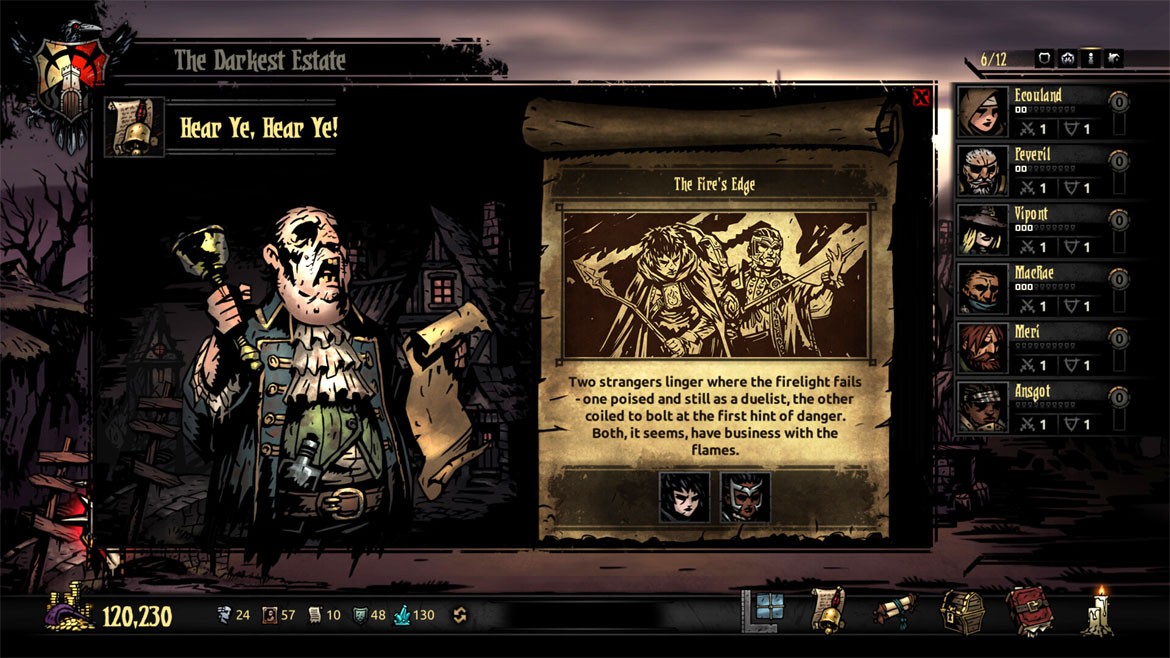 Both classes were very enjoyable and versatile to mess around with, as I was able to bring the Duelist to max level 6 and venture into the endgame. I typically enjoyed taking the Jester class alongside the Runaway, which allowed for hefty enemy control with two- to three-slotted enemies and heavy debuff capabilities. Then, with the Duelist, I liked taking the Antiquarian, buffing her dodge numbers while also protecting her by forcing the Duelist to take aggro instead.
Audio and visuals sound and feel immense and robust in Darkest Dungeon, and they sell the idea that you’re venturing through abyssal-like dungeons and feeling the weight of the adventure. This feeling is heavily elevated by the Narrator, voiced by Wayne June, who does an incredible job in his voice acting for this atmosphere. June sadly passed away back in 2025, but his work in Darkest Dungeon left an everlasting impression on the community and brought the experience to even higher heights. The music in Darkest Dungeon serves its purpose. Most of the battle themes tend to be quiet but catchy, and the music stops whenever you walk, leading to hearing water dripping or enemies barking in the background. The visuals mix immense, bold lines and saturated colors that blend well, creating a dark, unsettling aesthetic that pairs well with its low lighting.
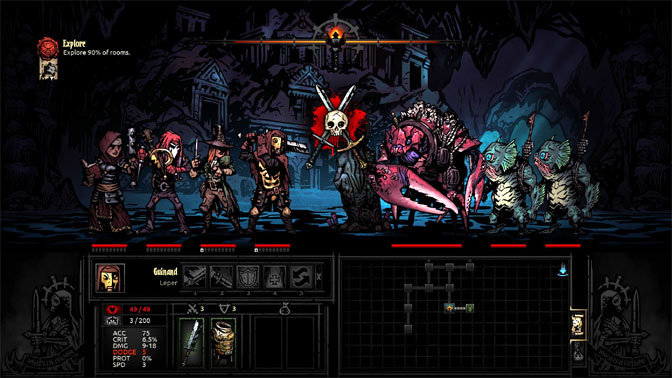 Overall, Darkest Dungeon is a great title for someone who wants to be challenged with brutal difficulty in the turn-based RPG genre and are able to pass the time with an expedition here and there. The Fire’s Edge DLC gives players a strong reason to return, especially with the Runaway and Duelist adding new ways to build parties, control enemies and survive fights that already feel stacked against you. Red Hook Studios curated the perfect blend between prioritizing the mental loop needed to pay attention to the situations at hand and seemingly turn unfavorable odds in your favor. Due to the title having RNG elements with critical strikes and punishing sanity mechanics, be prepared to lose a character you’ve invested in from an unfortunate series of events. My last tip is that you’re able to abandon a dungeon if you believe the challenge is stacked against your party, as a character dying is generally a bigger setback compared to leaving with fewer rewards. Unless it is a boss; then you will suffer the consequence of randomly losing a party member. I wish you luck, traveler.