
Welcome back to Save State, where we get physical, physical. There has been a lot of news, both in press releases and rumors, of two major console manufacturers abandoning physical media entirely. Sony confirmed that they’re no longer releasing physical games after 2028, while it’s only rumored for Microsoft at this point in time.
 The thing is, it’s pretty obvious why Sony wants to manifest a digital only future considering these corporations have been trying to slay the beast of the secondary market as far back as the early 2010s. This push actively bothers me since I’m a big collector of physical media for a variety of reasons, some of the most practical of which I’d like to share with you today.
The most unfortunate prospect that losing physical media will cause is that the player will have fewer choices. It’s a no brainer for Sony (and Microsoft if the rumored nextbox lacks a disc drive for playing physical games), but it’s difficult to see this as anything more than an anti-consumer move that gives gamers fewer options. This isn’t something to benefit you, the person spending your hard-earned money on video games. This is entirely to help Sony and Microsoft maintain more control over the pricing of video games to further extract the maximum amount of capital out of consumers while simultaneously giving you fewer rights over the entertainment on which you spend your money. This is a change towards maximum capital extraction with no real benefit for you, the consumer.
A digital-only environment in a completely closed ecosystem will lead to higher prices over time and likely more studio closures too. “But Vincent!” you may shout while finger pointing like Phoenix Wright. “You buy plenty of games on Steam, and that’s digital-only!” Thank you for noticing strawman inquirer I made up to segue to my next point, that the PC is predominantly a digital marketplace at this point in time. What’s interesting about the PC when compared to modern day consoles, though, is that the PC isn’t a closed ecosystem.
 The point in contention here is: A closed loop ecosystem lacks competition. The important thing is that there are multiple sellers all vying for your wallet on the PC, which incentivizes them to have better sales to try and grab your attention rather than keeping prices exactly at release price for an extended period of time. You can buy your games on Steam, sure, but there are multiple other storefronts made by companies like EA, Ubisoft, and Epic, and there’s also GOG, which sells games without any DRM (Digital Rights Management) whatsoever. There are even sites that sell keys for game purchases like Humble, Green Man Gaming, and enough others to fill an entire paragraph with just their names.
There’s a good reason why games on PC as a whole tend to go on sale more often, and there’s fewer instances of them being $60-70 for months. It’s because even if Steam is a major player on the PC, it’s not the only player. Compare the prices on Steam to physical copies of modern console games being sold at stores for $10-20 for months while the digital version goes on sale a few times a year to match that aforementioned price. Sure, the convenience of buying games digitally basically can’t be beat, but physical games can be significantly cheaper to buy physically for a title’s first couple years, which is why this shift to a digital-only future should be concerning for gamers on a budget.
 Physical games can also function as a dampener for prices, so to speak, since publishers have to compete with the value storefronts place on their titles a good portion of the time. Are you going to buy a game on sale for $40 on PSN when you could order a disc from Amazon for half that three months after release? Stores only have so much inventory space, so while they may buy loads of copies of games from distributors, that doesn’t necessarily mean that they’ll all sell. That’s where incentivizing purchases through discounted prices comes into the equation to move them off the shelves. A lot of the time the push downward for pricing at retail results in permanent price drops of these copies, and a good amount of the time publishers will take notice of that and price their sales accordingly. Effectively, if you game on a budget, it’s challenging to think that PlayStation Store discounts will improve at all when you don’t have the option to go anywhere else.
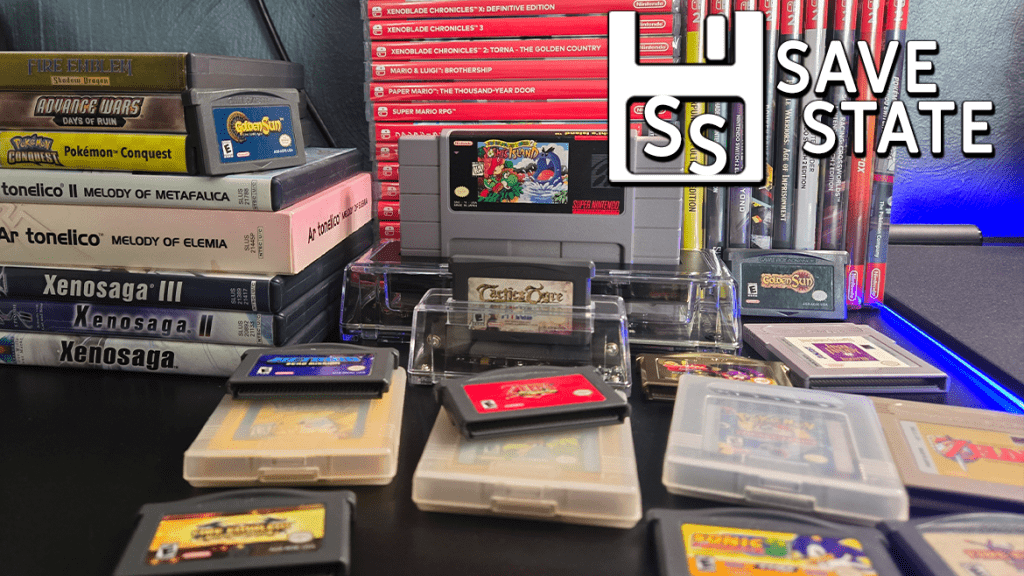
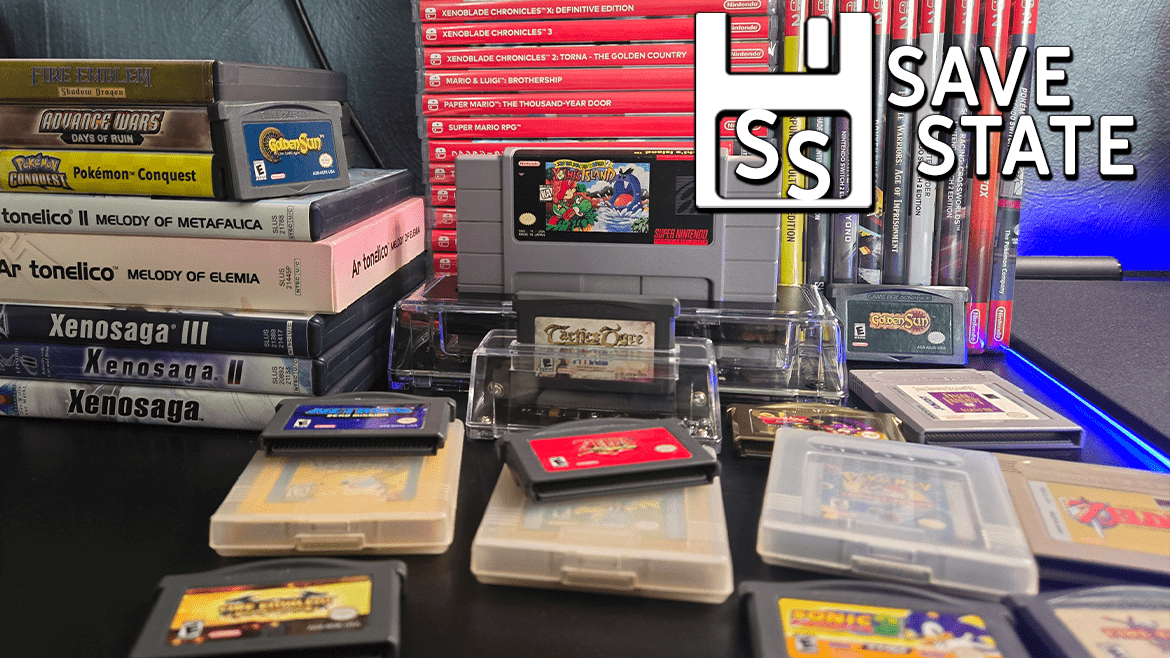
If you can’t tell, I’m clearly biased on this subject because I am a huge fan of physical media, with the loads of physical games I’ve purchased over many years. Sure, I like owning the cartridges for my Gameboy Advance games to the extent I’ve purchased little devices that help me appreciate them even better than back in the day, but the most important part is those cartridges and discs are mine to enjoy at a later date with no influence from the publisher. I don’t have to worry about Sony removing my copy of Ar Nosurge from my library of digitally purchased items because I own the disc physically. Meanwhile, people who bought movies through the PlayStation Store may not be able to share that opinion since Sony has removed purchases from people’s accounts multiple times at this point without refunding the buyers at all.
That’s point two: You don’t own your digital purchases. When buying physical goods in the US, whatever you purchase is codified by what’s called the first sale doctrine, a legal concept that limits the rights of the owner of a copyrighted work so they can’t restrict you from doing what you want with what you purchased. Effectively, once you buy it, you can lend the item, resell it, or give it away without being restricted by the copyright holder. You don’t own the rights to the work, but you do own your copy, so you’re legally justified in lending or selling it to someone at a later time. Digital ownership, conversely, is in much murkier territory (digital didn’t exist in the early 1900s), something that modern games publishers want to leverage to give them even more control and completely eliminate the secondary market (something they’ve been vying to do since the 2010s with their “online passes” and other gimmicks since the Xbox 360 era).
 While most platforms don’t exercise the same heavy-handed actions as Sony by literally removing purchases from people’s accounts if a license expires, it’s still unfortunate that it’s happening at all on large digital storefronts. Amazon, with their Prime Video and Audible platforms, are exceptionally bad about removing access to already purchased goods too, so don’t think that this only applies to digital purchases for video games. Licensing is a massive headache, and we’ve seen games get updated to remove music, scenes, or other elements which would mean that the only method of archiving the work of that game in its entirety would be through whatever physical copies exist. Not to mention, sometimes due to licensing a title disappears for years or may be unavailable to buy digitally in perpetuity, such as with Deadpool or Forza Horizon 4.
These delisted, unpurchaseable games can still be bought by new players who might be interested in them specifically due to the fact that physical discs of them exist somewhere out in the wild, and a lot of time archiving these kinds of titles either requires a physical copy being created or the ability to copy it wholesale (which usually requires the console getting jailbroken or being cross-platform like with a PC). Without physical copies, your ability to enjoy a video game, for better or worse, is at the whims of the publisher and console manufacturer. Many people dislike renting things, and an all-digital media landscape creates an unfortunate parallel with companies like Sony being your digital landlord.
I could completely understand raising the prices of physical games (or, conversely, lowering prices digitally), so this remains an option for those who prefer physical media. In that case, we would just have to pay a little bit more, and I think that’s fine. Completely removing it as an option leaves an awful taste in my mouth, and it’s very obvious that this is a move to get a bigger slice of the pie to cut out the secondary market and retail stores while simultaneously restricting consumer options. It is extremely obvious that this decision is being made due to financial incentive.
 There’s a big reason why offering an offline version of digital-only titles like Mega Man XDive is important, especially when you compare it to something like Nintendo’s Dragalia Lost or Mario Kart Tour. While fans can, and sometimes do, step in to save beloved digital-only and online-only games, there are still so many others that were only available on consoles that weren’t able to be archived and all of that work by the developers just becomes lost media. It’s a shortsighted focus on profits above all else that will basically make it so it’s impossible for today’s youth to share the games they played when they were kids with their children. There’s a solid and beneficial point in preserving the history of artistic mediums.
I also had a third point about how a digital-only landscape makes archival difficult, but I feel like this “old man yells at cloud” column has gone too long for something that’s normally a feel-good bit of, “Hey look at this cool old/indie game I rediscovered!” While there is plenty that I can find to complain about the current state of the games industry, that doesn’t mean it’s all bad, so expect my next column to return to the usual happy-go-lucky format you’re used to where I gush about something I found that week. Until next time!