
Stronghold 4 is the newest game in the Stronghold series from Firefly Studios, and the demo is available while you wait for the full release. Stronghold is a classic title and series in every sense of the word. It has been around for many years in different forms, and while the franchise has seen some strong remakes, it has been a long time since we got a brand-new mainline castle-building experience. That alone makes this demo feel worth paying attention to.
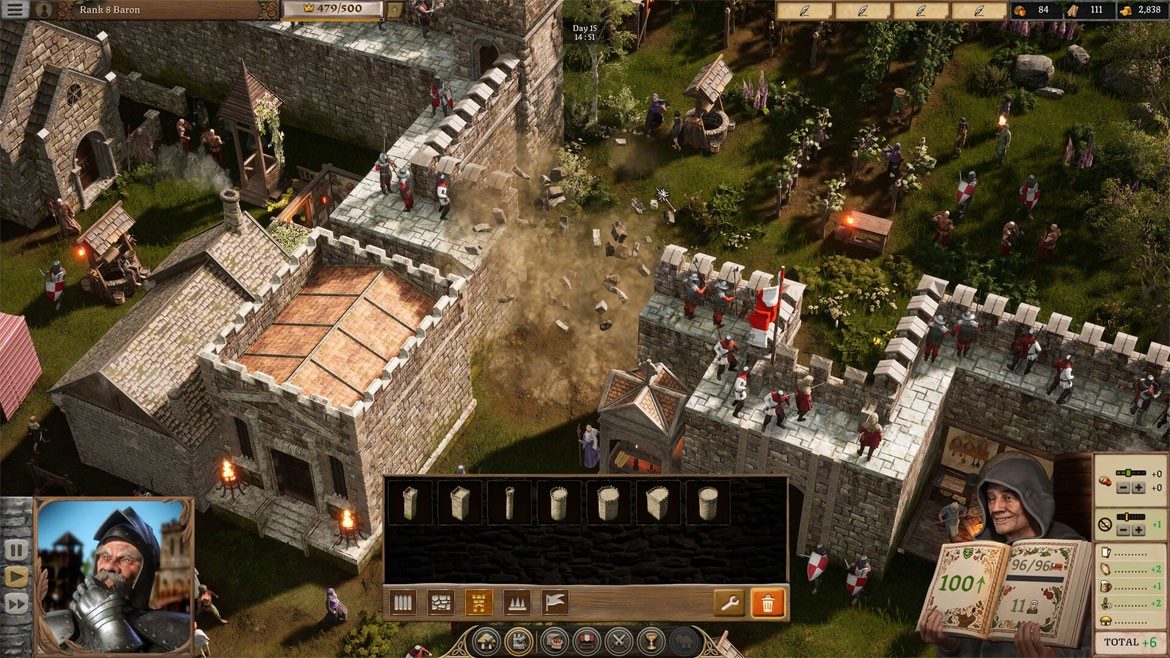
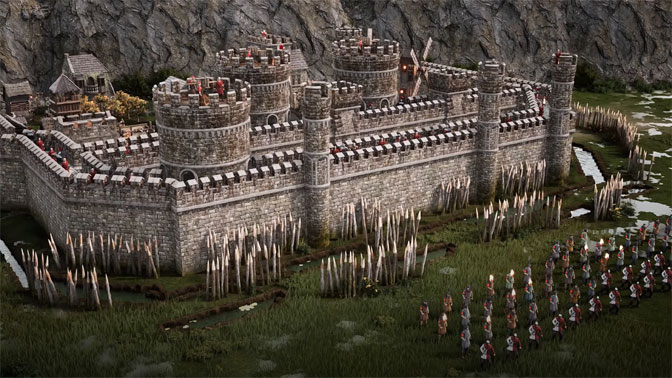
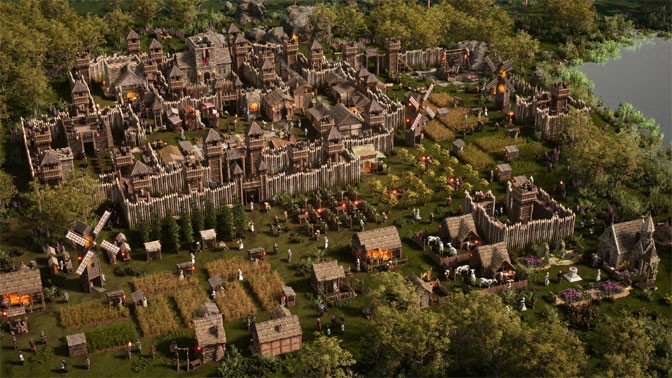 The biggest change longtime players will likely notice right away is the presentation. Stronghold 4 has been built in Unreal Engine 5, which is a first for the series. Earlier Stronghold entries, including Stronghold and Stronghold Crusader, always played well, but their visuals were usually functional more than flashy. Here, the graphics move much closer to center stage. Your castles look amazing while standing tall, and they are just as impressive while being smashed apart during a siege. There are also a number of additions and modern touches, but the core gameplay loop longtime fans expect still feels intact. We played the demo on Steam to get a sense of what Stronghold 4 may deliver when the full version arrives.
There is a fair amount of content in the demo. You build your own civilization in a medieval setting through two main modes. The first, Economy, is the traditional castle-building experience where you construct your stronghold, manage food and people, and defend your settlement from bandits who want to tear it all down. The second, Military, focuses more directly on combat and the tactical placement of your forces as you defend your lord from waves of enemy soldiers.
The gameplay loop in Economy mode feels polished and fluid, especially for a modern Stronghold release. The constant need for materials like wood, food and gold, along with the balancing act of maintaining popularity, creates a satisfying challenge.
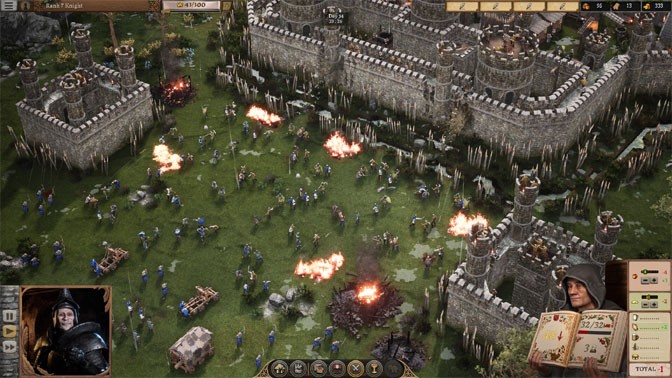 Popularity affects everything from taxation to overall productivity, so keeping your people happy matters. You can improve morale by building churches or areas for your citizens to practice their faith and by creating more jobs for peasants inside your castle. Managing resources can definitely be stressful, but it never feels overwhelming. As long as you keep an eye on your situation, you can usually recover. Need more gold for troops? Raise taxes. Running short on food? Ration for a little while until production catches up.
Just keep a close eye on popularity because heavy taxes and strict rationing will cause your standing with the people to drop, and that can lead to workers abandoning your settlement. Every minute or so, an event appears in the top-right corner of the screen, and while not all of the more dramatic event types are available in the demo, the ones that are can still have a major impact on your population or resource flow. Luckily, there is at least some ability to anticipate future events, so the title does not leave you completely helpless if things start heading south.
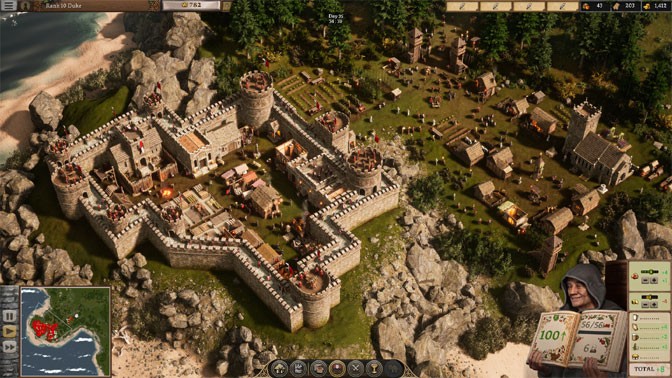 Another challenge in Economy mode is that your settlement is constantly at risk of being raided by bandits. Some of your workers will fight back if they are carrying materials, but they are not trained soldiers and cannot be counted on in a real defense. That is where the combat side of the experience comes in. You need to train peasants into proper military units capable of protecting the village. You can field archers, longbowmen and heavier troops armed with swords or spears. The class variety feels healthy, especially because your choices are shaped by the weapon production chains you decide to build back in your settlement.
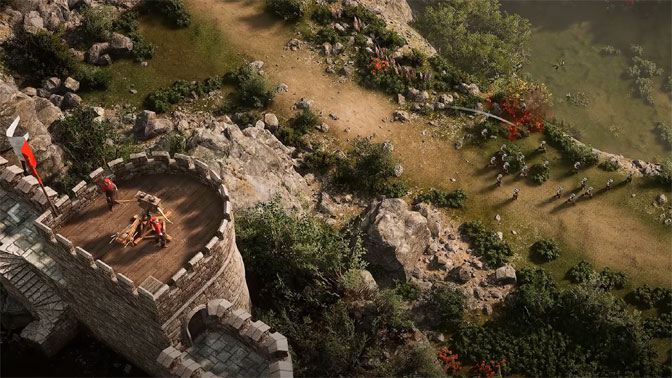
My only criticism on the unit side is readability. If a unit is not wearing iron armor or holding something as obvious as a pitchfork, many of them look fairly similar at a glance because they share the same general red clothing. That can make it harder than it should be to tell which group is using short bows, and which is made up of longbowmen unless you zoom in and inspect them more closely. Otherwise, the combat itself feels familiar in a good way, with some of the same top-down tactical energy found in games like StarCraft. You can use different formations, position troops on walls and towers, and generally shape your defenses in ways that feel true to the Stronghold formula.
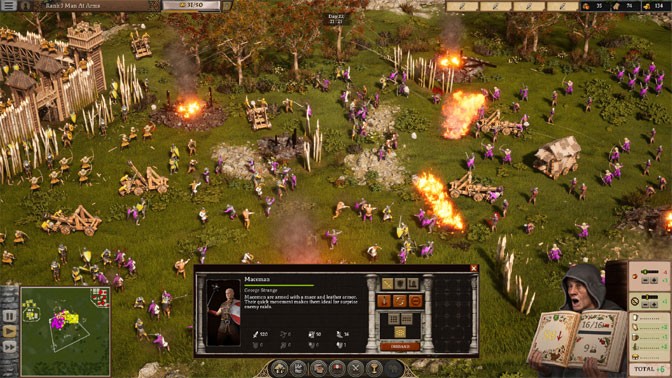 The second mode in the demo, Military, is more directly focused on combat and defense. It gives you access to stronger units that are not available in Economy mode, including the iron-armored troops mentioned earlier. The map used here places your village on top of a mountain while enemies push upward toward you, which gives the combat a nice sense of terrain and makes the defensive gameplay more tactical. This mode is fun, but it is also where the demo feels roughest in terms of onboarding.
The tutorial for Military mode is just okay. If you are new to the series, it does not do enough to clearly show important things like how to use ballista defenses or where iron mines are located. That stands in contrast to Economy mode, where the title is much better at pointing you toward the buildings and actions you need in order to move forward. Military mode can leave you a little confused while the timer counts down toward the next assault. A warning pop-up suggesting that players try the main mode first might help, or even a shorter dedicated tutorial showing where to find key military resources. Some of that confusion could be fixed pretty easily, but it is noticeable in the demo’s current state.
 Button mapping in Stronghold 4 is easy to grasp, especially if you have played other city builders or strategy titles before. The camera controls are familiar, and the tutorial does a decent job of introducing the basics in both modes through active objectives. My only real nitpick here is stylistic. The giant yellow arrows used in the tutorial get the job done, but they feel a little out of place next to the rest of the presentation. Highlighting buttons more subtly while dimming the rest of the screen might have fit the atmosphere better, though that is a small complaint rather than a real issue.
The audio and music are both strong. Combat has dramatic backing music that helps raise the tension, and the quieter moments around the village are packed with small immersive touches. If you zoom in close enough, you can hear people whispering to each other, along with the sounds of wood being chopped, livestock moving around and other bits of day-to-day life. It helps the world feel lived in, which is important for a title designed so much around building and defending a home.
 In the end, the Stronghold 4 demo is a very promising start. Whether you are looking for a slower experience built around crafting a thriving medieval village while fending off raids, or you want larger-scale combat and wall defense, the demo gives you a solid taste of both. The demo is also short enough to get through in a day or two, though players should be ready to sit down and finish their sessions since neither mode allows saving of progress where you leave off, at least at the time of this writing. If you already enjoy city builders and RTS titles, this is an easy demo to recommend. And if you have never played Stronghold before, this looks like a strong sign that the series may be ready to matter again in a big way.